
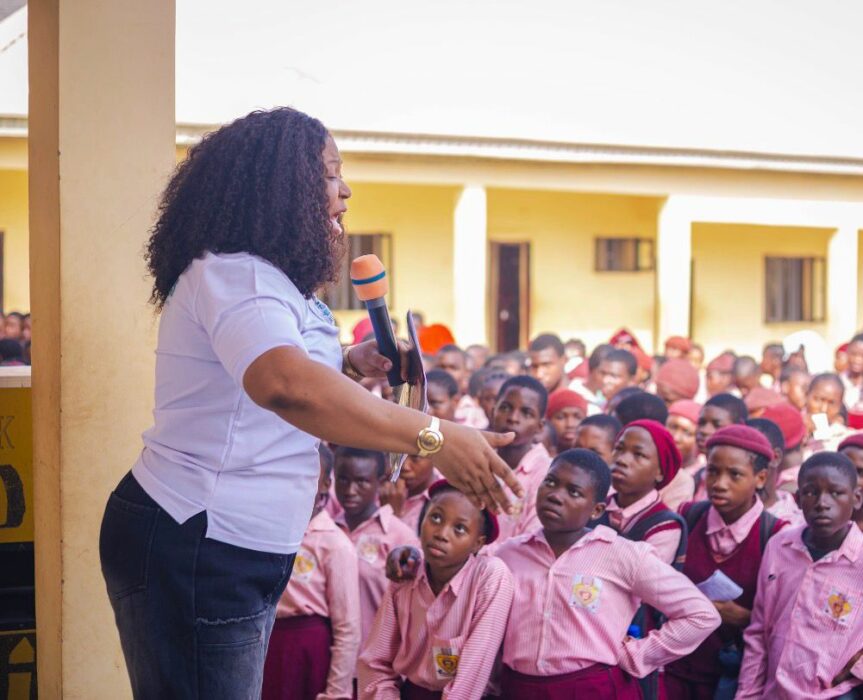
Secondary school students have been advised to make informed career decisions early as part of wider efforts to tackle youth unemployment and the growing skills mismatch in Nigeria.
Career coach, Dr. Abiodun Ipadeola, gave the advice on Thursday during a “Pep Talk on Early Career Choices and Decision Making” for senior students of Government Secondary School, Mabushi, Abuja. The event formed part of activities marking her 40th birthday anniversary.
Ipadeola said early, deliberate career guidance was essential in helping young people align their strengths and interests with national workforce needs. She noted that many students still choose careers based on peer influence or societal expectations, leading to frustration, unemployment or underemployment later in life.
“The decisions students make at this stage shape their future. Early clarity gives them confidence and direction, while wrong choices can lead to confusion, wasted resources and delayed productivity,” she said.
She explained that career paths generally fall under arts, commercial and science fields, each requiring specific subject combinations and competencies. She called for structured career guidance to be integrated into the secondary school curriculum to help bridge the disconnect between classroom learning and labour market demands.
“There is a gap between what students study and what the economy requires. Introducing career counselling early in schools will help students make informed decisions and build relevant skills,” Ipadeola added.
She also encouraged students to consider entrepreneurship and technical skills such as fashion designing, photography and catering, describing them as viable opportunities in Nigeria’s evolving job market. According to her, strengthening vocational and digital skills is critical to reducing dependence on white-collar jobs.
Citing international estimates, she noted that Nigeria’s youth unemployment rate stood at about 5.05 per cent in 2024, although underemployment and informal work remain widespread. Additional reports from the International Labour Organisation (ILO), she said, showed that many young graduates lack industry-relevant, practical skills.
Students who participated in the session said it gave them clearer direction on potential career paths, with some noting exposure to opportunities beyond traditional professions like medicine and law.
Stakeholders at the event emphasised that expanding access to career guidance, mentorship and skills development programmes can play a transformative role in preparing Nigeria’s young population for the future of work. They also called for stronger collaboration among government, schools and the private sector to equip students with relevant competencies.
The event underscored the importance of early career guidance as a strategic tool for human capital development and sustainable national growth.
We’ve got the edge. Get real-time reports, breaking scoops, and exclusive angles delivered straight to your phone. Don’t settle for stale news. Join LEADERSHIP NEWS on WhatsApp for 24/7 updates →
Join Our WhatsApp Channel