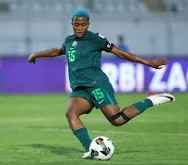
The captain of Nigeria’s Super Falcons, Rasheedat Ajibade, has publicly voiced her deep frustration following the Confederation of African Football’s (CAF) unexpected decision to postpone the 2026 Women’s Africa Cup of Nations (WAFCON) by several months.
The continental showpiece, which serves as the premier national team competition for women’s football in Africa, was originally scheduled to kick off on March 17, 2026. However, in a brief statement released on Thursday, CAF announced a postponement, pushing the tournament to July of the same year.
The governing body cited “some unforeseen circumstances” as the reason for the delay, without providing further immediate details on the nature of these challenges.
The announcement has sent ripples of disappointment through the African football community, with Ajibade emerging as one of the most prominent voices to react.
The Atletico Madrid forward took to her official X (formerly Twitter) account to express her dismay, posting a pointed message that resonated with fans and players alike.
“African women’s football deserves better,” Ajibade wrote, accompanying the text with a disappointed emoji. Her succinct yet powerful statement encapsulates a growing sentiment among players who feel that the development and stability of the women’s game on the continent are often undermined by last-minute logistical changes and a lack of transparent communication.
Ajibade’s reaction carries significant weight, coming just days after she led the Super Falcons in a pair of international friendly matches against Cameroon last week. These games were likely part of the team’s preparatory roadmap for the original March window, building chemistry and form ahead of a major tournament on home soil.
The sudden shift in the WAFCON schedule now throws those preparations into disarray, forcing coaches and players across the continent to redraw their plans.
The postponement raises several questions for participating nations, including Nigeria, who will be expected to be among the title favorites. Key among these are the availability of players, as the new July dates fall outside the primary international window, potentially clashing with pre-season training for many professionals or even overlapping with club commitments. Furthermore, the delay prolongs the qualification process and disrupts the carefully planned calendars of the 12 qualified teams.
We’ve got the edge. Get real-time reports, breaking scoops, and exclusive angles delivered straight to your phone. Don’t settle for stale news. Join LEADERSHIP NEWS on WhatsApp for 24/7 updates →
Join Our WhatsApp Channel