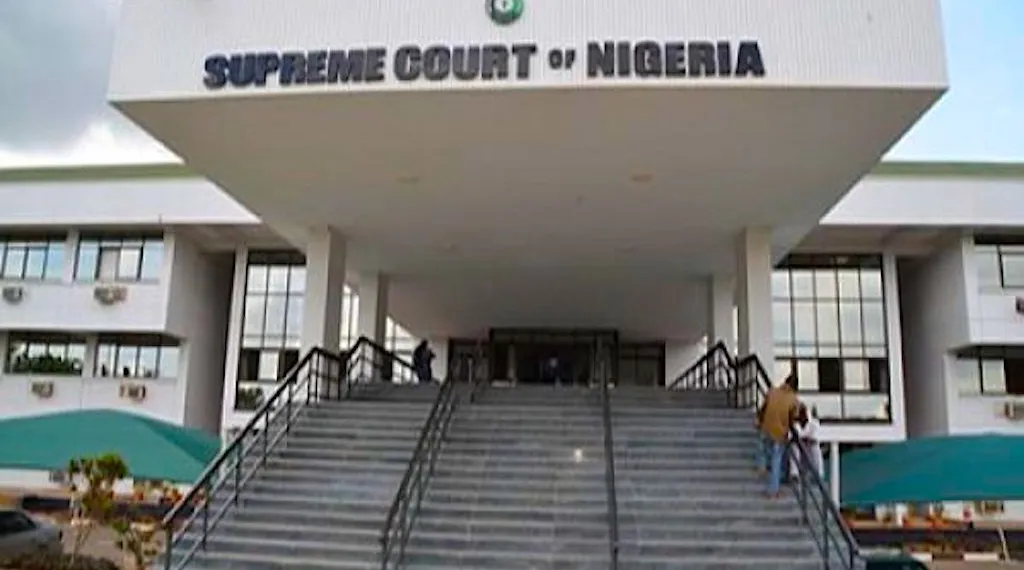
In a landmark judgment, the Supreme Court has affirmed that the President possesses constitutional powers to declare a state of emergency in any part of the country and, when necessary, suspend elected officials during the period of the emergency.
Delivering the lead majority judgment in a split 6–1 decision, Justice Mohammed Idris, held that Section 305 of the 1999 Constitution (as amended) empowers the President to “deploy extraordinary measures” to restore order and prevent a breakdown of law and order.
“Section 305 empowers the President to take extraordinary measures to restore normalcy where emergency rule is declared,” Justice Idris stated.
“The section is not specific on the nature of those extraordinary measures, thereby granting the President discretion on how to go about it.”
The ruling was on a suit filed by Adamawa State and 10 other Peoples Democratic Party (PDP)-led states, who challenged the legality of the state of emergency declared by President Bola Tinubu in Rivers State earlier this year.
The emergency rule declaration led to the suspension of elected state officials, including Governor Siminalayi Fubara, his deputy and lawmakers for six months.
Justice Idris further upheld the preliminary objections raised by the Attorney General of the Federation (AGF) and the National Assembly, who were joined as defendants in the suit.
He ruled that the plaintiffs failed to establish any cause of action capable of invoking the apex court’s original jurisdiction.
“The plaintiffs failed to demonstrate a reasonable cause of action that can activate this court’s original jurisdiction,” the justice held.
Consequently, the suit was struck out for want of jurisdiction and dismissed on its merits.
However, Justice Obande Ogbuinya, disagreed with the majority’s position, insisting that while the President indeed has the constitutional right to declare a state of emergency, such powers do not extend to suspending democratically elected officials.
“The President cannot use the instrument of emergency rule as a political tool to suspend elected state officials,” Justice Ogbuinya held.
“The Constitution does not contemplate the removal or suspension of governors, deputy governors, or legislators under the guise of emergency powers.”
The judgment, which clarified the extent of presidential authority under Section 305, is expected to have far-reaching implications for Nigeria’s federal structure and the balance of power between the executive and subnational governments.
We’ve got the edge. Get real-time reports, breaking scoops, and exclusive angles delivered straight to your phone. Don’t settle for stale news. Join LEADERSHIP NEWS on WhatsApp for 24/7 updates →
Join Our WhatsApp Channel