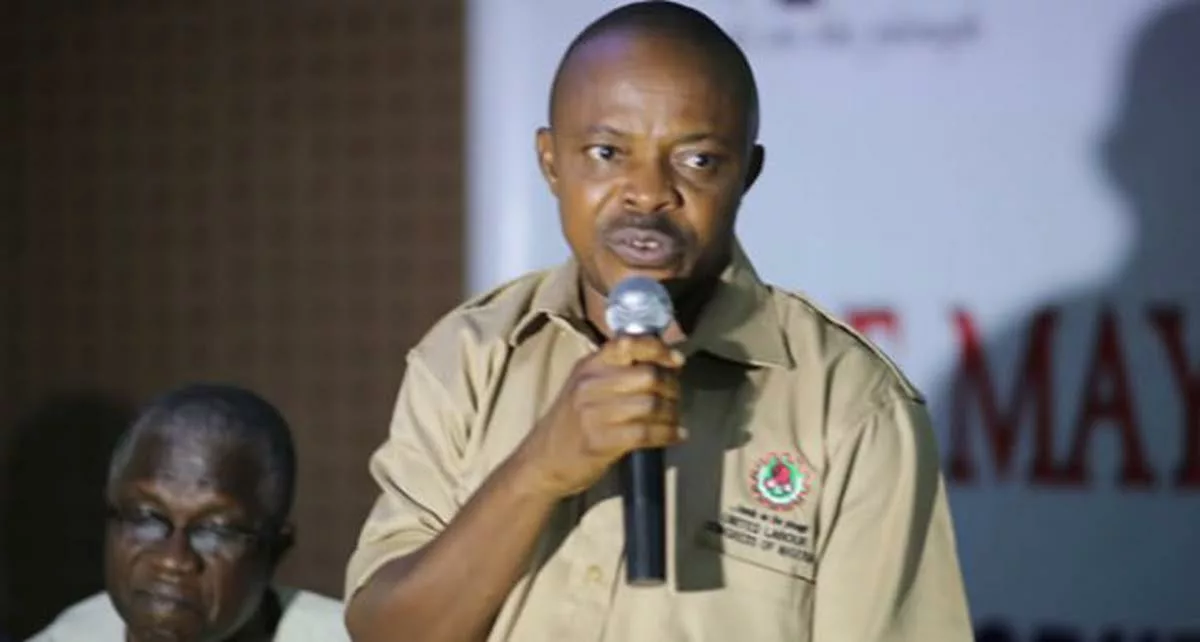
The Nigeria Labour Congress (NLC) has linked the rising wave of kidnappings and violent attacks across the country to what it described as an aggressive bid by speculative global capital to seize control of mineral-rich territories in northern and central Nigeria.
NLC president, Comrade Joe Ajaero said that insecurity in many communities was no longer random criminality but part of a wider economic contest for Nigeria’s lithium, tin, cobalt and other minerals that power 21st-century technologies.
He argued that the surge in abductions, mass killings and forced displacement in states such as Sokoto, Zamfara, Benue, Kogi, Kwara and Plateau had become intertwined with the interests of corporate actors and their local enablers.
Ajaero made these assertions yesterday in Abuja while declaring open the 2025 Harmattan School, an event organised by the labour movement to examine workers’ rights amid economic pressures and rapid technological shifts.
According to the labour leader, the plundering of mineral resources now sits at the heart of the insecurity crisis that continues to traumatise rural and urban populations.
He also warned that Nigerian workers faced increasing attacks not only from armed groups but from powerful corporate entities and political actors pushing policies that undermine trade union rights and weaken worker-led institutions.
He cited concerns over alleged attempts to override the governance structures of the Nigeria Social Insurance Trust Fund (NSITF) and the National Pension Commission (PENCOM), describing such efforts as a direct move to seize workers’ savings for the benefit of the elite.
Ajaero said the developments pointed to an expanding pattern of “legalised class warfare” that demanded collective resistance.
“Why is there a surge of violence, of kidnappings, and of a general state of anarchy? We must view this through our objective lens. Greedy, speculative capital is in a frantic scramble to capture vast swathes of our national territory.
This is not random banditry; it is a primitive accumulation drive for the 21st Century. The chaos is a smokescreen, a strategy of de-population and terror to clear the land for capital’s plunder.”
Sokoto, Zamfara, Katsina, Benue, Kogi, Kwara and Plateau states have become theatres of terrorism because of the treasures beneath their lands, Ajaero said.
Ajaero, urged workers to confront the multi-layered crisis facing the country by building stronger organisational capacity, deepening political consciousness, and resisting efforts to diminish collective bargaining rights.
At the event, leaders of the Academic Staff Union of Universities (ASUU) and the Nigerian Union of Teachers (NUT) also raised similar concerns, stating that the education sector was now under simultaneous attack from bandits and government failures.
ASUU president, Professor Chris Piwuna, said insecurity and poor governance were eroding the foundations of the school system, noting that education was being harmed both by kidnappers and by policy neglect.
“Education is under attack, while the bandits are attacking and killing us instantly, our leaders are attacking and killing education instalmentally,” Piwuna said.
He dismissed suggestions that the union had suspended its demands, noting that unresolved issues from the 2009 agreement remained central to ongoing talks.
He insisted that ASUU would not be swayed by claims that government had met its demands, saying the issues at stake were structural and longstanding.
NUT president, Comrade Titus Amba said teachers across the country were increasingly afraid to work, with many states shutting schools in response to abductions and attacks.
He warned that the union could direct its members to withdraw from unsafe communities if urgent security measures were not taken.
Amba said the situation had reached a point where leaders of the school system must convey their dissatisfaction more forcefully.
“Today, our school system is under threat… most of the states are closing schools now. We are sending this message to the government, requesting that they provide the necessary security that is supposed to be in place for our schools.
We can’t be teaching while our life is at risk… these are the issues that we are having on ground. They should intensify efforts to bring back these students and also intensify efforts to safeguard and protect all our schools across the country,” Amba said.
We’ve got the edge. Get real-time reports, breaking scoops, and exclusive angles delivered straight to your phone. Don’t settle for stale news. Join LEADERSHIP NEWS on WhatsApp for 24/7 updates →
Join Our WhatsApp Channel