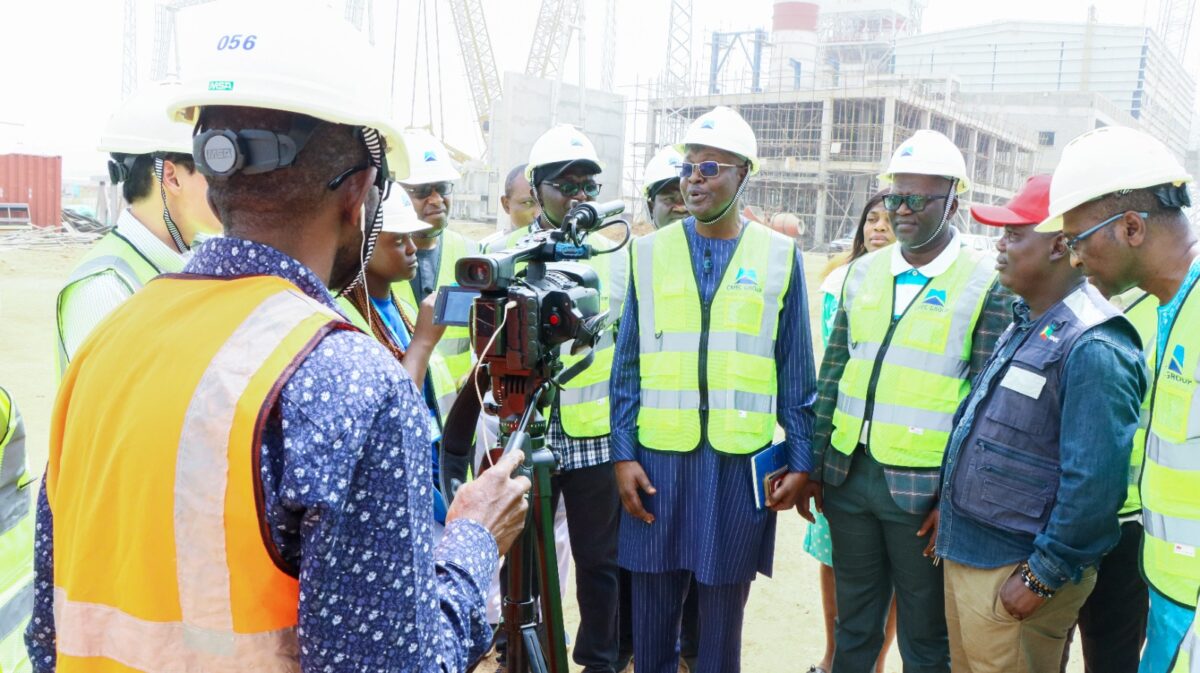
Management of the Transmission Company of Nigeria (TCN), has conducted a comprehensive inspection of the ongoing construction at the Abuja Independent Power Plant (IPP) Project Phase One in Gwagwalada, Abuja, on Wednesday.
The visit, led by the TCN executive director of Transmission Service Provider (TSP), Dr Oluwagbenga Ajiboye, focused on assessing construction milestones, obtaining firsthand updates on the plant’s generating capacity, projected commissioning timeline, and specific evacuation infrastructure required for integration into the national grid.
Ajiboye emphasised TCN’s commitment to ensuring reliable power evacuation, stating that such collaborations are critical to minimising delays in Nigeria’s power infrastructure rollout.
During the engagement, TCN engineers held detailed technical discussions with the project contractor, addressing potential challenges in grid synchronisation and reinforcing coordination protocols ahead of the December 2026 commissioning target.
The 350MW Phase One facility, being developed by the Nigerian National Petroleum Company (NNPC), marks a significant step in leveraging domestic gas resources.
It will be powered by natural gas supplied via the Ajaokuta–Kano–Kaduna (AKK) Gas Pipeline, a 614km, 48-inch diameter project designed to transport up to 2.8 billion standard cubic feet of gas daily from Nigeria’s gas-rich Niger Delta to the northern regions.
The AKK pipeline, over 70 per cent complete as of late 2025, aims to industrialise northern Nigeria, support fertilizer production, and reduce gas flaring while bolstering thermal power generation nationwide. Phase One of the Abuja IPP aligns with this by injecting 350MW into the grid, with potential expansion in subsequent phases to meet growing electricity demand.
TCN’s involvement underscores its pivotal role as the transmission system operator, responsible for wheeling power from generation plants to distribution companies.
Recent TCN upgrades, including the completion of several transmission lines and substations, position it to handle increased capacity from projects like this IPP.
The initiative comes amid Nigeria’s broader power sector reforms under the Presidential Power Initiative, which seek to add thousands of megawatts through public-private partnerships.
Reliable plants like the Abuja IPP could alleviate chronic shortages, where supply often hovers below 5,000MW against an installed capacity of over 13,000MW, benefiting households, industries, and economic growth in the Federal Capital Territory and beyond.
Stakeholders anticipate that successful commissioning will enhance grid stability and support President Bola Tinubu’s Renewed Hope Agenda for energy security.
We’ve got the edge. Get real-time reports, breaking scoops, and exclusive angles delivered straight to your phone. Don’t settle for stale news. Join LEADERSHIP NEWS on WhatsApp for 24/7 updates →