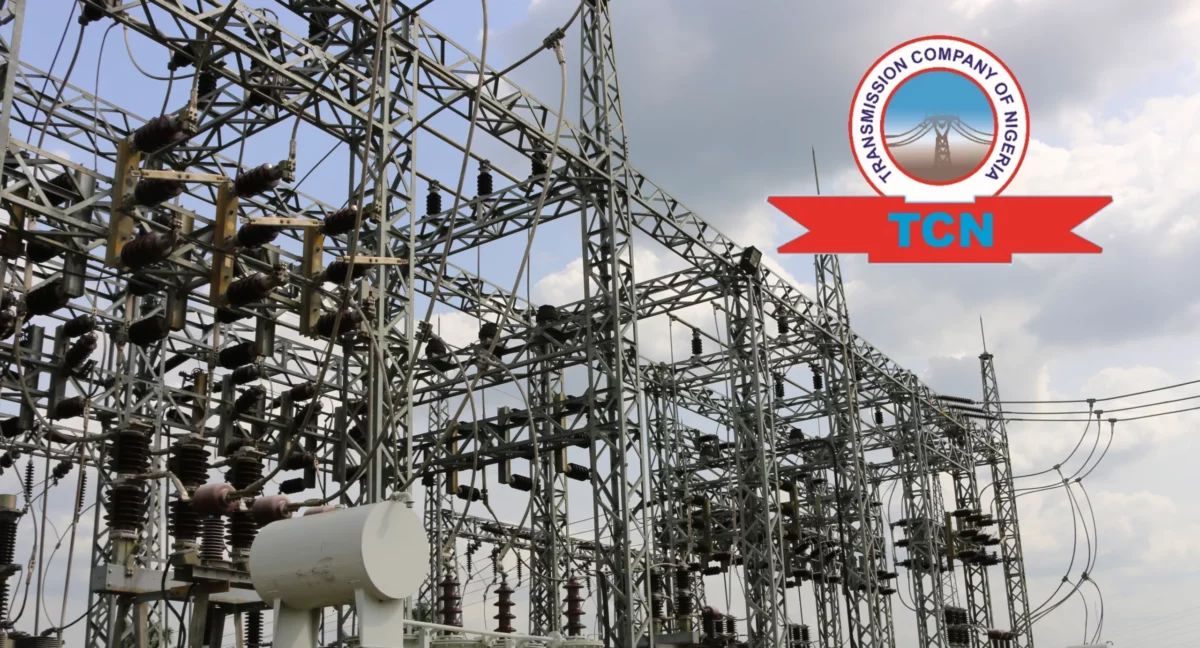
The Federal Government said on Tuesday that Transmission Company of Nigeria (TCN) projects backed by the World Bank have added about 480 megawatts (MW) of bulk power capacity to Lagos, with upgrades at Ijora, Apapa, Alausa and Lekki aimed at easing transmission bottlenecks and improving supply to the state’s main commercial corridors.
The minister of Power, Joseph Tegbe, said on Tuesday that upgraded transmission infrastructure at Alausa and Lekki in Lagos would add a combined 272 megawatts (MW) of bulk power capacity to two of the state’s busiest economic corridors.
Recall that the Alausa and Lekki upgrades followed Monday’s commissioning of upgraded facilities at Ijora and Apapa, forming part of a coordinated effort this week to strengthen Lagos’s transmission network. Together, these upgrades have boosted the electricity transmission capacity of Lagos state by 480MW.
He said these projects together would significantly increase bulk transfer capacity across the state’s main commercial corridors and help relieve longstanding congestion on the grid.
Tegbe was reported to have explained that the works formed part of the federal government’s effort to strengthen the national transmission network. He said the Alausa and Lekki upgrades would help unlock stranded capacity and make more power available to distribution companies serving Lagos residents and businesses.
At Alausa, Tegbe said a 30MVA transformer had been replaced with a new 100MVA unit, raising the station’s total capacity from 135MVA to 205MVA. He said that change would increase bulk power available to the Ikeja Electricity Distribution Company (IKEDC) by about 80MW.
He said the Lekki upgrade involved the Transmission Company of Nigeria (TCN) installing two additional 60MVA, 132/33kV power transformers and nine new 33kV feeders. Tegbe said those works doubled the substation’s 132/33kV capacity from 120MVA to 240MVA, representing roughly a 192MW increase in bulk capacity.
Tegbe was quoted as saying the administration’s approach was to “identify the bottleneck, invest in it, remove the constraint, unlock the capacity.” He said President Bola Tinubu was determined to confront the infrastructure constraints that had limited the country’s economic potential, and that the government would continue to replace ageing equipment and address stranded capacity nationwide.
The Lekki works, Tegbe said, were executed by Shanghai Electric Group Company Limited with support from the World Bank. He added that the project also includes a 300 MVA, 330/132kV transformer, which was expected to be energised in November 2026.
Tegbe commended TCN, the Nigerian Independent System Operator (NISO), EKEDC and IKEDC, as well as Shanghai Electric Group and the World Bank, for their roles in delivering both projects. He also congratulated Lagos State governor, Babajide Sanwo-Olu, for maintaining an enabling environment that attracted infrastructure investment to the state.
Managing director/CEO of TCN, Sule Ahmed Abdulaziz, said the Alausa project had been carried out by Shanghai Electric Limited under a World Bank-funded initiative. He was reported to have said that, once energised, the upgrade would provide more stable and reliable electricity to at least 70,000 residents supplied by IKEDC.
Abdulaziz said the upgrades would strengthen overall grid stability and enable more bulk power to reach distribution companies for onward supply within their franchise areas. He described the works as evidence that “TCN remains resolute in its mandate of building and sustaining a robust transmission network, capable of transporting Nigeria’s growing power needs to various distribution load centres nationwide,” the statement said.
We’ve got the edge. Get real-time reports, breaking scoops, and exclusive angles delivered straight to your phone. Don’t settle for stale news. Join LEADERSHIP NEWS on WhatsApp for 24/7 updates →
Join Our WhatsApp Channel