…Funding constraints limiting marine operators’ tech uptake, says Ebhodaghe
Operators in the petroleum sector have called for the acceptance of new technologies and human capacity to drive needed growth in the sector as well as boost the country’s economy.
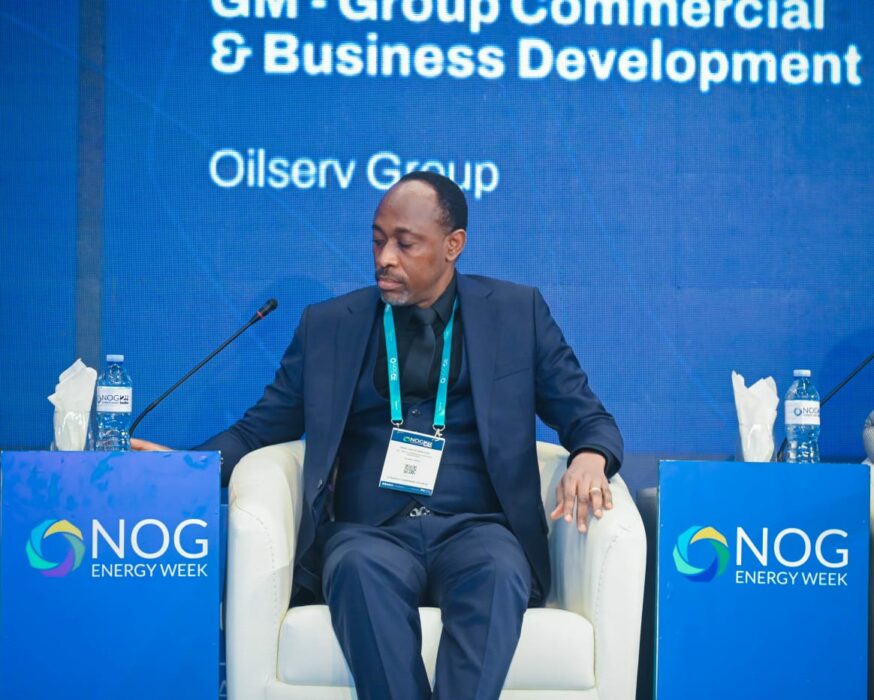
Speaking during a panel session tagged ‘Driving Energy Innovation: Technology-Powered Pathways for Oil and Gas’, at the just concluded Nigeria Oil and Gas NOG Energy Week in Abuja, the chairman of Oilserv Group, Emeka Okwuosa, stated the need to grow human capacity in the sector.
Represented by the company’s group business development and commercial manager, Cheta Okwuosa, said, “The industry needs to address speed, safety and sustainability. If technology must be viable for the EPC companies, it must address all these.
“It’s people-driven, and we need to be deliberate as well as intentional in growing human resources by building local or indigenous personnel to operate these technologies.
“In our operations, we started with manual, and then at some point we deployed the automatic system, which we started with the semi-automatic. Later on, the company mastered it and deployed it in the OB3 project. With that, the company realised some gains, but not the optimum.
“In AKK, we used a combination of the two, the semi-automatic and the fully automatic system. And the gains were something else. Now, in the algorithm that plays the semi-automatic and the fully automatic, that is where the AI comes into play.
“Now that we are veering into gas commercialisation, we have also deployed leak detection, intrusion detection, and other AI operational systems. Technologies that help you to, you know, clone what you have on the ground and be able to monitor it remotely. So that’s it.
Also speaking, Gbolahan Lawal, MD, GIL Group, task the industry on data driven innovations to incorporate with the new technologies as well as industry development.
He challenged operators to “evaluate what has worked with the analogue system of operations and replace it with the new technologies. There is also a need for training and empowerment to create a roadmap for profitability in the industry.
On the impacts to marine operations, Lead Strategic Consultant at Acepontis Ltd, Atiemoria Ebhodaghe, argued that the acceptance of new technologies among marine logistics operators in the upstream sector is quite divided.
“On one hand, International Oil Companies (IOCs) and leading vessel owners are jumping on board with advanced technologies like Dynamic Positioning (DP) systems, remote data exchange for vessels, and automated fuel optimisation. They recognise that offshore support vessels operate in high-risk settings where any downtime can be very costly. On the flip side, smaller indigenous operators find it tough to adopt these technologies, mainly due to financial constraints.
“For them, investing in sensor-based technology or satellite monitoring often feels more like a luxury than a necessity for their operations. This creates a two-tier market: the technologically savvy fleets land the lucrative, long-term offshore contracts, while the older ‘legacy’ vessels are left to compete in the spot market, grappling with inefficiencies and higher operational costs.”
He added that, “In the upstream marine sector, AI and new technologies are transforming vessel management from a reactive approach to a more predictive one. Take AI-driven predictive maintenance, for instance; it allows operators of Anchor Handling Tug Supply (AHTS) vessels and crew boats to foresee engine or thruster issues well before they result in a breakdown during operations.
“The key measure of this impact is the decrease in ‘off-hire’ days during project delivery. Keeping vessels operational and compliant is crucial to ensuring that multi-million-dollar offshore drilling and production timelines stay on track.”
We’ve got the edge. Get real-time reports, breaking scoops, and exclusive angles delivered straight to your phone. Don’t settle for stale news. Join LEADERSHIP NEWS on WhatsApp for 24/7 updates →
Join Our WhatsApp Channel