The Tertiary Education Trust Fund (TETFund) has pledged support for the Defence Research and Development Bureau (RDB) for its research and development initiatives.
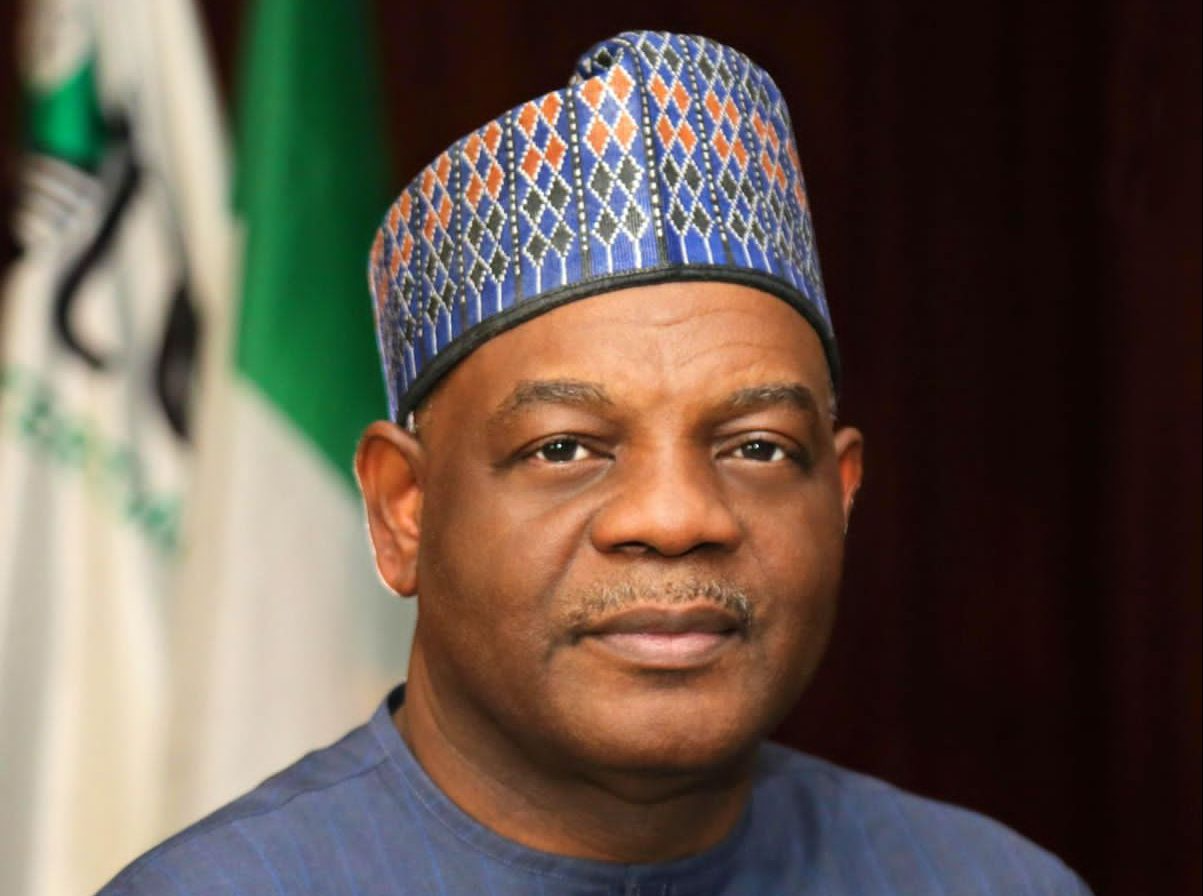
The Executive Secretary of TETFund, Arch Sonny Echono, made the statement while receiving the Director-General of RDB, Rear Admiral K.J. Odubanjo, and his team at his office in Abuja.
He said that as a country striving for development and facing serious challenges ranging from insecurity to unemployment and dependence on foreign goods and services, it is essential to harness all resources available to the nation.
He highlighted that the military has traditionally played a significant role in technological and scientific development globally.
“On behalf of the Board of Trustees and the management of TETFund, I warmly welcome you. I want to underline that we at TETFund recognise the vital role agencies like yours play in national affairs.
“I recall the privilege of presenting a paper at one of your functions about a year or two ago, and all contributions pointed in one direction. As a nation striving for development and confronted with challenges such as insecurity, unemployment, and dependence on foreign goods and services, we must harness all available resources.
“Traditionally, the military has played a significant role in technological and scientific development worldwide. We recall with satisfaction that the Internet we enjoy today had its origins in military research, as did the Global Positioning System.
“Technologies such as Google Maps, initially developed for military purposes, demonstrate this. Similarly, drone technology is now used for delivering medical equipment and drugs in some countries.”
Echono emphasised the potential of collaboration between the military and the defence establishment, particularly in research.
“So a great deal can be achieved if we build bridges and establish synergy between the military and research institutions. I am pleased that you are already exploring this, and I am also happy to inform you that over the past two years, TETFund has focused specifically on this area, addressing gaps that previously existed,” he added.
He noted that the federal government recently inaugurated a Committee on the Commercialisation of Research Findings.
According to him, going forward, all research products will receive support to translate them from prototypes into actual products, and partners will be identified to invest in and bring them to market.
“Indeed, just today, we signed a landmark MoU with NACCIMA to jointly promote this agenda. Last year, we created a new thematic area under our National Research Fund Granting Committee, recognising the growing importance of military and defence research. We expect RDB to participate in these committees, ensuring representation where decisions are made,” he added.
Earlier, the Director-General of RDB, Rear Admiral K.J. Odubanjo, stated that the agency’s goal under his leadership is to improve on previous initiatives.
“Progress is only possible when we work with the right partners, because no institution can operate in isolation. The RDB has the mandate to coordinate research activities nationwide, particularly defence-related innovations, and to create strong links between military and civilian institutions. This collaboration benefits not only the Armed Forces but other sectors as well.
“For example, an airboat currently in use was originally conceived through RDB-supported research. Although RDB did not physically build it, the concept was developed internally and handed over to a designated company for production.
“It was designed for defence operations, but other agencies expressed interest after its public demonstration. The Nigeria Customs Service has already requested units, and RDB is working with the company to deliver them.
“Similarly, RDB collaborated with private partners to develop night-vision goggles, which have been tested, certified, and approved. The Enugu State Government has also indicated interest in procuring some through RDB.”
He further acknowledged that inadequate funding remains a major challenge. “We have ideas and experts, including university researchers and professors, but research cannot progress without financial support. We cannot expect partner organisations to provide 100 percent of resources; our contribution is also necessary. This is why TETFund’s intervention is vital.
“With God’s help and continued support from TETFund, we are confident that Nigeria’s research capacity will grow stronger, helping the country confront current security challenges and advance into the future,” he added.
…Signs Pact With Association To Boost Innovation
The Tertiary Education Trust Fund (TETFund) and the National Association of Chambers of Commerce, Industry, Mines and Agriculture (NACCIMA) have signed a Memorandum of Understanding (MoU) aimed at fostering research, innovation, and industry-ready graduates.
Executive Secretary of TETFund, Arch Sonny Echono, expressed his appreciation for the partnership during the signing ceremony in Abuja.
He noted that the collaboration aligns with the federal government’s vision of creating an economy driven by the skills, enterprise, and innovation of Nigerian youths.
“We welcome you to your fund, as well as all the excellent initiatives that have brought us together. Today’s signing is the culmination of long-standing efforts between TETFund and NACCIMA.
“This collaboration focuses on research, innovation, and producing graduates fit for purpose, ready to contribute effectively to industry. It is central to the triple helix model we have championed and supports the President’s goal of harnessing Nigeria’s human and material resources for national development,” he added.
The MoU outlines several objectives, including promoting research and innovation that address industrial and societal needs; facilitating the commercialisation of research outcomes; strengthening capacity building, skills development, and entrepreneurship initiatives; encouraging investment and joint ventures between academia and industry; supporting policy advocacy and knowledge sharing; and promoting job creation, start-up growth, and inclusive innovation.
Echono further emphasised the partnership’s potential to stimulate economic growth, stating that “if we harness the talent of our youths and equip them with critical thinking, cultural awareness, and problem-solving skills, we can advance Nigeria’s economy and address global skills gaps.”
Engr. Jani Ibrahim, National President of NACCIMA, highlighted the importance of industry-education collaboration. He explained that the partnership provides structured access to the private sector, industry-informed research, internship and industrial attachment opportunities, and enhanced commercialisation of innovations.
“Development must be driven by knowledge, innovation, skills, enterprise, and strong industry-education partnerships. This MoU provides a bridge for graduates to gain practical skills and for research institutions to commercialise knowledge, contributing to national productivity.
“For the business community, this partnership guides research priorities towards industry needs, builds a more competent workforce, and enhances productivity, competitiveness, and investment,” he said.
He also noted that the collaboration aligns with President Bola Ahmed Tinubu’s Renewed Hope Agenda, which has strengthened TETFund through improved funding efficiency, upgraded research infrastructure, and a focus on skills-driven and technology-based learning.
“This partnership reinforces the federal government’s commitment to an education sector that is innovative, industry-aligned, and globally competitive,” Ibrahim added.
He described the MoU as the beginning of a strategic journey to build a stronger education-industry nexus, enhance national competitiveness, and unlock opportunities for young Nigerians and businesses alike.
We’ve got the edge. Get real-time reports, breaking scoops, and exclusive angles delivered straight to your phone. Don’t settle for stale news. Join LEADERSHIP NEWS on WhatsApp for 24/7 updates →
Join Our WhatsApp Channel