What is the value of an apology offered by a country’s ruler to its citizens? More importantly, what does the leader expect to achieve by such an apology?
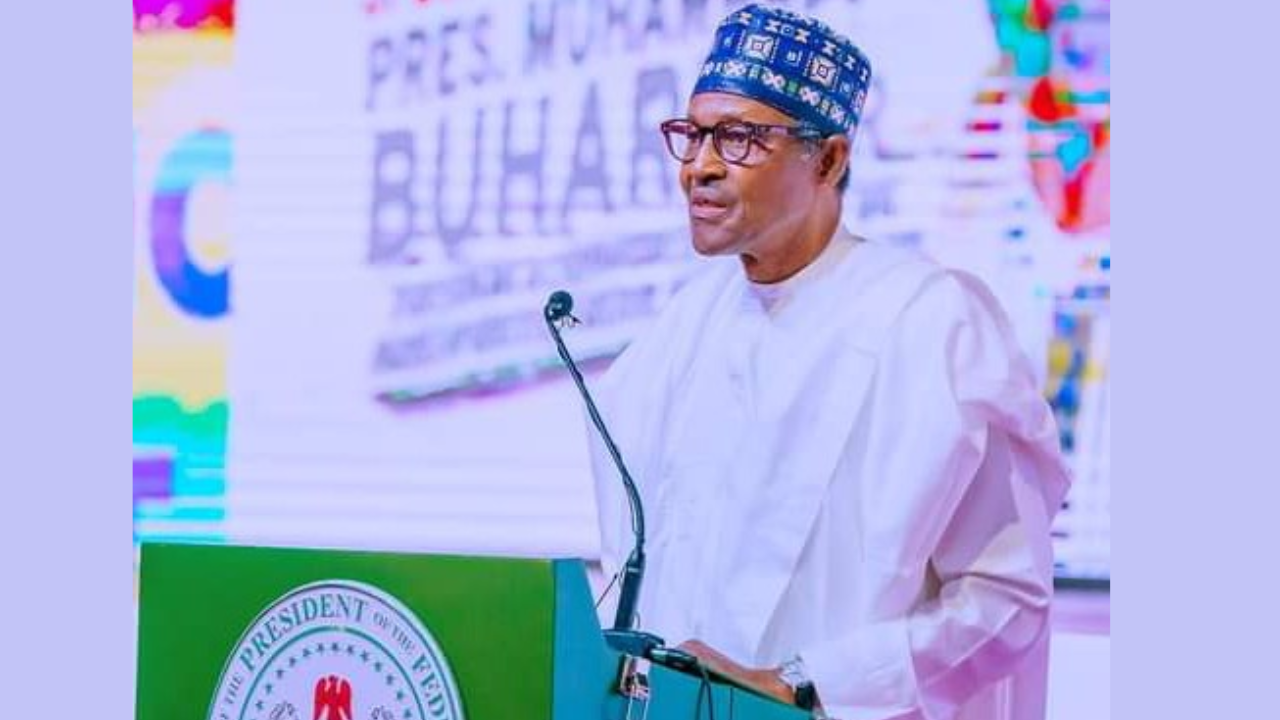
When President Muhammadu Buhari hosted a controlled number of guests at his ninth and final Sallah homage at the Presidential Villa, Abuja he used the opportunity to seek the forgiveness of Nigerians he felt he might have hurt t during his eight year presidency. “I honestly consider myself very lucky; I was made a governor, minister of petroleum, head of state in uniform, then after three attempts, God, through technology and PVC, I became President. I think God has given me an incredible opportunity to serve as your President. And I thank God for that”, the President said appreciatively. Continuing in the same line of divine attribution and injunction, he added: “So, please, whoever feels I have done wrong to them, we are all humans. There is no doubt I hurt some people, and I wish you will pardon me. And those that think that I have hurt them so much, please pardon me.”
Nigerians reacted differently to this apparent public show of contrition by the retired General. Many took the opportunity of the apology to evaluate his eight-year rule and scored him an embarrassing low. Veteran Nigerian singer Charlie Boy appeared to capture the feelings of most of the critics of his apology: “Dear, General Buhari, apology not accepted! At least, by me. Abeg abeg, stop forming…Many will agree with the fact that Nigeria in the last eight years has been intentionally and deliberately mismanaged under your watch and the APC cabals with impunity and intensity,” the controversial singer, who is also known as ‘Area Father’, wrote.
Buhari was not alone in profusely apologizing to Nigerians. Governors Darius Dickson Ishaku of Taraba State, Abdullahi Ganduje of Kano State and Samuel Ortom of Benue State, all vacating their respective government houses on 29 May 2023 after an eight year tenure – apologized to the citizens and residents of their respective states.
But Nigeria’s political leaders are not the only ones who have deemed it necessary to offer public apologies. On 18 January 1992 for instance Japanese Prime Minister Kiichi Miyazawa publicly apologized for Japan’s use of “comfort women” during World War II. In December 1992 Australian Prime Minister Paul Keating publicly acknowledged for the wrongs done to Aborigines and sought forgiveness. Pope John Paul II apologized on 9 August 1993 for Catholic involvement with the African slave trade. On 29 August 1993 South African President F.W. de Klerk apologized for apartheid. On 31 August 1993 Nelson Mandela apologized for atrocities allegedly committed by the African National Congress against suspected enemies. Of course there are also leaders who have stubbornly refused to apologize even for obvious errors of judgments
But what do we make of public apologies by leaders?
Barbara Kellerman, in an article in Harvard Business Review of April 2006 entitled, ‘When Should a Leader Apologize—and When Not?’ argued that apologies are a tactic leaders now frequently use “in an attempt to put behind them, at a minimal cost, the errors of their ways.” She noted that public apologies by leaders are not without risks. As she puts it:
“For leaders to apologize publicly is therefore a high-stakes move: for themselves, for their followers, and for the organizations they represent. Refusal to apologize can be smart, or it can be suicidal. Conversely, readiness to apologize can be seen as a sign of strong character or as a sign of weakness. A successful apology can turn enmity into personal and organizational triumph while an apology that is too little, too late, or too transparently tactical can bring on individual and institutional ruin.”
Kellerman identified four possible reasons why a leader would endure the discomfort and assume the risk of offering a public apology: One, is that it could serve an individual purpose. Here the leader senses that he/she made a mistake or committed a wrongdoing and publicly apologizes to encourage the followers to forgive and forget. Two, is the institutional purpose where one or more persons in a group to which the leader belongs made a mistake or committed a wrongdoing and the leader publicly apologizes to restore the group’s internal cohesion and external reputation. Three, is an intergroup purpose where one or more persons in a group to which the leader belongs made a mistake or committed a wrongdoing that inflicted harm on one or more persons outside the group and the leader publicly apologizes to repair relations with injured parties. Four, is a moral purpose where the leader experiences genuine remorse for a mistake made or a wrongdoing committed either individually or institutionally and both apologizes and offers restitution.
Kellerman argues that the first three purposes are primarily strategic and rooted in self-interest while the last purpose – the moral purpose – is primarily authentic:
The major problem with Kellerman’s typologies however is that we will never know the real motivation for a leader’s decision to offer public apology. For Buhari, we can argue that probably he apologized for all of the above grounds – though he offered no restitution to those injured. I will also argue that those who rejected his apologies miss the point because public apologies by leaders are like rhetorical questions: they do not require the acceptance or non-acceptance of the apologies by those addressed.
They are essentially a therapeutic exercise by the leader offering the apology.
Buhari probably offered his apologies because he knew there was no way he could have met all the reasonable and unreasonable expectations of Nigerians during his tenure. Leadership often involves taking hard decisions and for every tough decision taken, there are people who will be hurt by it.
In our clime, it is easier for political leaders to apologize when they want to say good bye – like someone terminally ill who wants to make peace with everyone before meeting his maker. Buhari has repeatedly said he is tired and will want to be as far away as possible from Abuja. He wants to go and rest and probably needs the apology as a closure to his political career. .
How will history remember Buhari? It is not certain that Buhari cares much about how history will remember him. However, even by the law of unintended consequence, every leader must have left something good and something not so noble behind. For Buhari, despite his crass nepotism, mismanagement of the country’s diversity and saddling the country with huge debts, he has done reasonably well in the provision of infrastructure and in using personal diplomacy to secure high profile roles in leading international organisations for some Nigerians. His achievements or lack of them however will be amplified by the performance (or lack of performance) of the incoming government. If our history – in which the past is usually rosier than then present – is anything to go by, then it is only a matter of time before Buhari, despite the current generalized misgivings against his government, also joins the pantheon of our past leaders we often like to dress in borrowed garments.
We’ve got the edge. Get real-time reports, breaking scoops, and exclusive angles delivered straight to your phone. Don’t settle for stale news. Join LEADERSHIP NEWS on WhatsApp for 24/7 updates →
Join Our WhatsApp Channel