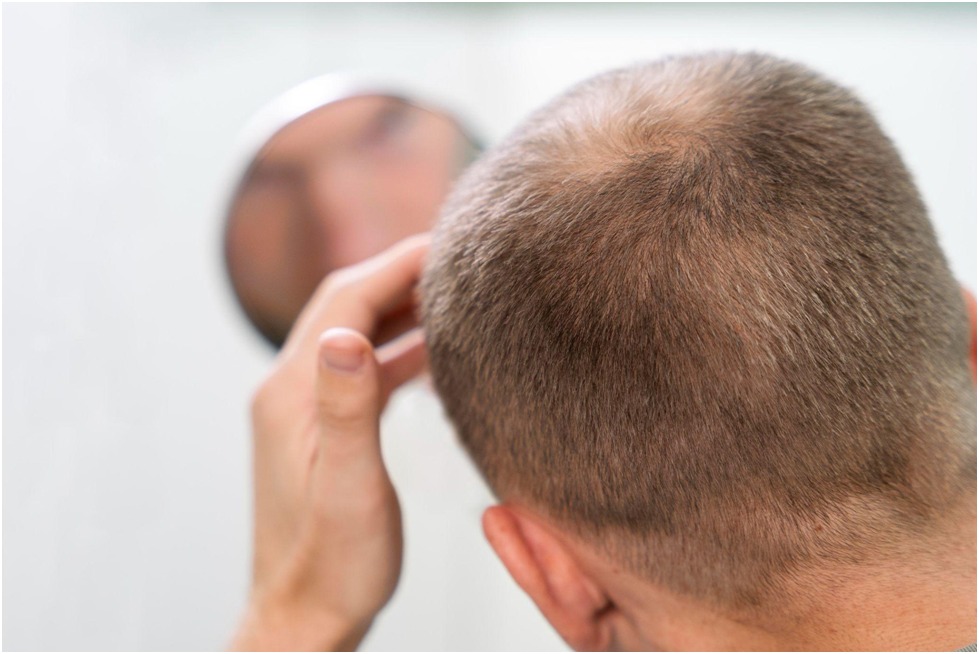
Walk into any dermatologist’s clinic in India and ask about the most common reason people come in for hair loss. The answer, almost every time, is the same — a gradual thinning that creeps up over months or years until one day it becomes impossible to ignore. This condition is not rare, not mysterious, and not random. It has a name, a clear mechanism, and thankfully, a growing body of knowledge around how to manage it.
What Is Androgenetic Alopecia?
Androgenetic Alopecia is the medical term for pattern hair loss — the kind that follows a predictable path depending on whether you’re male or female. In men, it usually starts at the temples or crown. In women, it shows up as widening of the central parting rather than a receding hairline. It is estimated to affect roughly 50–80% of men and around 40% of women at some point in their lives. In India, where both genetic predisposition and lifestyle stressors are high, these numbers are significant.
The word “androgenetic” itself gives away the two key factors at play: androgens (hormones) and genetics (your inherited blueprint). Neither of these is something you chose, which is why people who eat well, sleep enough, and take care of themselves can still experience this type of hair loss.
How DHT Damages Hair Follicles
The primary hormonal driver here is dihydrotestosterone, commonly known as DHT. It is a derivative of testosterone and is present in both men and women, just in different amounts. In people who are genetically sensitive to DHT, this hormone binds to receptors in the hair follicles on the scalp and essentially shrinks them over time — a process called follicular miniaturization.
What this means practically is that each hair growth cycle produces thinner, shorter, lighter hairs than before. Eventually, the follicle may stop producing visible hair altogether. The critical thing to understand is that this process is slow and progressive. It does not happen overnight. The follicle is not dead immediately — it is weakening gradually, which also means there is a window of opportunity to intervene.
Why Genetics Alone Doesn’t Tell the Whole Story
If one of your parents had significant hair loss, your chances are higher — that part is well understood. But genetics sets a predisposition, not a certainty. What often triggers the expression of this genetic tendency is a combination of factors:
- Chronic stress, which increases circulating cortisol and can elevate androgen levels
- Poor nutrition, particularly deficiencies in iron, zinc, Vitamin D, and protein
- Hormonal imbalances such as thyroid dysfunction or PCOS in women
- Scalp health — inflammation, dandruff, or excess sebum can accelerate follicle damage
- Lifestyle factors like poor sleep and lack of physical activity
This is why two siblings with the same family history can have very different hair outcomes. The genes load the gun, but the environment often pulls the trigger.
How Androgenetic Alopecia Is Diagnosed
A lot of people assume hair loss is obvious to diagnose. In reality, there are over 30 known causes of hair loss, and they can look similar on the surface. Pattern hair loss is specifically identified based on the distribution of thinning, a scalp examination, and sometimes a dermatoscope to look at follicular density.
Blood tests may be ordered to rule out contributing factors like thyroid issues, iron deficiency, or hormonal irregularities. This is important because treating a hormone-driven condition without addressing an underlying deficiency often gives partial or disappointing results.
What Treatment Actually Looks Like
Since androgenetic alopecia is a multi-root cause condition, treatment usually works best when it addresses more than just the scalp surface. Clinically validated options include topical minoxidil, oral DHT blockers, nutritional supplementation, and in some cases, PRP therapy. The catch is that there is no one-size-fits-all protocol. What helps a 28-year-old man with early thinning may not be appropriate for a 40-year-old woman with hormonal imbalance driving her hair loss.
Brands like Traya have built their approach around this principle — combining internal (nutrition, hormonal support) and external (scalp health, topical care) solutions based on individual diagnosis. Exploring Traya hair products gives you a sense of how that kind of layered approach is structured in practice.
Final Thoughts
Androgenetic alopecia is common, but common does not have to mean inevitable or untreatable. The most important shift is moving away from panic-buying shampoos and toward actually understanding what is happening inside your follicles and why. Hair loss that has a root cause — even a hormonal or genetic one — can often be slowed, managed, and in some cases partially reversed when approached systematically and early enough. That understanding is where real progress begins.
We’ve got the edge. Get real-time reports, breaking scoops, and exclusive angles delivered straight to your phone. Don’t settle for stale news. Join LEADERSHIP NEWS on WhatsApp for 24/7 updates →
Join Our WhatsApp Channel