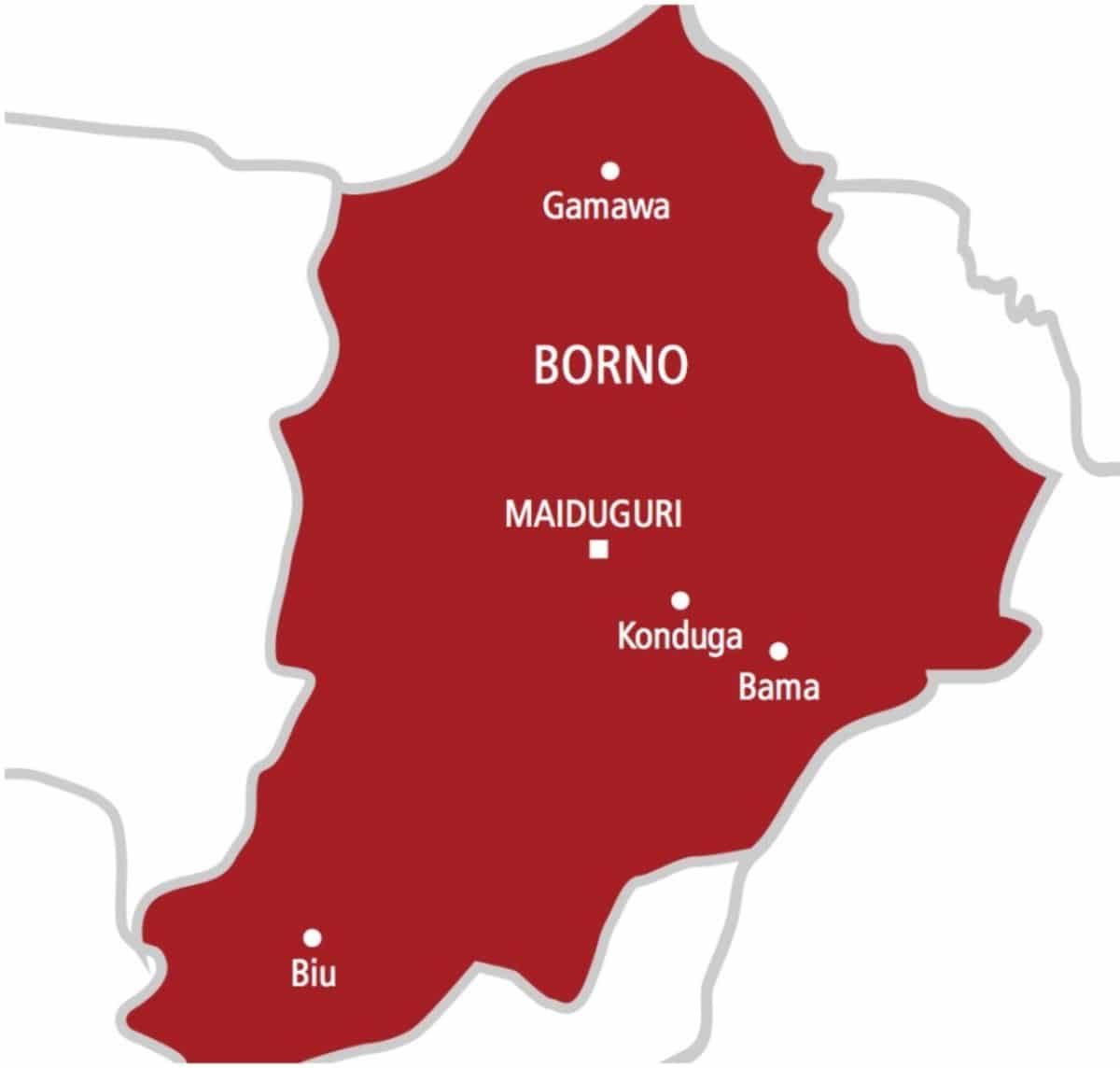
Last week I joined the team travelling to Borno for a presidential visit. President Bola Tinubu was inaugurating projects by Governor Babagana Zulum and attending the wedding of Sadeeq Sheriff, son of former Governor Ali Modu Sheriff.
The night before departure, we got the news—flights to Maiduguri were fully booked. We’d have to go by road. I nearly pulled out. Earlier that day I’d read a report listing Nigeria’s most dangerous roads, and the Damaturu-Maiduguri stretch made the top five. I asked someone if we’d be taking that route. He said yes.
The only long road trip I’d done was Abuja to Akwa Ibom, years back when insecurity wasn’t this bad. But Maiduguri? Different kettle of fish entirely.
Thursday morning we set off. By late evening we hit Damaturu, and they said we couldn’t proceed—the road gets blocked at night. We’d have to sleep over and continue at dawn.
One thing struck me hard on that journey from Bauchi to Damaturu: the roads were good. Surprisingly good. And the vast stretches of land on either side—empty, fertile, endless—made you wonder what business Nigeria has being poor. You also get a sense of how massive this country really is. Space we’re not using. Potential we’re not tapping.
The next morning we took the infamous Damaturu-Maiduguri road.
We passed through Mainok, Benisheik, and Konduga. Some of the villages looked like scenes from Gaza—deserted, battle-scarred, eerie. Multiple checkpoints. Military bases perched along the road, soldiers battle-ready. Sad to see how terrorism has turned Borno and Yobe into war zones. And here’s the tragic part: they may never fully recover.
On Saturday President Tinubu commissioned the international wing of the Muhammadu Buhari Airport, a new VIP extension, electric vehicles, intra-state buses, tricycles, and three model schools—primary, junior secondary, and senior secondary.
Standing inside those schools, I was genuinely amazed. These buildings are finer than most private schools in Abuja, Lagos, or any other major Nigerian city. Spacious classrooms. Proper lighting. Modern facilities. Governor Zulum deserves serious commendation for this.
The President also stood in as father of the groom at Sadeeq Sheriff’s wedding, following Kanuri custom. Governor Zulum acted as father of the bride. Seven governors attended, alongside senators and ministers. The Shehu of Borno hosted the ceremony at Maiduguri Central Mosque. By 3:25 pm, the President departed for Bauchi.
But here’s what I kept thinking as we drove back: how does a state ravaged by over a decade of insurgency still manage to build world-class schools while states with zero conflict can’t even paint their existing classrooms?
How is it that Borno—ground zero for Boko Haram terrorism—now has model schools that put Abuja’s public schools to shame? The answer is simple: leadership.
Governor Zulum has prioritised education and infrastructure despite operating in a war zone. He’s not waiting for federal allocations to magically multiply. He’s not blaming his predecessor for 15 minutes at every event. He’s governing.
Compare that to states with zero insecurity, full federal allocations, and governors who can’t fix one decent school in four years. States where teachers haven’t been paid in months. States where school roofs leak and children sit on broken furniture. The contrast is infuriating.
That Bauchi-Damaturu stretch also bothered me. Good roads. Flat, endless land perfect for mechanised farming. Yet we import rice. We import tomatoes. We import virtually everything we eat. Nigeria has 79 million hectares of arable land. We’re using less than 40%. Meanwhile, we have 133 million people living in multidimensional poverty (National Bureau of Statistics, 2022). The numbers don’t add up.
The insecurity argument only goes so far. Yes, Borno and Yobe have been terrorised. Yes, farmers have been killed and displaced. But what’s the excuse for the 30 other states with relative peace and zero productivity? Why are we not converting that vast northern landmass into an agricultural powerhouse?
Why are governors in peaceful states not replicating what Zulum is doing with education?
Let’s be clear: Zulum isn’t governing paradise. Borno still has an active insurgency. Suicide bombings still happen. Entire communities remain displaced. IDPs are living in camps. The state is literally rebuilding from rubble.
Yet he’s constructing model schools that rival anything in Abuja. What does that say about governors in states with fewer existential threats and comparable or higher federal allocations? It says they’re not serious. It says leadership matters more than excuses. It says the problem has never been money—it’s priorities.
There was something symbolic about the President standing in as father of the groom at that wedding. Kanuri culture demands it, but it also sent a message: despite the war, despite the losses, life goes on. Ceremonies happen. Communities rebuild. Hope persists. But hope without execution is just propaganda.
Borno is rebuilding because Governor Zulum is executing. Other states are stagnating because their governors are posturing. And that brings me back to those deserted villages along the Damaturu-Maiduguri road. I said earlier that Borno and Yobe may never fully recover. Let me clarify: they may never return to what they were before Boko Haram. Too much has been lost. Too many people were killed. Too many towns erased.
But recovery doesn’t mean returning to the past. It means building something new—and arguably better. That’s what Zulum is attempting. New schools. New infrastructure. New economic expansion. The real tragedy would be if, ten years from now, states that suffered zero terrorism are still worse off than Borno because their governors spent a decade making excuses while Zulum spent a decade making progress.
Insecurity is not an excuse for underperformance everywhere else. If Borno can build model schools under active insurgency, what’s stopping Enugu, Zamfara, Anambra, Ekiti, Osun, or Ondo from doing the same?
Voters need to start rewarding performance, not party loyalty or ethnic solidarity. Zulum’s re-election in 2023 wasn’t a gift—it was earned. More governors should be forced to earn their seats the same way.
As we drove back through those checkpoints and empty villages, I kept thinking: this is the Nigeria we don’t talk about enough. Not the one on Twitter where everyone’s a governance expert. Not the one in Abuja where ministers give speeches about “intervention programmes.”
The Nigeria where soldiers sleep in bunkers along highways. Where school buildings rise in towns that were once Boko Haram strongholds. Where a governor refuses to use war as an alibi for failure. That’s the Nigeria that should shame the rest of us into demanding better from leaders who have no excuse for doing less.
If Zulum can build world-class schools in Maiduguri, why can’t your governor build a decent primary school in your local government? Ask him. Loudly. Repeatedly. Because if we don’t, we’ll keep celebrating mediocrity while calling it democracy.
We’ve got the edge. Get real-time reports, breaking scoops, and exclusive angles delivered straight to your phone. Don’t settle for stale news. Join LEADERSHIP NEWS on WhatsApp for 24/7 updates →
Join Our WhatsApp Channel