
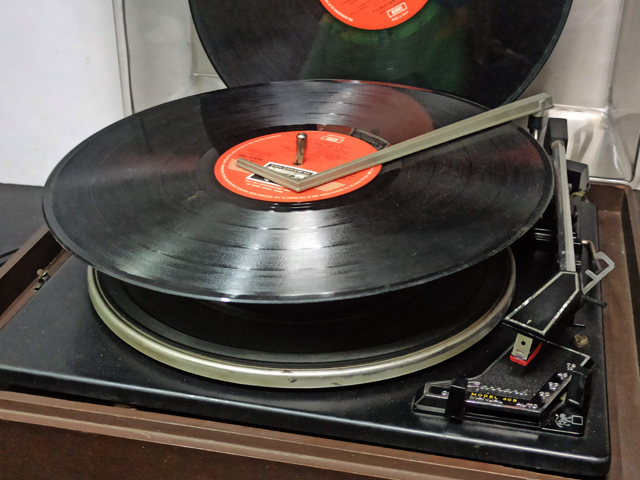
For decades, the turntable changer—an automatic record player designed to stack and play multiple vinyl discs was a prized centrepiece in living rooms and music lounges.
In rural communities without electricity, families spent a fortune buying cell batteries to power their turntable charges. At weekends, especially on Sundays, when most people were at home, the sitting rooms of device owners were mini-celebrations as friends gathered to listen and dance to lyrics oozing from the device.
Over time, it became a status symbol and gradually faded out as technology changed.
Now, it has undergone a quiet but remarkable transformation in the music culture.
In the 1960s through the 1980s, the device symbolised technological convenience, allowing listeners to enjoy hours of uninterrupted music without manually flipping records. However, the rise of cassette players, compact discs and later digital streaming gradually pushed the turntable changer into near obscurity.
Today, the narrative has changed. Rather than disappearing entirely, the turntable changer is being rediscovered as part of a broader revival of analogue sound. Audiophiles and collectors now value its mechanical precision, warm sound quality and nostalgic appeal. Vintage electronics markets and repair workshops report increased demand for refurbished units, especially among younger music enthusiasts seeking authenticity in listening experiences.
Manufacturers, too, are responding to this renewed interest. Modern versions now combine classic design with updated features such as Bluetooth connectivity and improved tonearm engineering, blending retro aesthetics with contemporary convenience.
The changing phase of the turntable changer, industry players say, reflects a wider cultural shift: a growing appreciation for tactile media in an age dominated by instant digital access. For many users, the ritual of stacking records and watching the mechanism drop each disc offers a sense of engagement absent in algorithm-driven playlists.
While streaming remains the dominant mode of music consumption, the evolving relevance of the turntable changer suggests that older technologies are not merely relics, but adaptive artefacts. In an era of fast-changing gadgets, its quiet comeback underscores a timeless truth—innovation does not always replace the past; sometimes, it reinvents it.
We’ve got the edge. Get real-time reports, breaking scoops, and exclusive angles delivered straight to your phone. Don’t settle for stale news. Join LEADERSHIP NEWS on WhatsApp for 24/7 updates →
Join Our WhatsApp Channel