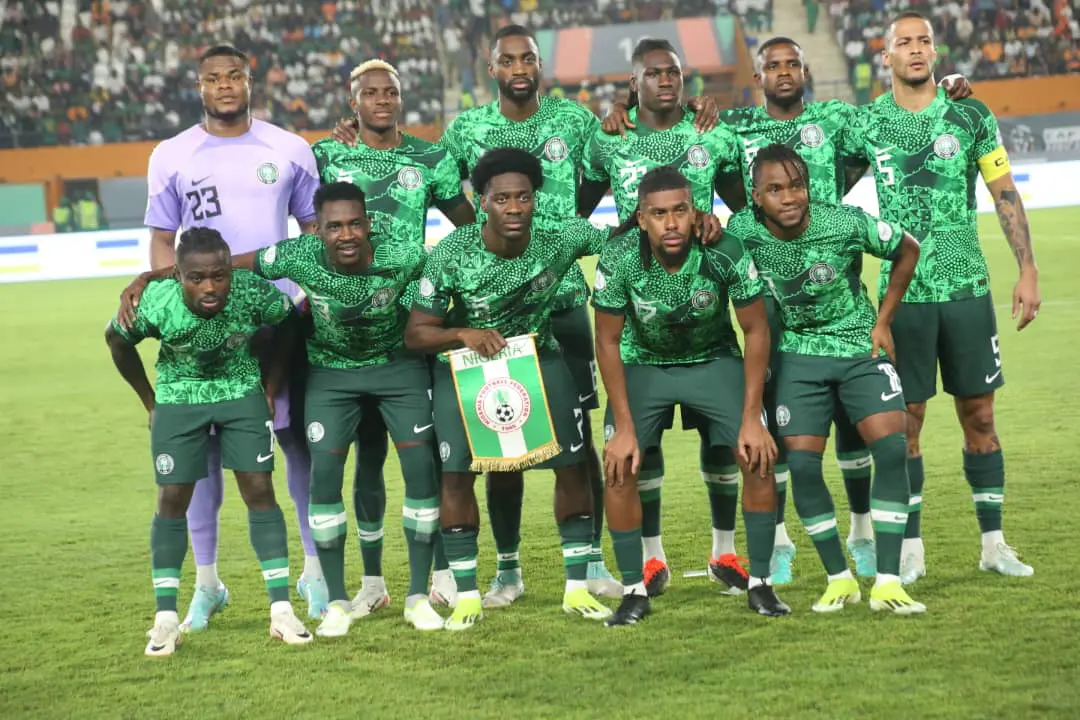
As the world gears up for the 2026 FIFA World Cup to be hosted across the United States, Mexico, and Canada, the anticipation among football fans is palpable. In Nigeria, the excitement surrounds the Super Eagles, who have kept their dreams of qualification alive following a resounding 4-0 victory over Benin, marking an important stepping stone towards the Mundial.
However, amidst the thrill of competition, there lurks a significant concern that could overshadow Nigeria’s journey to the World Cup: the alarming threat issued by the U.S. President Donald Trump regarding violence against the Nigerian state in response to anti-Christian violence.
The connection between sports and diplomacy has long been acknowledged; international sporting events like the World Cup serve as a stage where cultural exchanges flourish, and international relationships are forged. The essence of sports lies in its capacity to unite individuals across borders, fostering an atmosphere that encourages understanding and shared experiences. Yet, Trump’s incendiary rhetoric poses a stark threat to this spirit, raising fears for the safety of players, officials, and supporters alike.
In a recent social media post, Trump declared that the United States would cease all assistance to Nigeria if the government did not take action against the violence directed at Christians. He purportedly instructed the reorganised Department of War to “prepare for possible action” — a statement that has incited both fear and confusion about the implications this may hold for the Super Eagles’ participation in the World Cup.
When approached for insight on the implications of Trump’s pronouncement for Nigeria’s national football team, Dr Muhammed Sanusi, general-secretary of the Nigeria Football Federation (NFF), declined to comment on the diplomatic aspects of the situation. He maintained the federation’s focus on ensuring Nigeria secures its World Cup ticket through the playoffs.
“This is a diplomatic issue, and I cannot comment on it,” Sanusi said. “But as for our preparation for the playoffs, that has been ongoing since we qualified, and we are fully prepared to perform at our best.”
Dissenting voices
Yet, dissenting voices have emerged from various quarters, including retired military personnel who see Trump’s threats as very serious, likening them to political posturing that carries real implications for the Super Eagles’ prospects in the competition. Emmanuel, a retired officer, explained, “Such a statement raises legitimate fears about the safety of Nigerian players, officials, and fans expected to travel to the United States.”
He elaborates further, emphasising that while threats of aggression from a significant global power may come across as mere rhetoric, they can trigger panic and unsettled diplomatic relationships. “This affects not just the morale of the Super Eagles but also complicates travel arrangements, visa approvals, and fan attendance. If the atmosphere is perceived as hostile, players might find it difficult to focus on their game.”
The concerns surrounding the safety of the Super Eagles and their supporters are not unfounded. History has shown that international sporting events can become stages for political messaging, where fragile diplomatic relations can drastically shift in a short timeframe. Nigeria’s government must respond with poise, aiming to ensure the safety of its representatives while navigating the complexities of international diplomacy.
Diplomatic challenges
According to Emmanuel, addressing these diplomatic challenges head-on is crucial. He asserts that Nigeria must advocate for firm assurances of safety from U.S. authorities. Meanwhile, enhancing local security coordination for the national team and its supporters should be a priority. “Above all, our focus should be on allowing the Super Eagles to participate without fear or distraction,” he said. “Sports should unite nations, not divide them.”
Play offs hurdle
As Nigeria’s national team builds momentum towards the World Cup, the victory against Benin—courtesy of Victor Osimhen’s impressive hat-trick and Frank Onyeka’s late strike—has instilled a sense of hope. This triumph not only secured a playoff spot but also reignited the nation’s passion for football, providing a glimpse of what could be possible at the World Cup.
Despite the uncertainty that shadows the upcoming fixtures, Nigeria is positioned as one of the strongest contenders among the four best runners-up on the continent. If successful in the African playoffs, they will advance to the inter-confederation play-offs scheduled for March 2026, where they could join teams from other regions vying for the final World Cup slots.
The playoff system will host six teams from five different confederations, including teams from CAF, AFC, CONMEBOL, OFC, and two from CONCACAF. Among the participants will be nations like Bolivia from South America, New Caledonia representing Oceania, and either Iraq or the United Arab Emirates from Asia, alongside the two CONCACAF representatives due to be confirmed in November.
Divided attention
While on-field performances remain paramount, the implications of Trump’s rhetoric looms large, threatening to divert focus from sport to security. The raised stakes could result in increased scrutiny on the Super Eagles, accumulating pressure that they may not be prepared to shoulder. Moreover, it risks muddying the waters of national pride and sportsmanship, qualities deeply embedded in the fabric of football.
Competing in an environment shadowed by threats can affect not only the team’s performance but also the dynamic of international relations. The essence of the World Cup—to inspire unity and promote harmony—could be undermined by geopolitical concerns that overshadow the festive spirit of the tournament. Emmanuel’s cautious approach to this situation underscores the need for measured diplomacy. “Diplomacy must be the first line of defence. We need to engage with U.S. authorities quietly yet firmly to ensure our players can compete at the World Cup without compromising their safety or our national integrity.”
Beyond football pitch
The intersection of sport and diplomatic relations poses a unique challenge that could have lasting effects on the players, the fans, and the broader Nigerian society. As the interplay between football and international relations unfolds, all eyes will be on how both the Nigerian government and the football federation navigate these treacherous waters. Their approach will be critical not only to the Super Eagles’ chances of successfully qualifying for the tournament but also in ensuring that the spirit of sportsmanship is preserved in the face of external pressures.
Ultimately, it is essential for Nigeria to maintain a narrative that emphasizes unity and resilience, reinforcing that sports can indeed bridge divides and foster friendship, even amid threatening rhetoric. The Super Eagles represent more than just a football team; they symbolize hope, pride, and the potential for positive engagement on the global stage. Their journey towards the World Cup, set against the backdrop of geopolitical tensions, will serve as a testament to the unyielding spirit of Nigerian football and its fans.
As the nation awaits the upcoming playoff matches with bated breath, supporters and stakeholders alike will be hoping for triumph not just in terms of qualification, but in the broader narrative of national representation and security.
The Super Eagles have the opportunity to inspire, uplift, and unite; let us wish them an unwavering path forward filled with success, safety, and the passion that only football can ignite.
We’ve got the edge. Get real-time reports, breaking scoops, and exclusive angles delivered straight to your phone. Don’t settle for stale news. Join LEADERSHIP NEWS on WhatsApp for 24/7 updates →
Join Our WhatsApp Channel