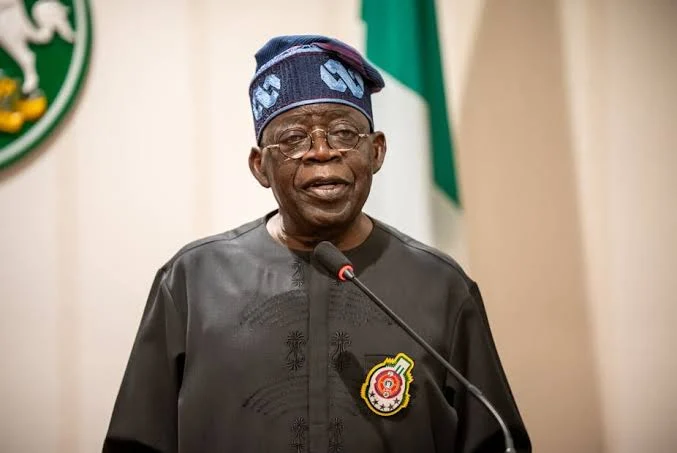
President Bola Tinubu on Friday hosted leaders of the Newspaper Proprietors’ Association of Nigeria, the Nigerian Guild of Editors, and the Broadcasting Organisations of Nigeria at the Presidential Villa for an interfaith breaking of the Ramadan and Lenten fast.
What should have been a routine goodwill dinner turned into something more interesting when the President urged the media to shift its searchlight from the Federal Government to state and local governments. “Don’t bombard me alone; look out to the local government too,” Tinubu told the gathering.
The President makes a valid point. State governors and local government chairmen spend billions of naira annually with little or no scrutiny. The recent Supreme Court judgment that guaranteed direct funding for local governments was a significant reform that should have attracted more media attention than it did. If local government chairmen are now receiving allocations directly, the public has every right to ask: where is the money going? Who is building the roads, equipping the primary healthcare centres, and paying the teachers? These are legitimate questions that the media should be asking aggressively.
However, it would be inaccurate to suggest that the media has been ignoring the sub-nationals. From the Bayelsa billions scandal to the recurring salary sagas in states like Ondo, Kogi, and Benue over the years, Nigerian journalists have covered state government failings extensively.
The bigger challenge is that state governors have perfected the art of strangling local media through advertising patronage and intimidation. A newspaper editor in Maiduguri or Ebonyi who publishes a damaging story about his governor risks losing the only advertising revenue keeping his outfit alive. If the President genuinely wants more scrutiny of sub-national governments, the conversation should also include how to create an environment where journalists can hold all tiers of government accountable without fear of economic reprisal.
That said, one cannot ignore the timing of this appeal. Inflation is still a concern. Petrol prices remain a daily source of discomfort for ordinary Nigerians. The naira, despite some stabilisation, is still far from where it was two years ago. When Nigerians are feeling the pinch of economic reforms, their eyes naturally turn to Aso Rock, not the local government secretariat. The President should understand that the scrutiny comes with the territory. It is not an unfair burden ,it is the price of leadership.
On a more positive note, Tinubu declared that no state government is currently borrowing to pay salaries. If true, that is a measurable improvement from the days when states like Osun, Kogi, and Benue owed workers months of unpaid wages. It is the kind of claim that can be verified, and the media should do exactly that not take it at face value, not dismiss it reflexively, but go state by state and check. That is what accountability journalism looks like.
Credit should be given where it is due, and if this claim holds up, it reflects progress.
Now to the Electoral Act. The President told All Progressive Congress (APC )leaders and members of the Inter-Party Advisory Council that he had “no option” but to sign the amended Electoral Act after the National Assembly passed it with an overwhelming majority. “I signed, the rest is history. We’ll meet at the polls,” Tinubu said.
This is interesting for several reasons. For Tinubu to publicly state that he submitted to the legislature’s will, regardless of his personal reservations, is a commendable display of democratic temperament. In a country where the executive has historically bulldozed the legislature or used pocket vetoes to frustrate inconvenient legislation, a President who says “I respect the majority’s decision” sets a tone worth acknowledging.
Still, the IPAC chairman, Yusuf Dantalle, raised valid concerns about some provisions, the requirement for political parties to submit digital membership registers with National Identification Numbers 21 days before primaries, the abolition of indirect primaries, and the withdrawal of government subventions to political parties. These are not trivial objections. Smaller parties without the financial muscle of the APC or PDP will struggle to comply with digital membership requirements.
And abolishing indirect primaries, while potentially reducing delegate buying, could also shut out grassroots politicians who lack the resources for direct primary campaigns in large states. These concerns deserve serious attention.
The real test of this Electoral Act will not be in Abuja debates and cocktail commentary. It will be in the field in Kano and Rivers and Borno and Lagos when candidates, INEC officials, and voters collide in 2027.
Every Electoral Act since 2010 has promised to sanitise our elections, and every election cycle has found creative ways around the rules. One can only hope this version has enough teeth to make a difference.
On security, Tinubu struck a defiant note at the interfaith breakfast with religious and traditional leaders. “Nigeria will never surrender. We are not discouraged. We are going to win and win well,” the President declared. He also described terrorists as “desperate” because they are being “barraged and defeated.”
No doubt, a Commander-in-Chief must project strength and confidence. That is part of the job description. And to be fair, there have been some gains in the security space the military has recorded successes in parts of the Northeast and some bandit enclaves have been disrupted. But the families in Borno, Zamfara, Katsina, and parts of Niger State who still live in fear would appreciate more than rhetoric.
How many displaced persons have returned home this year? What percentage of previously ungovernable territory has been reclaimed? These are the metrics that will validate the President’s confidence. Defiant words are necessary but they must be matched by measurable outcomes on the ground.
Tinubu also stated that his administration has “saved Nigeria from bankruptcy” and that “the economy has turned the corner.” There is some basis for this claim.
The removal of fuel subsidy, however painful, was a decision most economists agreed was long overdue. The unification of exchange rates, however chaotic the transition, was necessary. The President deserves credit for making decisions that his predecessors ducked. But turning the corner is not the same as arriving at the destination. If inflation is still high and food prices are still climbing, the woman in Wuse market who used to buy a basket of tomatoes for two thousand naira and now pays five times that amount will need more than presidential assurances.
The media leaders at Friday’s dinner also raised a critical issue that deserves more attention ,the existential threat posed by global technology platforms to Nigerian media. Google and Meta extract billions in advertising revenue from the Nigerian market while Nigerian newspapers struggle to pay reporters. Frank Aigbogun of BusinessDay appealed for government intervention on tariffs for newsprint and ink, and for fair compensation frameworks with big tech companies. This is not a parochial industry concern. A country without a viable independent press is a country without accountability. If Nigerian newspapers die, who holds the governors and local government chairmen that Tinubu wants scrutinised?
The Information Minister, Mohammed Idris, assured the gathering that regulatory agencies are engaging Meta and Google. Countries like Australia and Canada have already passed legislation requiring tech platforms to pay for news content. Nigeria should study those models and act decisively. Engagement without legislation is just conversation.
So where does all of this leave us? Tinubu is right that accountability should not stop at Aso Rock. He is right that local governments must be scrutinised now that they receive direct funding. But the presidency sets the tone for the nation. When the price of petrol changes, when the naira moves, when security deteriorates Nigerians look to the Commander-in-Chief, not their local government chairman. That is not media bias. That is the reality of power.
The President should welcome the scrutiny and wear it as a badge of honour. And the media, for its part, should take Tinubu up on his challenge. Cover the local governments. Investigate the state governors. But never take your eyes off the centre. That is where the power sits. That is where the buck stops.
We’ve got the edge. Get real-time reports, breaking scoops, and exclusive angles delivered straight to your phone. Don’t settle for stale news. Join LEADERSHIP NEWS on WhatsApp for 24/7 updates →
Join Our WhatsApp Channel