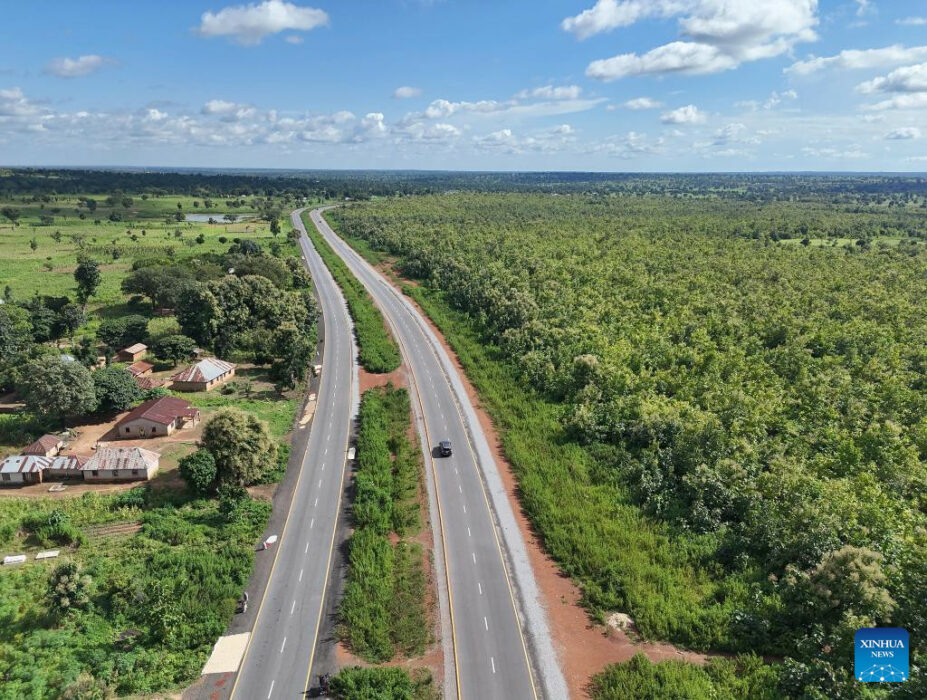
The federal government has approved the extension of the Bodo–Bonny Road by 8.7 kilometres up to the East-West Road, reinforcing its commitment to expanding strategic infrastructure and improving connectivity in the Niger Delta region.
President Bola Tinubu also approved the extension of Akwanga -Jos-Gombe -Maiduguri road length.
Minister of Works, David Umahi, disclosed this during a press briefing at the Ministry of Works headquarters in Abuja on Thursday.
He described the approval as part of President Tinubu’s broader directive to accelerate critical road projects across the country.
He said, “Yesterday, the president graciously directed that the Ministry of Works should extend the Bodo–Bonny Road by 8.7 kilometres using reinforced concrete up to the East–West Road.”
He described the decision as a major boost to economic activities in Rivers State and the South-South region, noting that the extension would enhance access to coastal communities and strengthen regional integration.
Umahi said the extension reflects the administration’s resolve to sustain inherited projects and expand their scope where necessary.
“The president did not stop any inherited project. He directed the continuation of all projects and also approved extensions where they are critical to national development,” he said.
The minister explained that the Tinubu administration has prioritised durable infrastructure, stressing that reinforced concrete technology has been adopted to ensure longevity and value for money.
“The roads we are building now will last between 50 and 100 years. This is very important because Nigerians deserve infrastructure that will stand the test of time,” he said.
The Minister also said the President approved the continuation of Akwanga-Jos-Gombe Road project to Biu-Maiduguri in Borno State.
He said, “another fantastic news, when we talk about the legacy projects of the President Tinubu, it is the Akwanga to Jos to Borno State. That was what the President gave to me, that route is supposed to be Akwanga, Jos, Gombe, to Maiduguri.
“And so the President has thought that not only that, you know, the situation should be corrected for what it is, especially for the locals, but should also procure the project for the work starting from Akwanga, another work should start from Maiduguri, going to Gombe, going to Bauchi. And so, I think the President is in a very serious conundrum.”
Umahi also raised concerns over widespread vandalisation of public infrastructure, warning that the destruction of road assets threatens the sustainability of government investments.
He said, “We are facing massive vandalisation of our critical infrastructure across the country. What we are doing to protect our roads is being destroyed by people.”
He cited examples of damaged installations, illegal mining activities around bridges, and deliberate obstruction of drainage systems, which he said have contributed to flooding and structural failures in several locations.
“The flooding we witnessed was because underground channels were blocked with refuse. People dump their daily waste inside manholes, and this is one of the reasons for flooding in many places,” Umahi said.
The minister also urged Nigerians to take collective responsibility for protecting public infrastructure.
“This infrastructure belongs to all of us. If we do not protect it, we will continue to repeat repairs, and that is not good for our society,” he said.
Umahi said the ministry was working within available resources to deliver quality projects and ensure transparency in execution.
“We are doing everything possible within the limit of our ability and conscience to ensure value for money in road infrastructure,” he said.
He commended Tinubu for sustaining road projects inherited from previous administrations and expanding their scope despite fiscal constraints.
“The president inherited a very terrible state of roads and bridges, yet he has continued these projects and even extended some of them. That shows commitment to national development,” Umahi said.
The extension of the Bodo–Bonny Road is expected to further strengthen connectivity between coastal communities and major transport corridors, while reinforcing the federal government’s drive to modernise Nigeria’s road infrastructure.
We’ve got the edge. Get real-time reports, breaking scoops, and exclusive angles delivered straight to your phone. Don’t settle for stale news. Join LEADERSHIP NEWS on WhatsApp for 24/7 updates →
Join Our WhatsApp Channel