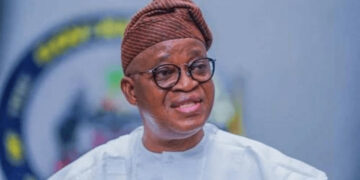
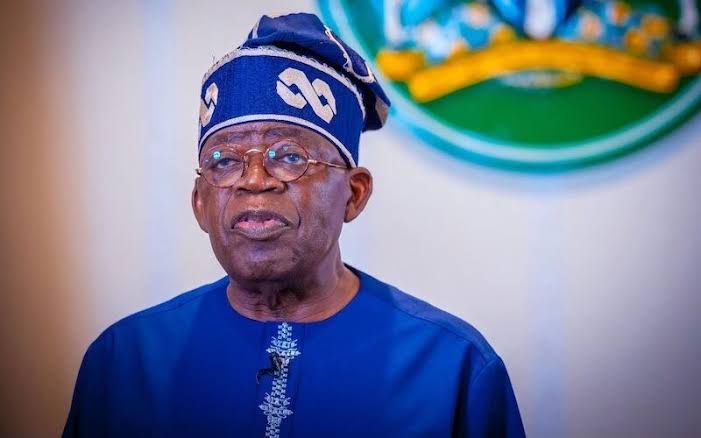
President Bola Ahmed Tinubu, the Central Bank of Nigeria (CBN) and the World Bank have challenged Nigerian banks to deploy the N4.65 trillion fresh capital raised through the recently concluded recapitalisation exercise towards productive investments capable of driving economic growth, creating jobs and transforming the real sector.
The President and other stakeholders spoke at the 19th Annual Banking and Finance Conference of the Chartered Institute of Bankers of Nigeria (CIBN), which opened yesterday in Abuja.
The event was organised under the theme, “Building a Resilient Economy in an Era of Disruptions: Strategic Imperatives for the Banking and Financial Services Industry.”
Represented by the minister of finance and coordinating minister of the economy, Taiwo Oyedele , President Tinubu said the recapitalisation must go beyond strengthening bank balance sheets to increasing capital formation in the real economy.
According to him, Nigeria’s financial system must now shift from financing government to financing growth, with banks playing a more decisive role in funding businesses, manufacturing, agriculture, infrastructure, and micro, small, and medium-sized enterprises (MSMEs).
The President said, “The recently concluded bank recapitalisation must produce more than bigger balance sheets. It must translate into capital formation in the real economy, financing Nigerian businesses as they expand across Africa and pursue our ambition of a trillion-dollar economy.”
“A bigger bank that does not finance a more productive economy is a suboptimal outcome.”
Tinubu said the reforms undertaken by his administration over the past three years were beginning to produce measurable results, citing real GDP growth of 4.43 per cent in the second quarter of 2026, external reserves exceeding $54 billion, and a decline in headline inflation to 15.43 per cent.
He reiterated that the $54 billion reserve position represented Nigeria’s highest level in 18 years, while improvements in the foreign exchange market had restored greater predictability for businesses and strengthened investor confidence.
“Stability has returned, predictability is rising, and prosperity is coming,” the President said, but warned that macroeconomic stability should not be mistaken for economic prosperity.
Stability is the foundation; prosperity is the destination,” he said.
Tinubu also said the next phase of the reform programme was to convert stability into investment, investment into production, production into jobs and economic growth into improved living standards.
He identified five key imperatives for building a resilient financial system which include productive lending, financial inclusion, technology and cybersecurity, long-term capital and trust.
He also urged banks to deepen the use of artificial intelligence, open banking, digital identity and instant payments, while strengthening cybersecurity, data protection and fraud prevention.
Also speaking, World Bank country director for Nigeria, Matthew Verghis, said the banking system was now stronger and safer following the recapitalisation exercise, but urged bank chief executives to redirect capital towards sectors capable of generating large numbers of jobs.
He noted that Nigeria would need millions of new jobs to absorb its rapidly expanding workforce, stressing that the private sector, rather than government, would have to drive employment creation.
“If you are going to take away one piece of my intervention, it will be the word jobs.
“Sustained jobs come from firms that invest, spend and hire, and from a financial sector that finances them,” Verghis said.
The country director also said the World Bank did not consider shortage of capital to be Nigeria’s principal constraint, noting that the country had significant banking, pension and insurance assets, alongside access to a huge pool of global institutional capital, adding that domestic credit to the private sector was only about 13 per cent of GDP, one of the lowest levels among comparable economies, while MSMEs received only about one per cent of available credit and agriculture about six per cent.
“This is where the jobs are. The core observation to me and to the World Bank is credit is bypassing the job creators,” Verghis said.
Verghis also challenged banks to reduce their dependence on government securities and increase lending to productive businesses proposing stronger use of blended finance, guarantees, credit enhancement and risk-sharing facilities to enable development finance institutions and other public-sector funds to mobilise larger volumes of commercial and institutional capital.
Representing CBN Governor Olayemi Cardoso, Deputy Governor in charge of the Financial System Stability Directorate, Philip Ikeazor, said the impact of the ongoing reforms was already evident.
He said the N4.65 trillion raised by banks during the recapitalisation exercise demonstrated renewed confidence in the Nigerian economy, particularly because a significant proportion of the funds came from domestic investors.
“What we have witnessed is an impressive investment by Nigerians. Our people put their money where their confidence is, investing about N4.65 trillion,” Ikeazor said.
He added that the recapitalisation had strengthened banks’ capital bases and provided the financial system with greater capacity to withstand domestic and external shocks.
“We know that no economy thrives without strong and well-capitalised banks. No economy can thrive with weak banks,” he said.
Earlier, the president of the CIBN and chairman of its Governing Council, Dr Dele Alabi, said the conference was coming at a critical time when global geopolitical tensions, technological disruption, climate risks, cybersecurity threats, and rising costs were placing additional pressure on economies and financial institutions.
He said Nigeria’s banking sector had demonstrated resilience, particularly through the recapitalisation exercise, which resulted in approximately N4.65 trillion in new capital.
Alabi noted that about 72 per cent of the incremental capital was subscribed by domestic investors, describing it as evidence that Nigeria had the capacity to mobilise local capital for economic development.
“That lesson is very clear in the Nigerian capital market, that we have the capacity to build local capital formation in Nigeria,” he said.
However, he warned that macroeconomic improvements would only become meaningful when they translated into better outcomes for households, businesses and MSMEs.
Chairman of the Senate Committee on Banking, Insurance and Other Financial Institutions, Senator Mukhail Adetokunbo Abiru, also called for policy consistency and stronger measures to ensure that the gains from the reforms reached households and businesses.
Abiru said the reforms had begun to produce positive outcomes, including improved GDP performance, stronger investor confidence and a more liquid and transparent foreign exchange market.
“These are strong indications of renewed investor confidence in the Nigerian financial system and the attractiveness of the opportunities emerging from the reforms,” he said.
The Senate President, Senator Godswill Akpabio, represented by Senator Onyeka Peter, said government alone could not build a resilient economy, stressing that the private sector and financial institutions had equally important roles to play.
“It is therefore important that we recognise the critical role of the banking industry in strengthening transparency, accountability and confidence in our economy,” he said.
On his part, the Lagos State Governor, Babajide Sanwo-Olu, represented by the Commissioner for Finance, Abayomi Oluyomi, similarly urged banks to deploy their resources towards productive sectors, saying financial institutions had a central role in converting capital into jobs and economic opportunities.
“When banks finance businesses in agriculture, housing and productive enterprises, they are doing more than expanding their balance sheets. They are helping to create jobs, unlock investment, stimulate economic activity and widen economic opportunity,” he said.
We’ve got the edge. Get real-time reports, breaking scoops, and exclusive angles delivered straight to your phone. Don’t settle for stale news. Join LEADERSHIP NEWS on WhatsApp for 24/7 updates →
Join Our WhatsApp Channel