President Bola Tinubu has urged nations that pledged the $100 billion annual climate finance to honour their commitments and ensure the timely delivery of resources in order to support the adaptation, mitigation of climate related issues particularly for vulnerable developing countries.
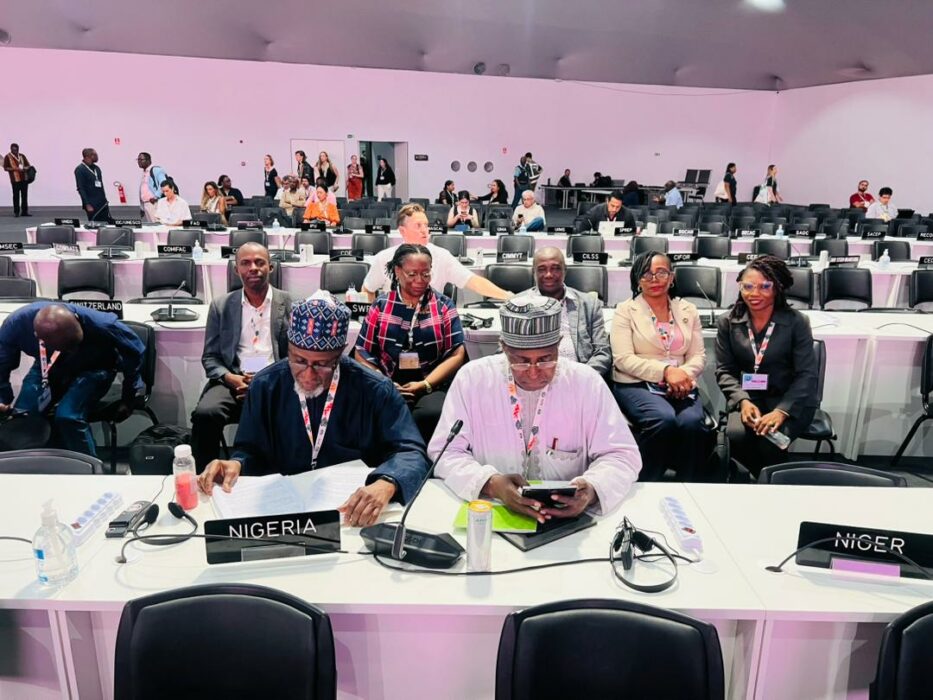
Tinubu made the call at the 30th session of the Conference of the United Nations Framework Convention on Climate Change (UNFCCC COP30) in Belem, Brazil, while outlining Nigeria’s significant accomplishments in its transition towards a resilient as well as low-carbon future.
The Nigerian President, who promised that his country was committed to collaborating with bilateral, multilateral, as well as private partners in order to mobilise resources, share knowledge, and accelerate innovative solutions for a just and sustainable transition, was represented by his minister of environment, Balarabe Abbas Lawal.
While calling for greater access to climate grants and technology transfer to strengthen local innovation and resilience, President Tinubu reiterated that addressing climate change was a shared responsibility. He emphasised that the gathering of COP30 presents yet another opportunity for governments and organisations to collectively strengthen global solidarity, scale up ambition, and translate their commitments into concrete actions that will safeguard the planet.
Tinubu, who decried that Nigeria is among the countries most vulnerable to the adverse impacts of climate change, added that the effects of the phenomenon were evident across all regions of the country.
He, however, noted that Nigeria was implementing decisive and coordinated measures to mitigate the impacts of climate change both domestically and across Africa.
“To confront these challenges, Nigeria is implementing decisive and coordinated measures to mitigate the impacts of climate change both domestically and across Africa. We recognize the critical importance of well-structured climate finance alongside technology transfer and capacity building in attaining sustainable development. We believe these are essential pillars for achieving climate resilience, inclusive growth, and a just transition to a low-carbon future.
“In Nigeria, we have taken decisive steps to move from pledges to practical implementation. This year, Nigeria is the first country in West Africa to submit a comprehensive and enhanced Third Nationally Determined Contribution (NDC 3.0). The NDC 3.0 aligns with our national development priorities which enhance resilience, energy access, adaptation, and emission reduction across key sectors,” he revealed.
While worrying that the arid and semi-arid zones of his country faces desert encroachment, loss of arable land, and declining livelihoods, the President added that there were also rampant cases of erosion and land degradation in the coastal areas.
He lauded that through his country’s National Flood Management and Resilience Programme (NFM-RP), Nigeria was investing in hydraulic infrastructure, river training, shore protection, and desilting works to protect vulnerable communities and restore degraded catchments.
The Nigerian President who further told the global gathering that his government remains steadfast in strengthening data systems and inclusive governance that prioritize women, youth, and vulnerable communities, also revealed that his team is advancing climate resilience in rural and urban areas to protect public health, enhance productivity, and sustain livelihoods.
“We have approved and operationalized the National Carbon Market Framework, designed to ensure integrity, transparency, and national benefit-sharing while positioning Nigeria as a regional hub for high-quality carbon markets. At the same time, we are implementing transformative initiatives to promote sustainable resource management and low-carbon growth.
“The Nigeria Farmers Soil Health Scheme enhances soil productivity; Smart Mining Technologies improve efficiency and land reclamation; while the Nigeria Livestock Growth Acceleration Strategy (NL-GAS) embeds climate resilience, methane reduction, and sustainable livestock practices supported by real-time emissions monitoring through Close Carbon technology,” he added.
We’ve got the edge. Get real-time reports, breaking scoops, and exclusive angles delivered straight to your phone. Don’t settle for stale news. Join LEADERSHIP NEWS on WhatsApp for 24/7 updates →
Join Our WhatsApp Channel