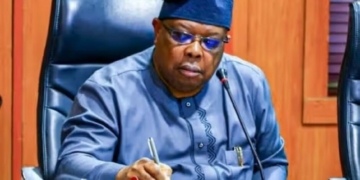
Abuja-based human rights activist and lawyer, Barrister Deji Adeyanju, has criticised President Bola Tinubu over the enforcement of the controversial Tax Reform Laws, describing the move as “an insult to the Nigerian nation and the concept of rule of law.”
Adeyanju made the remark in a post on his verified Facebook page on Thursday, faulting the President’s decision to proceed with the implementation of the Acts from January 1, 2026, despite unresolved controversies surrounding its passage and authenticity.
“For President Tinubu to insist on implementing the disputed Tax Reform Act from today, January 1, despite the controversies and issues of forgery and breaches of the constitutional process, is an insult to the Nigerian nation and the concept of rule of law,”
Adeyanju wrote.
The activist also questioned the legal basis of the President’s reported decision to unilaterally write off the debts of the Nigerian National Petroleum Company (NNPC) Limited, saying such action lacked constitutional backing.
“Where did President Tinubu also get the power to unilaterally write off NNPC debts?” the activist queried.
Adeyanju’s comments came amid growing public and institutional scrutiny over the new Tax Reform Acts, which have faced allegations of discrepancies between the versions passed by the National Assembly and the ones later gazetted by the federal government.
Opposition members and civil society groups have called on the federal government to suspend the implementation until investigations were concluded.
Controversies began to trail the implementation of the new tax laws after a member of the House of Representatives, Abdussamad Dasuki, recently raised concerns about what he described as discrepancies between tax laws passed by the National Assembly and the versions subsequently gazetted and made available to the public.
Dasuki argued that his legislative rights had been breached because the content of the gazetted tax laws did not reflect what lawmakers debated and approved on the floor of the House.
Despite these concerns, President Tinubu directed that the new tax regime take effect from January 1, 2026, arguing that it would expand the country’s revenue base and simplify Nigeria’s complex tax structure.
LEADERSHIP reports that Tinubu signed the four tax reform bills into law in 2025, marking what the government has described as the most significant overhaul of the country’s tax system in decades.
The tax reform laws, which faced stiff opposition from federal lawmakers from the northern part of the country before their passage, were scheduled to take effect on January 1, 2026.
The laws include the Nigeria Tax Act, the Nigeria Tax Administration Act, the Nigeria Revenue Service (Establishment) Act, and the Joint Revenue Board (Establishment) Act, all operating under a single authority, the Nigeria Revenue Service.
We’ve got the edge. Get real-time reports, breaking scoops, and exclusive angles delivered straight to your phone. Don’t settle for stale news. Join LEADERSHIP NEWS on WhatsApp for 24/7 updates →
Join Our WhatsApp Channel