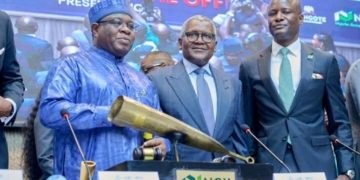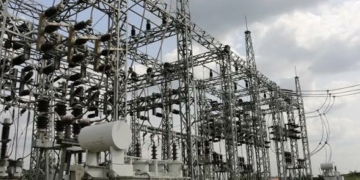
Top energy firms and key government regulatory agencies would be taking part in a landmark gathering that is bringing together senior government officials, industry leaders, regulators, and financiers to transition Nigeria from fragmented sector operations toward a unified, interconnected energy economy.
The conference being organised by the Harvard Business School Association of Nigeria (HBSAN) in Lagos, is founded on the proposition that Nigeria’s vast energy resources deliver maximum economic value only when oil, gas, and power operate as a coherent ecosystem.
Through deliberate dialogue on governance, policy convergence, bankable infrastructure, and operational efficiency, the event will produce an actionable white paper to assist government implementation.
Speaking at a press briefing in Lagos ahead of the association’s oil and gas event, themed “One Energy System: Integrating Oil, Gas and Power for National Transformation,” HBSAN Vice President, Niyi Omojala, said Nigeria had developed its individual energy sectors but needed to move beyond operating them in silos.
Omojola said the conference would examine the policy, regulatory, operational, infrastructure and financing challenges that must be addressed to achieve greater integration, with a white paper to be produced for government implementation.
He said a manufacturer currently relying on diesel had to contend with high and volatile operating costs, while greater access to domestic gas could provide a cleaner and more consistent power source.
”If we can create clarity around the cost of power to people, whether it’s self-generated as redundancy or ultimately grid power, if there’s clarity around price and around consistency,” he said, there would be greater investment.
Omojola said consistency in the cost of power and gas supply could create a cycle of lower costs, increased production and demand, leading to more investment, employment and economic growth.
HBSAN Programme Committee Chairman, Dr Blessing Ayemhere, said the high cost of power is undermining industrial competitiveness, despite Nigeria’s abundant gas resources.
HBSAN President, Mr. Collins Onuegbu, will open the event, followed by a keynote address delivered by Engr. Adeleye Falade, FNSE Managing Director of NLNG, titled: “From Resource to Prosperity: Unlocking National Growth through Integrated Energy Systems – Oil, Gas and Power. The African Perspective.”
The association also called for greater integration of Nigeria’s oil, gas and power sectors, saying fragmented policies and weak coordination are limiting the country’s ability to turn its energy resources into economic growth.
The integrated energy system would provide businesses with cheaper and more consistent power, improve investment certainty and support industrial development.
Nigeria’s indigenous energy companies are initiating new pathways to improve productivity and enhance their visibility in the in the oil and gas industry.
Meanwhile, new field development and fresh investment have been identified as critical to improving Nigeria’s oil production which if sustained will help the country meet its 2 million barrels daily output target.
Nigeria produced 1.67 million barrels per day of crude oil and condensate in August, according to the Nigerian Upstream Petroleum Regulatory Commission (NUPRC) as the country continued to sustain output above 1.5 million bpd while a fresh rise in global oil prices heightened the risk of higher inflation at home.
The August figure compares with Nigeria’s recent effort to stabilize production after a prolonged period of underperformance against its OPEC allocation.
The latest reading also keeps focus on whether Africa’s largest oil producer can build enough momentum to approach the 2 million bpd target previously flagged by the Nigerian National Petroleum Company.
Speaking on CNBC Africa, EO2 Law partner Oyeyemi Oke said the production data showed a more durable recovery over recent months.
He said Nigeria had recorded sustained production for about four months, consistently meeting its OPEC target and potentially reopening discussions over a higher quota.
The confernce is expected to be attended by regulatory bodies and key industry leaders which include, the NUPRC, RenaissanceEnergy, Chevron, Minister of State for petroleum (Gas) among others.
We’ve got the edge. Get real-time reports, breaking scoops, and exclusive angles delivered straight to your phone. Don’t settle for stale news. Join LEADERSHIP NEWS on WhatsApp for 24/7 updates →
Join Our WhatsApp Channel