
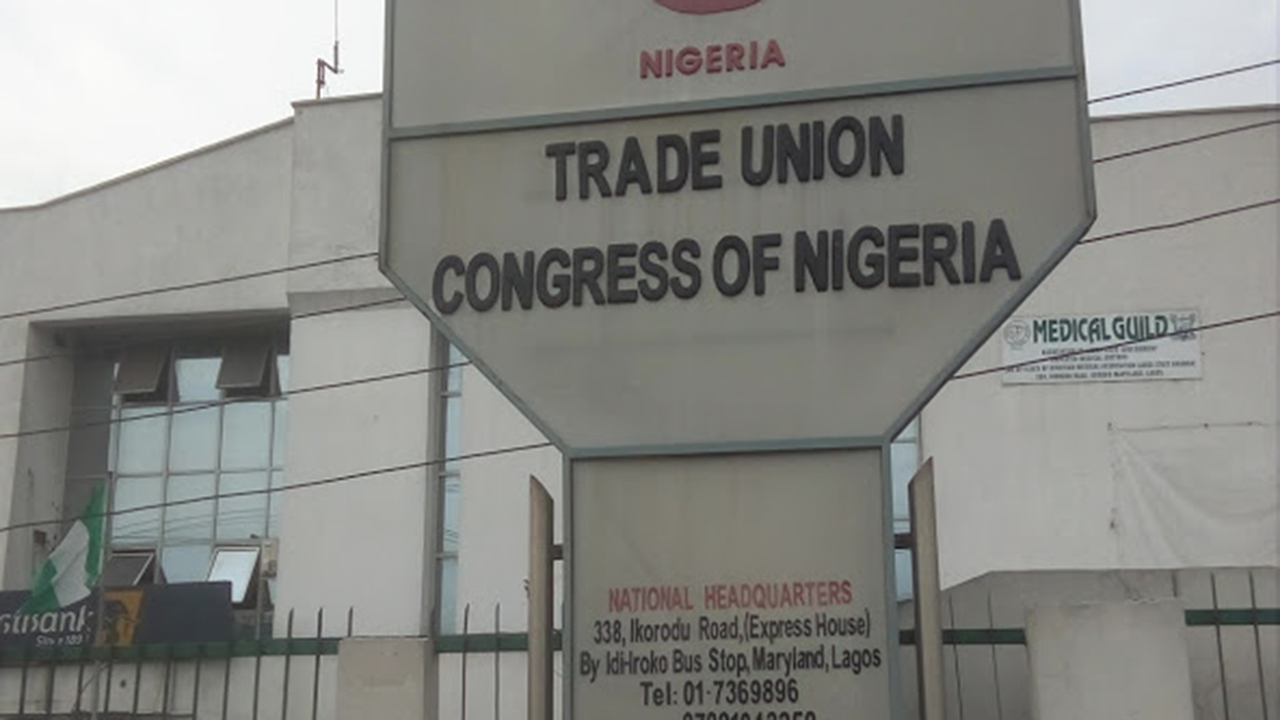
The Trade Union Congress of Nigeria (TUC) has called for a 50 per cent reduction in taxes on workers and manufacturing companies as part of urgent measures to ease rising economic hardship across the country.
The demand formed part of resolutions reached at the National Executive Council (NEC) meeting of the Congress held in Abuja yesterday, where labour leaders reviewed the state of the nation and the impact of current economic and security challenges on workers and businesses.
In a communiquéé jointly signed by the TUC president-general, Comrade Festus Osifo, and the secretary-general, Comrade N.A. Toro, the Congress said the tax relief had become necessary amid surging fuel prices, inflationary pressures and declining purchasing power.
NEC noted that global developments, particularly the Iran–US conflict, were worsening Nigeria’s economic situation by raising energy costs, disrupting supply chains, and putting pressure on the naira, further compounding hardship for citizens.
The Congress warned that, despite Nigeria’s status as an oil-producing nation, rising crude prices had not translated into relief for workers but had instead driven up the cost of living.
On insecurity, NEC described the situation as a major economic and labour crisis, linking it to reduced agricultural output, job losses, and declining productivity. It urged governments at all levels to adopt coordinated, intelligence-driven security strategies to protect lives, farms, and businesses.
The labour body also expressed concern over persistent increases in electricity tariffs without commensurate improvement in power supply, insisting that Nigerians should not be made to pay more for inefficient services.
While acknowledging the federal government’s N10 billion housing loan scheme for civil servants, NEC stressed that such initiatives must be transparent, accessible, and free from bureaucratic bottlenecks to have a meaningful impact.
The Congress further raised concerns over the growing trend of casualisation in the private sector and called on authorities to enforce labour laws to protect vulnerable workers.
It also urged intervention in the dispute between regulatory authorities and operators in the food and beverage sector to prevent further disruption to the industry.
Thecommuniquée reads in parts, “The combined effects of global crude oil volatility, exchange rate pressures, and domestic supply constraints continue to drive up the cost of petrol, diesel, and aviation fuel, thereby worsening transportation costs, food prices, production expenses, and overall living conditions.
NEC therefore calls on the federal government to allocate part of excess crude revenue earned above the budget benchmark to subsidise crude oil supplied to domestic refineries as a transparent, production-linked intervention.
“NEC also demands a 50 per cent reduction in taxes on manufacturing companies and workers within this period to ease economic pressure and support productivity.
The Trade Union Congress of Nigeria remains committed to constructive engagement, social dialogue, and national development, but will not hesitate to mobilise workers where policies continue to deepen hardship or undermine their welfare”.
We’ve got the edge. Get real-time reports, breaking scoops, and exclusive angles delivered straight to your phone. Don’t settle for stale news. Join LEADERSHIP NEWS on WhatsApp for 24/7 updates →
Join Our WhatsApp Channel