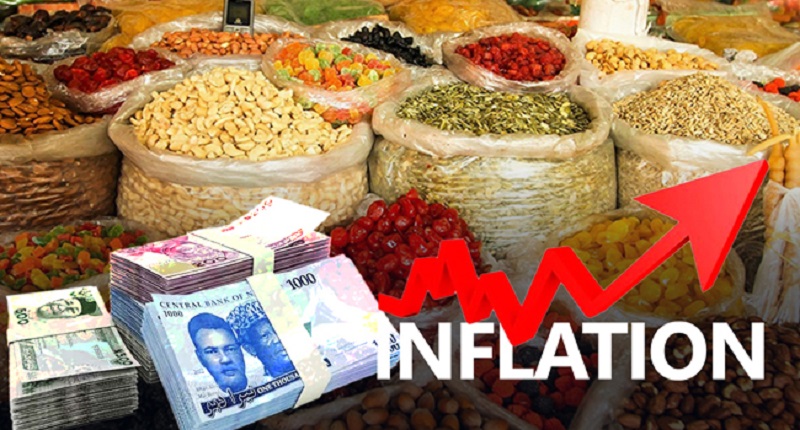
Nigeria’s worsening cost-of-living crisis is being amplified by rising transport costs that are feeding directly into food inflation, even as limited fiscal space constrains the government’s ability to cushion households, the International Monetary Fund (IMF) has warned.
Speaking at the African Department Regional press briefing during the ongoing IMF/World Bank 2026 Spring Meetings in Washington DC, Director of the African Department at the IMF, Abebe Aemro Selassie, said the impact of current global and regional shocks is already being felt across African economies, with Nigeria particularly exposed through rising logistics and transportation costs.
The warning comes amid persistent inflationary pressures in Nigeria, where food prices account for a significant share of headline inflation, and where higher fuel and logistics costs have continued to ripple across supply chains following recent economic reforms.
Inflation which measures the rate at which prices of goods and services rise had turned a corner in march, rising for the fist time in 12 months, as the impact of the rising lobal oil prices fed into the economy through a higher fuel price. From around N870 per liter, the price of fuel in the country had jumped to over N1,300 per liter as the war with Iran surred a spike in global oil price.
According to Selassie, increases in transportation costs are transmitting quickly into higher food prices, worsening inflationary pressures on households in both urban and rural areas. “We are already seeing quite a lot of increase in transportation prices that people are facing. Transportation costs are very high for people in urban areas, rural areas even more. So we are already seeing quite a bit of a pinch from the crisis on people, making life difficult,” he said.
Selassie noted that the immediate effect of the current shocks is not only inflationary but also disruptive to food systems, as higher transport costs, expensive fertiliser and supply constraints combine to push up the cost of basic commodities.
Selassie, however, acknowledged that reforms undertaken in recent years, including efforts to stabilise debt and reduce fiscal deficits, are beginning to provide some buffer against external shocks.
“In recent years, steps have been taken to stabilise debt, to reduce fiscal deficits. That stabilisation helps now when another shock like this comes, because there is a little bit more scope to try and defray the impact on people’s livelihoods,” he said.
Despite this, he warned that policy responses must be carefully calibrated to avoid undermining longer-term fiscal sustainability, stressing that short-term interventions should remain aligned with medium-term economic objectives.
On Nigeria’s borrowing strategy, Selassie declined to prescribe a preference between external and domestic debt, noting that what matters most is maintaining debt at manageable levels relative to the country’s capacity to service it.
So in recent years, steps have been taken to stabilize debt, to reduce fiscal deficits. So that stabilization, I think helps now when another shock like this comes, because, you know, there is a little bit more scope to try and defray the cost, the impact of this shock on people’s livelihoods. So I think, you know, in terms of policy response, it has to be very country specific, and even within countries, you know, it could vary from region to region. And what we are trying to do is identify the amount of space that governments have to make interventions, where interventions are being made. What we are pleading is that these are consistent with the medium term objectives that countries have, and that they’re not thrown off course by this. Because, you know, that would be a double whammy for countries.
“What’s really important is trying to keep the level of debt as manageable as possible relative to debt service capacity, and to ensure smooth maturities,” he said, adding that Nigeria’s debt management authorities have the expertise to navigate the trade-offs.
On his part, Deputy Director, African Department at the IMF, Amadou Sy noted that while the Africa Continental Free Trade Area (ACFTA), has in recent times recorded some progress, it has been uneven.
According to him, there are key negotiations to be concluded on issues “like the rules of origins, tariff concessions, and that limits the effectiveness of trade as diversification, as a shock buffer, but the long term potential is clear, and it is about reducing barriers, modernizing customs procedures, and deepening trade and services. And I would just add also the financing of trade, which is often overlooked, which is a key area.”
We’ve got the edge. Get real-time reports, breaking scoops, and exclusive angles delivered straight to your phone. Don’t settle for stale news. Join LEADERSHIP NEWS on WhatsApp for 24/7 updates →