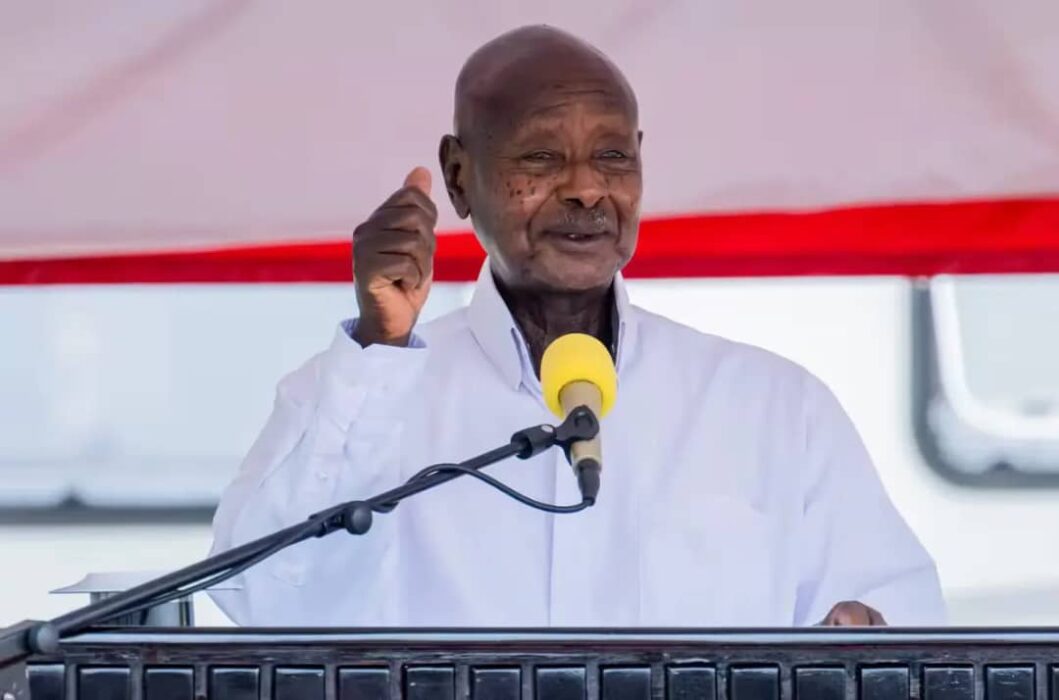
Ugandan President Yoweri Museveni is seeking a seventh term in office, extending a rule that has lasted nearly four decades and making him one of Africa’s longest-serving leaders.
Museveni, 81, came to power in 1986 after leading a rebel movement that overthrew a military government, promising a break from dictatorship and misrule.
At his swearing-in, he declared that Uganda was undergoing a “fundamental change” in its politics. Nearly 40 years later, critics said those early promises have been eroded by widespread corruption, democratic backsliding, and the steady consolidation of power.
“The problem of Africa in general and Uganda in particular is not the people but leaders who want to overstay in power,” Museveni once said after taking office, a statement frequently cited by his opponents as evidence of unfulfilled pledges.
Museveni has won all six presidential elections he has contested, though opposition parties have repeatedly rejected the results, alleging irregularities. Authorities have denied the accusations, and security forces have cracked down on protests.
His government has been praised internationally for its early response to the AIDS epidemic, its role in defeating the Lord’s Resistance Army insurgency, and for contributing troops to peacekeeping missions in Somalia and South Sudan. Uganda also hosts one of the largest refugee populations in Africa.
However, allegations of graft have dogged his administration. Parliamentary reports have accused senior officials and associates of benefiting from privatisation deals involving state enterprises, while public services remained underfunded.
“Corruption has been central to his rule from the beginning,” Kristof Titeca, a professor at the University of Antwerp, told Reuters.
Museveni has acknowledged corruption within government but said officials found culpable have been prosecuted.
Economic growth has failed to translate into broad-based prosperity, with the United Nations children’s agency (UNICEF) reporting that only one in four Ugandan children entering primary school reaches secondary level, while well-paying jobs remained scarce.
In 2005, parliament scrapped presidential term limits, a move critics said was designed to allow Museveni to remain in power indefinitely.
His main challenger in Thursday’s election is opposition figure and pop star Bobi Wine, 43. Analysts said Museveni’s victory is widely expected, but questions were growing about succession as the president showed signs of frailty.
Attention has increasingly focused on his son, Muhoozi Kainerugaba, the Army Chief, whose rapid rise through the military has fuelled accusations of a planned dynastic succession, claims the government denied.
“The big question looming over the election is the question of succession,” Titeca said.
Former newspaper editor Charles Onyango-Obbo added that the vote is less about the final result than public sentiment, “This is less about the results that will be announced, and more about the mood on the ground,” he said, adding that any handover of power may still be years away.
We’ve got the edge. Get real-time reports, breaking scoops, and exclusive angles delivered straight to your phone. Don’t settle for stale news. Join LEADERSHIP NEWS on WhatsApp for 24/7 updates →
Join Our WhatsApp Channel