The Presidency has clarified that Nigeria will not accept foreign deportees under the recently signed migration agreement with the United Kingdom, stressing that the arrangement applies strictly to Nigerian citizens without legal status in the UK.
Senior Special Assistant to the President on Media and Publicity, Temitope Ajayi, disclosed this in a statement shared via his X (formerly Twitter) handle,on Friday amid what he described as growing misinformation surrounding the agreement.
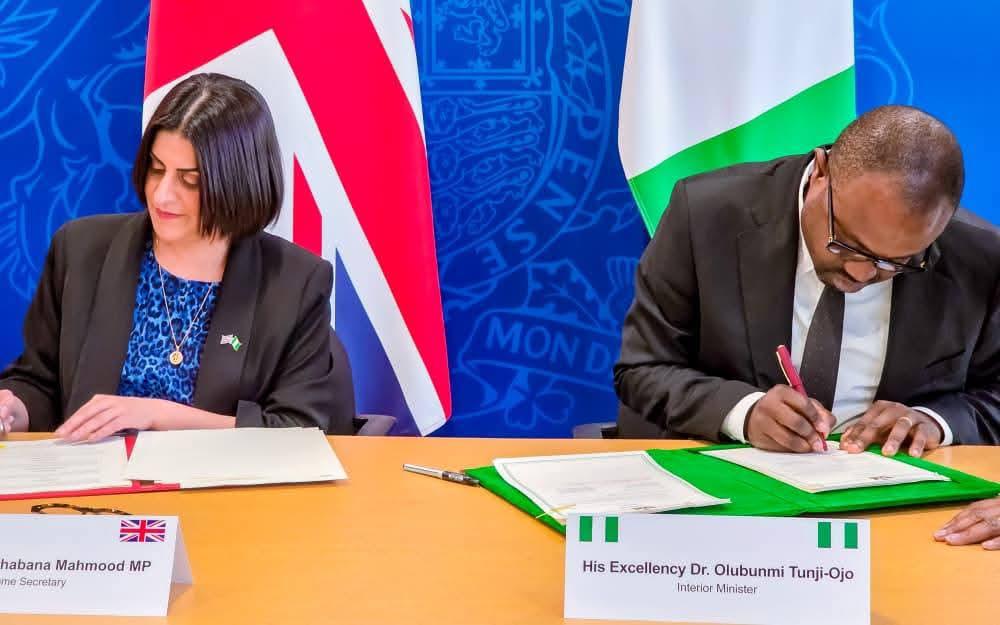
Ajayi explained that the deal, signed during President Bola Ahmed Tinubu’s State Visit to the United Kingdom, involves only the return of Nigerians who do not have the legal right to live and remain in the UK.
“For clarity, it is important to state that the agreement signed by the Minister of Interior, Olubunmi Tunji-Ojo, on behalf of the government of Nigeria, and the UK Home Secretary, Rt Hon Shabana Mahmood, on behalf of the UK government, only relates to Nigerians who do not have legal status to live and remain in the UK,” he said.
He emphasised that the Nigerian government is not taking back non-Nigerians and that the UK is not compelling Nigeria to accept individuals who are not its citizens.
“Nigeria is not taking back non-Nigerians. The UK government is not compelling Nigeria to take those who are not our citizens,” Ajayi added, noting that the clarification became necessary due to the spread of false narratives.
According to him, the agreement guarantees that Nigerian returnees will be treated with dignity and in accordance with their rights under domestic law.
He further stated that such individuals may re-enter the UK in the future, provided they meet applicable immigration requirements.
Also speaking on the development, the Ministry of Interior, in a social media post, said the agreement provides a structured framework for the “dignified return and reintegration of Nigerians who do not have the legal right to remain in the UK.”
The ministry listed key components of the arrangement to include the use of secured travel documentation, case-by-case identity verification, and safeguards for vulnerable individuals, including potential victims of trafficking.
It added that the framework outlines clear areas of cooperation between both countries, such as information sharing, capacity building, training, and joint research on migration management and border security.
We’ve got the edge. Get real-time reports, breaking scoops, and exclusive angles delivered straight to your phone. Don’t settle for stale news. Join LEADERSHIP NEWS on WhatsApp for 24/7 updates →
Join Our WhatsApp Channel