The federal government has said uncontrolled urbanisation and population growth have placed enormous pressure on cities and escalated construction costs across the country.
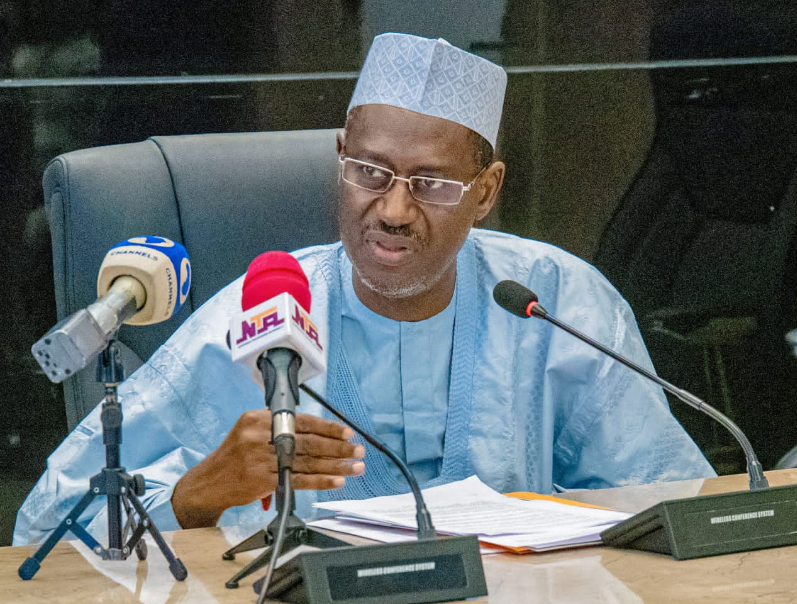
Speaking at the meeting of the National Council on Lands, Housing and Urban Development recently, the minister of Housing and Urban Development, Ahmed Dangiwa, also disclosed that inefficient land administration systems choke housing supply and push affordable homes out of reach for millions of Nigerians.
Dangiwa, who was represented by the director of Planning, Research and Statistics, Mukhtar Ilyasu, rolled out a new national housing strategy as part of a deliberate response to Nigeria’s worsening housing crisis, triggered by rapid urbanisation, population explosion, rising construction costs and a dysfunctional land administration system.
Dangiwa acknowledged that Nigeria’s housing deficit, estimated in the tens of millions, has become one of the country’s most stubborn socio-economic problems, worsened by years of uncoordinated urban growth and institutional weaknesses.
According to the minister, uncontrolled urbanisation and population growth have placed enormous pressure on cities. At the same time, escalating construction costs and inefficient land administration systems have continued to choke housing supply and push affordable homes out of reach for millions of Nigerians.
“The federal government is responding decisively to these challenges by placing effective land administration at the centre of housing delivery and adopting urban renewal as a strategic instrument for rebuilding Nigerian cities,” Dangiwa said.
He explained that the new policy direction recognises land governance as the foundation of housing development, noting that longstanding bottlenecks in land titling, allocation and management have slowed investment and deepened the housing deficit.
Under the new framework, private sector participation is positioned as the primary driver of mass housing delivery, with government focusing on policy coordination, regulatory reforms and the creation of an enabling investment environment.
“The strategy aligns housing delivery, land administration and urban development planning under a unified framework that will guide implementation in the coming years,” the minister added.
Dangiwa further disclosed that urban renewal and regeneration have now been elevated to national policy tools aimed at modernising cities, correcting decades of unplanned development, and responding to population pressure and climate-related risks.
As part of cost-control measures, the Federal Government is also prioritising the large-scale use of locally sourced building materials to reduce dependence on imports, lower construction costs and stimulate domestic industries.
Public–private partnerships, he said, will serve as the main engine for housing and urban infrastructure delivery, with government providing land governance reforms, policy guarantees and investment-friendly frameworks to attract private capital.
“The federal government is strengthening national land governance frameworks to eliminate the structural constraints that have held back housing development and to promote inclusive and sustainable urban growth,” Dangiwa said.
He also revealed that innovative housing finance and investment models are being introduced to unlock long-term funding for real estate development and help close Nigeria’s widening housing gap.
According to him, efforts are underway to align the federal and state governments under a coordinated housing and urban development agenda to ensure consistent policy implementation and measurable outcomes nationwide.
We’ve got the edge. Get real-time reports, breaking scoops, and exclusive angles delivered straight to your phone. Don’t settle for stale news. Join LEADERSHIP NEWS on WhatsApp for 24/7 updates →
Join Our WhatsApp Channel