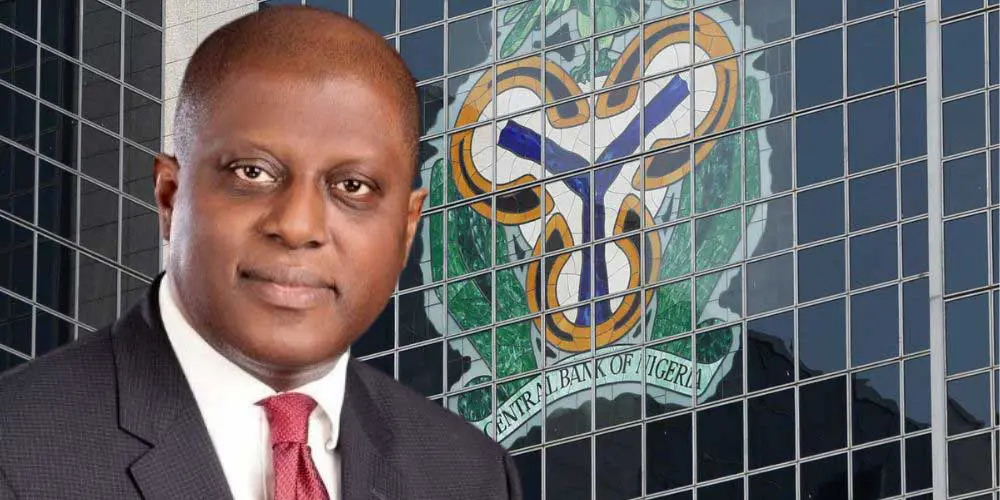
MARK ITSIBOR writes that the recent resumption of forex sales to BDCs by the Central Bank of Nigeria nudges toward a unified rate
In a move that underscores the Central Bank of Nigeria’s (CBN) ongoing commitment to a market-driven foreign exchange (FX) regime, the apex bank has issued fresh guidelines enabling licensed Bureau De Change (BDC) operators to deepen their role in the Nigerian Foreign Exchange Market (NFEM).
Titled “Participation of Licensed BDCs in the Nigerian Foreign Exchange Market,” the circular represents a nuanced adjustment rather than a seismic shift, aimed at addressing persistent retail FX liquidity challenges while embedding robust safeguards against abuse.
As Nigeria grapples with inflationary pressures and a volatile parallel market, this policy tweak arrives at a pivotal moment, potentially narrowing the chasm between official and informal FX channels without compromising the CBN’s hard-won discipline.
At its core, the circular empowers duly licensed BDCs to source foreign currency—primarily U.S. dollars—directly from Authorised Dealer Banks at the prevailing interbank market rate, capped at $150,000 per BDC per week. This access is not a blank check but a calibrated response to the evolving dynamics of retail demand, where small-scale end-users, from importers of essential goods to diaspora remittances, have long strained against supply bottlenecks.
By facilitating this channel, the CBN seeks to bolster liquidity in the retail segment, a critical artery in Nigeria’s FX ecosystem that has been throttled by parallel market premiums often exceeding 20% over official rates.
To contextualize the update, it’s essential to delineate the changes from the continuities. The most visible alteration is the upward revision of the weekly access limit—a figure adjusted
to mirror heightened retail needs amid post-pandemic economic recovery and global supply chain disruptions. Previously tighter caps had constrained BDCs,
exacerbating shortages that fueled hoarding and speculation.
This recalibration is liquidity-supportive, injecting a modest but
meaningful $7.5 million weekly into the retail pool if all 50 licensed BDCs fully utilize their quotas—a drop in the ocean compared to Nigeria’s $20 billion-plus annual FX inflows, but a targeted salve for grassroots demand.
Yet, the framework’s bedrock remains unaltered, preserving the CBN’s market-based ethos introduced in mid-2023. FX sourcing occurs strictly at the interbank rate, devoid of subsidies or preferential pricing that plagued earlier regimes. BDCs must adhere to extant guidelines, ensuring all sales are tethered to “eligible transactions”—think school fees abroad, medical tourism, or small-scale imports—backed by ironclad documentation.
Know Your Customer (KYC)
protocols and due diligence are non-negotiable, while unutilized funds must be repatriated to the sourcing bank within 24 hours, curtailing any window for speculative positioning.
On the sales front, BDCs are capped at a 1% spread above their acquisition rate, a margin designed to reward efficiency without inflating end-user costs. The apex bank has restated that the continuity signals no retreat from its zero-tolerance stance on FX distortions.
As Governor Olayemi Cardoso’s team has repeatedly emphasized, the post-2023 reforms—unifying exchange rates and dismantling naira arbitrage—have stabilized reserves and curbed capital flight. The BDC circular reinforces this trajectory,
embedding retail access within a compliant scaffold rather than reverting to the opaque “old regime” of the 2010s, where BDCs were accused of siphoning billions in subsidized dollars.
A cornerstone of the guidelines—and perhaps its most innovative guardrail—is the stipulation that no more than 25% of any BDC transaction may be settled in physical cash. The remaining 75% must channel through debit or prepaid cards issued by licensed financial institutions, transforming what could have been a cash-flooding policy into a digital bulwark for transparency.
The hybrid model not only mitigates the risks of informal dollar proliferation—often linked to smuggling or money laundering—but also funnels activity through the banking system, where every naira and dollar leaves an electronic footprint.
Consider the mechanics: A BDC procuring $150,000 might dispense up to $37,500 in crisp bills for urgent, verifiable needs, but the bulk—$112,500—flows via card-based disbursements. Transactions are verboten for third parties, with electronic returns mandatory to the CBN’s oversight mechanisms.
That structure dovetails with broader fintech integrations, such as the Nigeria Inter-Bank Settlement System (NIBSS), ensuring real-time monitoring. In essence, it’s a policy that weaponizes technology
against opacity, aligning with global best practices seen in jurisdictions like Kenya and South Africa, where digital FX rails have tamed parallel markets.
Critics might decry the $150,000 cap as “excessive,” but the cash ceiling recalibrates that math: At most, $9.375 million in physical dollars could circulate weekly across the sector—negligible against the $1 trillion-plus shadow economy often cited in FX debates. More importantly, it redirects the lion’s share toward formal intermediation, potentially deepening bank deposits and card usage by 10-15% in the retail FX niche, per preliminary CBN modeling.
The CBN’s stated goals are threefold and interlocking: enhance retail FX availability, foster price convergence between official and parallel segments, and amplify banking sector involvement. In a nation where FX scarcity has hobbled manufacturers and inflated import costs—contributing to a 2025 inflation rate hovering near 25%—this infusion could ease pressures on staples like rice and pharmaceuticals.
By encouraging BDCs to operate as retail extensions of the NFEM, the policy nudges toward a unified rate, potentially compressing the parallel premium from its current 5-10% band.
Economically, the ripple effects are promising yet measured. Enhanced liquidity may stabilize naira volatility, supporting Cardoso’s “transparency and discipline” mantra. It deepens financial inclusion, as card-based settlements onboard unbanked users into the formal economy. And
by prohibiting hoarding—via the 24-hour clawback—it neutralizes inflationary dollar dumps.
Far from pressuring reserves (which stood at $35 billion as of late 2025), the guidelines operate on commercial terms, with Authorised Dealers funding allocations from market inflows rather than CBN vaults.
Yet, this is no panacea. Eligible transaction proofs remain a potential bottleneck, and enforcement will hinge on the Financial Intelligence Unit’s vigilance.
If BDCs—historically a mixed bag of compliant operators and bad actors—lean into the 1% margin efficiently, end-users could see rates dip below parallel quotes, drawing traffic away from street vendors. Conversely, lax KYC could invite scrutiny, echoing the 2024 crackdowns that revoked over 1,000 BDC licenses.
As with any FX tweak, misinformation swirls. The circular is not a subsidy redux; rates are market-pure, with no discounted allocations. It’s no nostalgic rewind—newer controls like cash caps and instant returns outstrip prior laxity.
Hoarding fears are unfounded: Idle dollars revert swiftly, and the policy’s DNA is convergence, not divergence. Public access? Limited to documented needs, preserving the framework’s integrity.
In FAQ parlance, this addresses retail evolution without flooding streets with cash, centering banks as the compliant core. The verdict: a liquidity boost anchored in accountability, poised to fortify Nigeria’s FX resilience without unraveling hard-fought reforms.
As the CBN navigates 2026’s uncertainties—from oil price swings to election-year spending—this BDC recalibration exemplifies pragmatic governance: bold enough to lubricate markets, prudent enough to chain the risks.
For operators and end-users alike, it’s a green light with guardrails—signaling that in Nigeria’s FX arena, access comes laced with audit trails. Watch this space: if executed flawlessly, it could mark another win in the CBN’s marathon toward a stable, inclusive exchange rate.
We’ve got the edge. Get real-time reports, breaking scoops, and exclusive angles delivered straight to your phone. Don’t settle for stale news. Join LEADERSHIP NEWS on WhatsApp for 24/7 updates →
Join Our WhatsApp Channel