The United States House of Representatives has passed a fiscal year spending bill containing provisions that would suspend foreign assistance to Nigeria over allegations of targeted violence against Christians and other vulnerable communities.
According to the bill, US foreign assistance to Nigeria would be withheld until the U.S. government certifies that the Nigerian authorities are taking effective and measurable steps to protect Christian communities from religious violence.
The bill also calls for “holding foreign governments and bad actors accountable for persecuting people of faith.” It further proposes restricting assistance to Nigeria until measurable actions are taken to safeguard Christian communities affected by religious violence.
In addition, the bill seeks to strengthen support for religious freedom programmes overseas and enhance protections for faith-based organisations involved in delivering foreign aid.
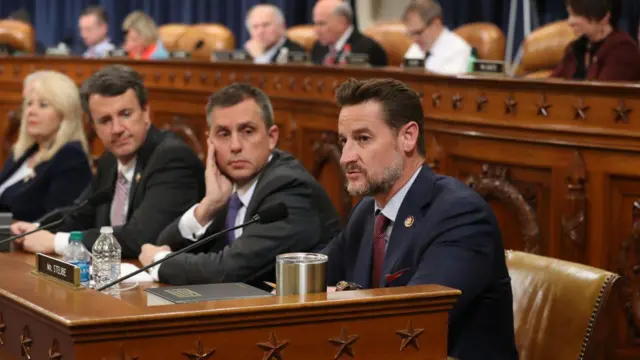
The provision was championed by Republican lawmakers, including Riley Moore and Jeff Steube of Florida, after the bill was introduced to the House in April.
Announcing thbill’s’s passage on his official X account, Mr Steube wrote” “American taxpayers should NEVER bankroll governments that turn a blind eye while Christians are abducted, tortured, and murdere”.”
Mr Moore, who has previously accused the Nigerian government of committing genocide against Christians, argued that the Fiscal Year 2027 National Security, Department of State and Related Programs (NSRP) Appropriations Act should restrict assistance to Nigeria because, in his view, insufficient action has been taken against Fulani Islamist terrorists operating in the country’s Middle Belt.
Addressing the House, Mr Moore said the measure was designed to encourage the Nigerian government to improve protection for Christian communities while making continued US assistance conditional upon demonstrable progress.
He described the proposal as part of the Trump administration’s strategy to support Nigeria in protecting Christians while holding President Bola Tinubu’s administration accountable if it failed to do so.
The original version of the bill proposed withholding 50 per cent of US assistance to Nigeria. However, Mr Steube introduced an amendment to increase that figure to 100 per cent, arguing that withholding only half the funding would effectively reward the Nigerian government despite what he described as its failure to protect its citizens adequately.
The House approved the amendment.
Although President Donald Trump suspended much of America’s foreign aid shortly after returning to office and dismantled the US Agency for International Development (USAID), his administration has continued to provide limited assistance to Nigeria, particularly for counter-terrorism efforts and support for victims of violence.
In January, the United States allocated approximately $413.046 million for counterinsurgency operations in Nigeria and other African countries. Less than two months later, it also supplied Nigeria with what officials described a” “critical military suppli”s”.
Claims that Christians are being specifically targeted in Nigeria have been repeatedly disputed by the Nigerian government, as well as local and international human rights organisations. They maintain that attacks by armed groups affect people of different faiths and are driven by a range of factors, including insurgency, banditry and communal conflict.
In recent months, the United States and Nigeria have carried out several successful joint counter-terrorism operations. One such operation resulted in the killing of Abu Bilal al-Minuki, also known as Abubakar Mainok, a senior commander of the Islamic State West Africa Province (ISWAP).
Thus, the US also recently announced that it had recovered a substantial cache of terrorist intelligence from Nigeria, which remains under analysis.
In addition, several Nigerian individuals and organisations have faced US sanctions over alleged terrorism financing. Among them is Mukhtar Adamu, a Lagos-based bureau de change operator accused of facilitating financial transactions for the West African affiliate of ISIS through his foreign exchange businesses.
The spending bill must still be approved by the US Senate and signed by President Trump before it can become law.
We’ve got the edge. Get real-time reports, breaking scoops, and exclusive angles delivered straight to your phone. Don’t settle for stale news. Join LEADERSHIP NEWS on WhatsApp for 24/7 updates →
Join Our WhatsApp Channel