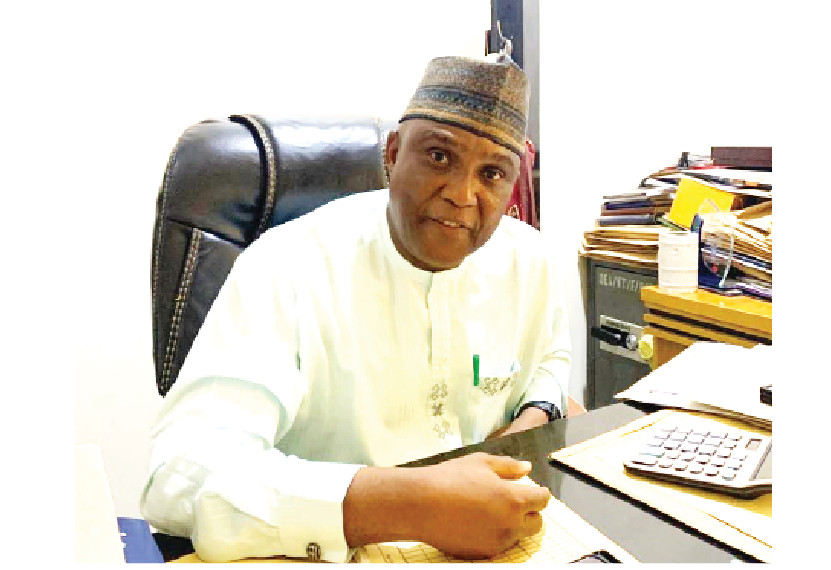
Dr Nasiru Muazu Dan Musa is the Commissioner for Internal Security and Home Affairs in Katsina. In this interview with our reporter, the commissioner explains the measures the state government is taking to restore peace in troubled communities, and why many bandits are now voluntarily disarming.
What kind of security challenges did the government meet when it came into office?
Before this administration, everyone would agree that the issue of insecurity was so intense that 26 out of 34 local governments in Katsina State were under siege by bandits. In fact, looking at the geography of Katsina, which is divided into three, we have Katsina North, Katsina Central, and Katsina South. Kidnapping, cattle rustling, and banditry went as far as the Daura zone.
There was a situation of kidnapping in Mashi Local Government, and here in Katsina metropolis, when the in-law of the former governor, Aminu Bello Masari, was kidnapped here in Katsina city, and ransom was paid. That was what we met.
There were incidents of kidnapping that went as far as Bindawa, as far as Ingawa, and other local governments that do not even border forests where bandits hide. So, with that challenge, His Excellency, the executive governor, after he was elected as the flagbearer of the APC, traversed all the local government wards. He decided that security would be the number one priority of his administration.
We know campaigning is different from governing. Has he made security his top priority?
I can tell you that the government has clearly demonstrated the resolve to address the problem of insecurity. Before coming to office, the governor constituted a committee.
That was the first thing he did. The committee was made up of experts, retired army officers, retired air force officers, retired police officers, retired DSS officers, and even academics to develop a blueprint for the way forward and advise the state government on the next steps.
This committee did its work. The work was so thorough, and their report was submitted to the governor. He constituted another security advisory committee comprising academics, retired security officers, and traditional rulers. This committee also made robust recommendations.
That was what catapulted the creation of this ministry of internal security and home affairs. When the ministry was created, it was vested with responsibility for supervising the state’s internal security. After that, it was realised that the crisis was community-driven and required a community-led approach to solve it.
That suggests different communities in conflict with one another
What I mean here is that 100 per cent of the bandits were born and raised here in Katsina, and they are operating within the matrices of Katsina. At the same time, their whereabouts are known. Their parents and their families are known. We looked at it from the trajectory of the sociological nature of the crisis. It is social and economic, unlike Boko Haram, which is driven by ideology. This one is not driven by ideology. With that, this government decided to create the first line of defence: the communities.
Because of the rural development crisis we face in this part of the world, especially in the developing countries we all know. We realised that if there is an attack on village A, which is far away from the main city or the main local headquarters, it will take you one to two hours to get to that village. So, we decided to create the first line of defence before the conventional security agencies’ reinforcement reaches that village.
So, His Excellency decided to recruit young, able men from the eight front-line local governments in the state. As I said, the security diagram is divided into three. We have frontline governments, vulnerable local governments, and local governments that were free of crisis before this administration came to power.
Which to categorise as frontline local governments?
The eight frontline local governments are defined as those inhabited by these bandits, that are forested, and that have hills where the bandits can navigate and take cover whenever there is any operation by the security agencies. The second category is the vulnerable local governments. They are about 11. These local governments border the frontline local governments. Then we have other local governments that border the vulnerable ones.
The frontline is Jibia, Batsari, Safana, Dan Misa, Faskari, Sabuwa, Kankara, and Sandamu. These lGs house the bandits. Because the areas are forested and we have hills and rocks, you find that whenever there is any aircraft deployment or army or police deployment, they just run and take cover in the forest or behind the rocks. So, His Excellency decided to recruit young men from those eight front-line LGs.
In each local government, a committee was formed comprising the traditional rulers, the security agencies, the clerics, and even the politicians and community leaders to recommend the names of these young men for a Community Watch Corp. The young men were trained in all aspects of defence, kitted out, given legally allowed weapons, and posted back to their communities. One of the things that stood out in the recruitment was that these young men were born and raised in these communities. So, they know every nook and cranny. They can face and deal with these crises. Within the first 10 months, we recorded a drastic drop in the crime rate. The overall level of banditry activities dropped to about 30 per cent.
The thing about this criminality is that it has become an enterprise with huge economic rewards. You have the informants, you have the suppliers of arms and ammunition, you have the suppliers of drugs, you have the suppliers of petroleum products, and those of motorcycles. You have the suppliers of everything. So, if you cut out that aspect of the criminality, the band I try will come down to less than 20 per cent of previous levels. If they don’t have suppliers of all these, how can the band try to take place?
Does the Community Watch Corp focus on these aspects?
The work of the Community Watch Corp is to eliminate this aspect of banditry and, at the same time, eliminate banditry activities. People have realised the significance of this first line of defence. With the intensity of the fight from the Community Watch Corp, the bandits had to withdraw to their enclaves. They don’t go to the clinics. They don’t have access to the markets.
They don’t have access to anything. So, the Watch Corp has assisted because we do not have an adequate number of conventional security personnel. With their effectiveness, the Corps was extended to the vulnerable LGs.
So, a second batch of the Watch Corp was formed, with young men recruited from vulnerable local governments such as Kurfi, Dutsin Ma, Matazu, Malumfash, Danja, Bakori, Funtua, and, at the same time, they were co-opted into this second phase. For now, we have 19 local governments with the Community Watch Corp as the first line of defence.
How does the Watch Corps co-exist with the police?
Another aspect of what the government did was to create synergy between the conventional security agencies and these community initiatives, such as the Watch Corp. You will see they are working with the police, the army, and the DSS. We went further to Borno and Adamawa to bring in hunters, about 1,700 of them. We posted them to these local governments.
That is the aspect of the kinetic. Apart from that, we built a world-class surveillance centre. Billions of naira were spent to build a world-class surveillance system for both porous borders and highways, so we can see who comes and goes in the state. Additionally, we procured armies and ammunition for conventional security as a token of support to complement their efforts. So provide ample incentives for the security agencies, including the Air Force. We also assisted in establishing a quick-response wing in the Nigerian Air Force. They were assisted in their operations in the Matazu and Jinia local governments. This is the aspect of the kinetic. We launched many offensives against the bandits.
Regarding non-kinetic measures, we recognised the significance of traditional institutions in peace development. So the government recruited 6,662 ward heads. These ward heads are given a token every month. Also, we realised the significance of religion in addressing security challenges. At the same time, we recruited clerics and placed them on monthly allowances. There are 7,525 of them being paid to preach peace, tranquillity, and peaceful coexistence. We also created a unit whereby any victim of banditry or any IDP who sustains injury, from the first day he is admitted to the hospital to the day he is discharged, will not pay a single kobo for treatment. The government takes responsibility for that. Even those who lost family or their means of livelihood receive cash to start over.
What concrete achievements does the government have to show?
For the last year, we have not had major attacks in Jibia. Batsari too is peaceful. Dan Musa, Safana, Kurfi, Dutsin Ma, Faskari, and other local governments are peaceful. Out of these 26 local governments, about 15 to 16 are now peaceful. In the last year, we have had no crisis. And people at the grassroots level are managing the crisis on their own. And these bandits, some of them are starting to come forward to disarm. We are now at this stage of disarming, and we are having meetings to see how they can voluntarily hand over their weapons.
Measuring successes through the ease with which people move about. What is the state of farmers and students?
As I speak to you, all our schools are open, unlike in the last three to four years, when most schools were closed. All our markets are now open. You can go to Jibia. You can go to Dan Musa and verify. All markets, both cattle and normal markets, are open. At the same time, all our roads are open. Farmers can farm their lands as far as they want. You can go to Safana and all the LGs; people are back on their farms.
What is the government’s policy on paying ransom to bandits?
The position of this government has been crystal clear. The government has not accepted the idea of paying ransom. We have never paid, and we will not pay.
We’ve got the edge. Get real-time reports, breaking scoops, and exclusive angles delivered straight to your phone. Don’t settle for stale news. Join LEADERSHIP NEWS on WhatsApp for 24/7 updates →
Join Our WhatsApp Channel