

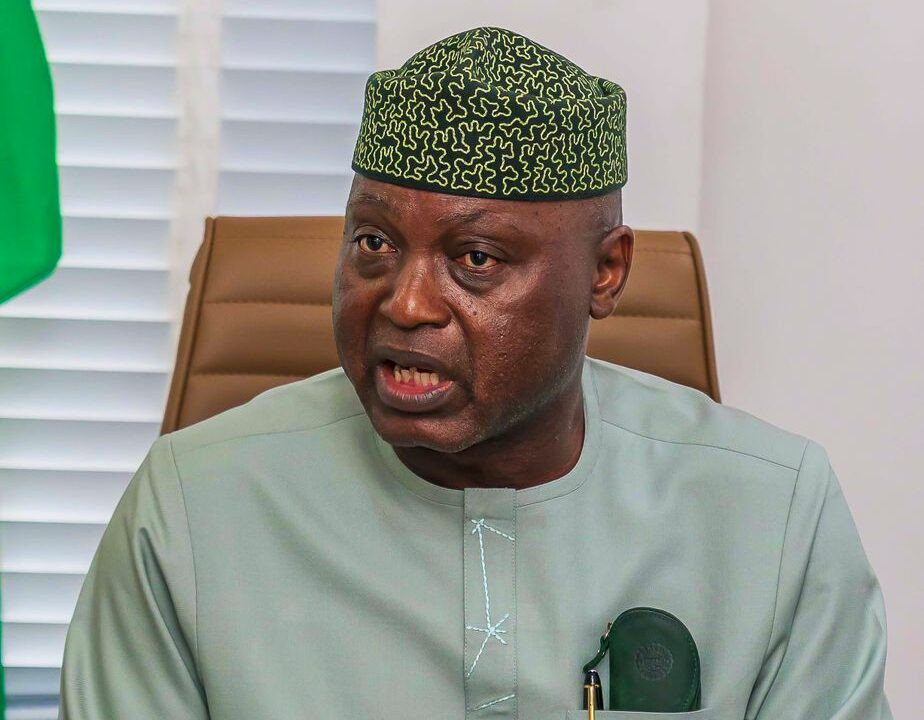
Ekiti State governor, Biodun Oyebanji, has disclosed that his administration has pulled out 5,000 youths across 13 clusters in the state from the streets to the farm in last one year.
He said the state government cleared land, tractorised it, gave improved seedlings to the youth farmers and set up an agrarian company to buy from them.
Oyebanji who emerged as the candidate of the All Progressives Congress (APC) through consensus primary election to contest the 2026 gubernatorial election in the state, said this while speaking with journalists on his stewardship and other issues.
The governor said the state has scaled up that arrangement with the building of what he he called “Renewed Hope Farm Dormitories”, where the youths have a kitchen, common room, internet and DSTV for their comfort.
“You know, agriculture is one area that we have invested so much resources and Mr President has been supportive. In the last one year, we have been able to pull from the streets to the farm 5,000 youths across 13 clusters in the state.
“If you go to Ikere, the dormitory is built as hostels for male and female, security house, they have a kitchen, they have a common room, there is internet, there is DSTV for their comfort. You can decide to stay on the farm for three to five days and you will not miss anything in the city.
“We provide buses and provide security for all the clusters, we are doing this in partnership with the local government. It’s something I’m so proud of, because there’s no kind of formal employment that you can pull 5,000 people off the streets at once. The Governor of Edo State, His Excellency, Monday Okpebholo will commission a road project and one of the dormitories.
“We have done six dormitories across six clusters in the State. Our intention is to scale it up to 16 because we have 16 local governments areas because the challenge they are having presently is having to commute to the farm everyday which is not good for them, but now they can sleep over. They are making so much money and they are happy, and I am so excited,” Oyebanji said.
The governor who highlighted his efforts towards addressing challenges of infrastructure, healthcare and other social services expressed commitment to ensuring that Ekiti retains its pride of place as fountain of knowledge through revolutionalising the education sector.
He said though Ekiti prides itself as one of the most educated states in the country with the highest PhD per capita in Nigeria, it is still not that strong and in reversing the trend, the government made up its mind to strike a balance between “what you teach, how you teach, and where you teach.”
“I believe that those three issues will be extremely critical to the future of education. What you teach refers to the currency of the curriculum. How current, how relevant are your curriculum? How you teach refers to methodologies of teaching, the conditions of the teachers and other staff, and are they happy with their welfare? Where you teach refers to the environment itself, is should be inviting and conducive.
“So, our policy in education is to address all those gaps and we are doing that at the primary school level now through UBEC, but we don’t have that structure for our secondary schools and one area that by God’s grace that we are going to put attention on in the second term is secondary school education, because I’m not happy with the state of our secondary schools, there’s no structure at all and we will renovate them.
“We concentrate on primary schools, and secondary education is so critical. You cannot have a good primary schools and bad secondary schools. Once we strike a balance between the three issues of content, welfare and environment, the outcomes will be okay,” he stated.
Oyebanji further said that his administration is working in line with a 30-year development plan that is the offshoot of its campaign manifesto which envision a state that will be economically prosperous; industralised, secured and be investment destination in the country.
“Well, we have a 30-year development plan that is the offshoot of our campaign manifesto, so the development plan stipulates where we should be at the end of every year. By 2030, by the grace of God, we envision a state that will be economically prosperous, a state that will have industries, a state where people will be able to live, to work, and to invest.
“A state that is secure, and a state where the indigenes will be proud that they have an entity they can call their own. So, our benchmark is the development plan, and every year we benchmark ourselves with that development plan, but we also have to review it now, he added.
We’ve got the edge. Get real-time reports, breaking scoops, and exclusive angles delivered straight to your phone. Don’t settle for stale news. Join LEADERSHIP NEWS on WhatsApp for 24/7 updates →
Join Our WhatsApp Channel
