
BY ABDULLAHI OLESIN, ACHOR ABIMAJE, NNAMDI MBAWIKE, FELIX IGBEKOYI, BABAJI USMAN BABAJI, DAMILOLA ORIGBEMISUYI and ANAYO ONUKWUGHA
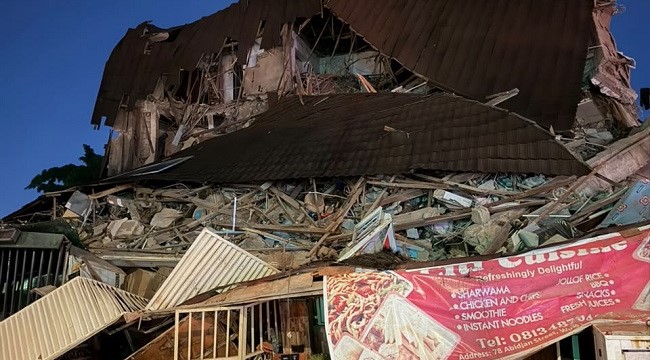
Buildings have continued to collapse across the country despite repeated warnings and regulatory guidelines, prompting reactions from professionals.
Speaking on the reasons for the frequent occurrences, the chairman of the Technical Committee of the Council for the Regulation of Engineering in Nigeria (COREN) in Kwara State, Engr Bashir Lawal, attributed incidences to inadequate structural integrity auditing of buildings, especially the old ones.
He urged the concerned authorities to ensure periodic and regular structural integrity auditing of buildings across the country.
Lawal recalled the recent collapse of a two-storey building at the Popo-Giwa area of Ilorin where which five members of a family lost their lives.
He emphasised the need for the state government to carry out a general structural integrity audit of all buildings in the state to avert a recurrence of the Ilorin incident.
In Plateau State, 24 deaths and 104 injuries were recorded in 2024 when school buildings collapsed.
The first was the collapse of the two-storey building of Saint Academy School. The students were said to be writing their promotional examinations when the incident occurred, resulting to the death of 24 students. Over 100 sustained injuries while many others were rescued from the debris.
The former president of the Nigerian Institute of Building (NIOB), Bldr (Prof) Yohana Izam expressed concern at the poor state of regulation of building sites, noting that the combined effect of quackery and the prevalence of substandard materials was responsible for cases of building collapse in the country.
In the same vein, the director-general of the Nigerian Building and Road Research Institute (NBRRI), Prof Samson Duna, attributed the use of substandard materials in construction as a major cause of building collapse.
He called for collaboration among stakeholders, including government agencies, professionals and the public, for the purpose of sharing knowledge on global best practices. He also called for refresher training among the professionals.
He challenged organs of government and professional bodies responsible for building construction to enforce strict compliance with building codes, regulations, and standards.
Prof Duna added that the country has continued to experience building collapse because there have been no regular inspections and penalties for non-compliance, saying people are not always sanctioned for negligence in relation to building collapse.
Following the collapse of the Saints Academy building, Plateau State Governor Barr Caleb Mutfwang, signed Executive Order 003 aimed at regulating urban development.
The Executive Order further introduced stringent measures aimed at regularising building constructions and preserving public infrastructure in the state.
A parent of one of the survivors of building collapse named Mercy appealed to the state government to always carry out integrity test on public buildings to avoid future occurrences.
Also, the general manager of Jos Metropolitan Development Board (JMDB), Arc Hart Bankat, emphasised the need for strict enforcement of urban planning rules to improve structural safety across the Jos-Bukuru metropolis.
In Enugu, investigations revealed that despite warning from relevant government agencies, some quack developers have continued to use substandard materials resulting to building collapse and death.
It was gathered that officials from the Enugu Capital Territory Development Authority (ECTDA) often visit approved ongoing building sites and when they notice any compromise, they usually tell the developers to stop work immediately.
But it was observed that even after the ‘stop work’ notice, developers continue to work on the buildings, a development that many attributed to compromise by some government officials.
But in the case of the recent collapse of a four-storey uncompleted hotel building on Ogbaru Street in the Independence Layout area of Enugu, on Sunday, September 13, 2026, officials of the Enugu Capital Territory Development Authority (ECTDA) revealed that the structure was actually sealed for six months due to critical structural defects and non-compliance, but the developers illegally bypassed the state order.
As a punitive measure, the authorities have since taken the developer’s representative into police custody for investigation.
Investigations by experts attributed the last building collapse and others to negligence, missing regulatory frameworks and compromised construction standards.
Some surveyors, architects and building developers said sharp construction practices, the use of substandard materials and inadequate supervision were some of the factors responsible for structural failures.
A building developer, Engr Lawrence Iheme, averred that the use of substandard materials, poor-quality cement, steel reinforcement and other construction materials can compromise structural integrity and called for stricter regulatory frameworks.
A surveyor, Loveday Azuka, stated that errors in architectural and structural designs could lead to structural failure.
In his reaction, the executive chairman, Enugu Capital Territory Development Agency (ECTDA), Barr. Uche Anya, said the recent collapse of the ongoing four story building was a case of one of the recalcitrant developers who failed to comply with building codes.
Anya stressed that ECTDA had taken regulatory action by sealing the site, which was approved in 2021.
A relative of one of the injured victims who identified herself as Ifeoma Madu said her brother was inside the property when it collapsed very early in the morning.
In July 2026, Gombe State recorded a major incident of building collapse, with one worker killed and seven others injured when a section of the new State House of Assembly Complex under construction fell.
Following the incident, Governor Muhammadu Inuwa Yahaya ordered an immediate investigation to determine the cause of the collapse.
The incident added concerns often associated with building failures, including the use of substandard materials, poor workmanship, deviations from approved designs and inadequate supervision.
The fact that the House of Assembly project was still under construction when the canopy collapsed also raises questions about the quality-control mechanisms in place for monitoring major public projects and whether construction defects are being identified and corrected early enough.
A Gombe-based house builder, Engineer Isa Mohammed, canvassed that beyond determining the immediate causes of individual failures, stronger enforcement of building standards, accountability for negligence and effective monitoring should be employed to prevent avoidable deaths and injuries.
In Delta State, government has sealed off 15 buildings in Asaba to reduce incidences of building collapse in the state.
The then chairman of the Delta State Taskforce on Operation Show Your Building Plan, Chidi Nwuko, said that developers of the sealed buildings failed to tender approved building plans within the stipulated time given to them or had none at all.
He said there were even cases of counterfeiters faking authentication certificates, adding that this was something regulators were not policing may be someone has been settled or political patronage.
“Some of the standard procedures in land and property development is to obtain approved building plan and permit, complying with approved building plan and documenting same with relevant authorities prior to development, but most times overlooked.
“Most companies are liable for utilising substandard materials in the support structure of the building and irregular structural testing. Contractors also knowingly use the incorrect materials to cut costs. So they may use concrete intended to bear the load of a one-storey building in a four-storey building..
He also highlighted challenges such as non-perpendicular alignment, a lack of quality supervision, and negligence in attending to minor details, both on the part of the builder and the Project Managers.
While investigations are still underway into the cause of these collapses, Engr Bade Tobori stated some common problems which include a weak foundation. According to him, two things should be considered when building the foundations: the solidity of the soil and the heaviness of the building and its contents.
But he said developers save money that should be spent on foundations when building. “Even on solid ground, foundations need to be strong enough for the load. Inadequate foundations for a four-storey building was one of the three reasons given by investigators for a building collapse.
“Materials that just aren’t strong enough to withhold the load are sometimes used. He revealed there was a market for counterfeit materials, going as far as to say that sometimes scrap metal is used instead of steel.
“Even when workers are given the right materials to make the concrete, they might mix them incorrectly. This results in concrete which is not of the sufficient strength to hold the load, developers cutting costs by employing unskilled workers who are cheaper than trained builders.”
A building engineer, Ayodeji Fasehun, said many building collapses in Nigeria could be prevented if stakeholders in the construction process properly discharge their responsibilities.
Fasehun said building collapse was not simply an engineering problem, noting that failures could occur at different stages of construction, from soil investigation and design to procurement, construction, supervision and maintenance.
He warned that replacing specified construction materials with inferior products to reduce costs could compromise the integrity of structures.
Fasehun stressed the need for effective standards, testing and monitoring of building materials, while urging state building-control agencies to ensure that approved designs were followed during construction.
He said, “Ultimately, many building collapses are preventable if everybody involved takes their responsibility seriously.”
In Rivers State, the Nigeria Society of Engineers (NSE) has consistently blamed building collapses in Port Harcourt and across the nation on the use of unqualified personnel, otherwise known as quacks, unauthorised plan modifications, and substandard construction materials.
It has continuously pointed out that many collapsed structures are handled by individuals or tradespeople with no formal training in structural engineering or certified building construction as well as the bypassing of approved designs.
In 2026 alone, no fewer than three high-rise buildings under construction have collapsed in parts of Port Harcourt.
Speaking on the incessant building collapse in the state, Rivers State Commissioner for Physical Planning and Urban Development, Edward Hart
attributed many building collapse incidents to non-compliance with approved building plans, the use of substandard materials and the engagement of unqualified personnel.
He urged developers to strictly adhere to approved building plans and engage qualified professionals throughout the construction process.
On his part, the chairman of the Nigerian Institution of Estate Surveyors and Valuers (NIESV), Rivers State branch, Nwokoma Nwankwo, called for stricter enforcement of building regulations and greater compliance with professional standards to prevent future building collapses.
Describing the incident of building collapse as unfortunate, Nwankwo urged the government to conduct a comprehensive forensic investigation to determine both the immediate and remote causes of such incidents.
He recommended strict enforcement of planning and development control regulations, mandatory engagement of qualified professionals throughout the project lifecycle, routine and surprise inspections at critical stages of construction, the use of certified building materials, proper supervision and documentation, stiff sanctions for erring developers and professionals, and increased public awareness to encourage the reporting of unsafe construction activities.
We’ve got the edge. Get real-time reports, breaking scoops, and exclusive angles delivered straight to your phone. Don’t settle for stale news. Join LEADERSHIP NEWS on WhatsApp for 24/7 updates →
Join Our WhatsApp Channel