With a booming population, rising fashion consciousness, and an increasing demand for affordable yet durable footwear, Nigeria is positioned for a multi-billion-naira breakthrough in canvas shoe production. The market potential is vast, and analysts say the country has all it takes to become a major manufacturing hub for canvas footwear across Africa.
Yet, despite its massive market potential, most canvas shoes worn across the country are imported from Asia and parts of Europe, a gap industry analysts believe can be transformed into a strong source of local manufacturing, employment and export revenue.
Canvas shoes have evolved from being mere casual wear to representing modern street culture, workplace comfort and school utility. From schoolchildren to sports enthusiasts and young professionals, the demand cuts across demographics and social classes. Industry observers estimate that Nigeria’s canvas footwear market runs into tens of millions of pairs annually. Still, less than five per cent of that demand is produced locally.
Manufacturing-driven economies such as Ethiopia, Kenya, and South Africa have already leveraged footwear production to stimulate job creation and export earnings. Analysts said, Nigeria can do the same and even outperform with the right investments in machinery, skilled labour and distribution channels. The abundance of raw materials, including cotton, rubber and leather, provides a strong foundation for the sector.
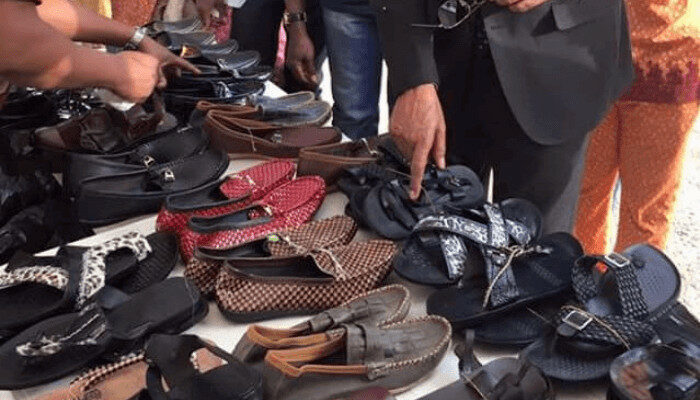
For many entrepreneurs, canvas shoe production is no longer just an artistic trade but a scalable industrial venture. Walk into popular markets such as Yaba and Mushin in Lagos or Ariaria in Aba, and clusters of micro-manufacturers are already hand-producing sneakers, school shoes and leisure footwear with limited industrial support. What they lack, they say, are financing, access to modern equipment and structured distribution to scale beyond local communities.
A Lagos-based footwear maker , Ruben Akinade said: “the industry has the potential to employ thousands if the government and investors treat shoemaking as industrial production rather than petty trade.
“People see us as artisans, but what we do is manufacturing, If the same energy given to importing shoes is put into supporting local production with machines, funding and retail access, Nigeria can produce for itself and tforhe rest of West Africa,” he said.
According to him, “one of the biggest challenges local producers face is competing with imported brands sold at low prices due to mass factory production abroad. We are not afraid of competition. What we need is the capacity to produce at scale,when we work manually, we can only produce maybe 15 to 25 pairs a day with a saizable number of staff. But with the right technology,cutting machines, vulcanising equipment, moulding machines such facilities can deliver thousands of pairs weekly”.
“If the goverment empowers the youth and shoe manufacturers like us, Nigeria can sell canvas footwear to neighbouring markets where demand is equally high to countries like Ghana, Cameroon, Benin and Côte d’Ivoire that currently import massive volumes of canvas shoes.,” he averred.
No doubt, a thriving footwear industry can reduce youth unemployment as the sector is labour-intensive, accommodating skilled and semi-skilled workers from machine operators to designers, tailors, marketers and traders. while vocational and training institutions with apprenticeship hubs can also emerge to support the industry.
Meanwhile, to unlock the potential of canvas footwear production, the shoemaker recommended targeted investment packages, access to long-term industrial loans, and partnerships with retail giants to guarantee offtake.
Hence, for people in the shoemaking trade, the future can be bright if policymakers and investors treat footwear as a strategic industrial category. “Nigeria doesn’t lack talent; we lack support. Once investors and government understand that canvas production is industrialisation, not tailoring, the story will change. The market is ready and what we’re waiting for is the capacity to meet it,” Akinade said.
We’ve got the edge. Get real-time reports, breaking scoops, and exclusive angles delivered straight to your phone. Don’t settle for stale news. Join LEADERSHIP NEWS on WhatsApp for 24/7 updates →
Join Our WhatsApp Channel