Barring any change of plans, the National Agency for the Great Green Wall (NAGGW) will move it’s operational headquarters from Abuja to Kano in line with the presidential directive.
The relocation is expected to mark a major turning point in Nigeria’s fight against desertification, land degradation and climate change, as the agency moves closer to the communities and landscapes at the centre of its interventions.
The Minister of Environment, Balarabe Abbas Lawal, described the decision as a strategic move under President Bola Ahmed Tinubu’s Renewed Hope Agenda, aimed at strengthening environmental restoration efforts and improving service delivery across the country’s northern frontline states.
According to the minister, moving the agency to the Afforestation Programme Coordinating Unit (APCU) complex in Kano will bring decision-making closer to affected communities, enhance project monitoring and promote faster implementation of the Great Green Wall programme.
“The relocation places the agency at the centre of its operations and brings decision-making closer to the people and communities directly impacted by desertification and climate change,” Lawal said.
The Great Green Wall initiative, an African Union-led programme involving over 11 Sahel countries, is designed to address land degradation, restore ecosystems and improve livelihoods. In Nigeria, it targets 11 frontline states, including Kano, Katsina, Jigawa, Borno, Yobe, Bauchi, Gombe, Adamawa, Kebbi, Sokoto and Zamfara.
The Director-General of NAGGW, Sale Abubakar, said the relocation was timely, noting that Kano has always served as the operational centre of the agency’s activities.
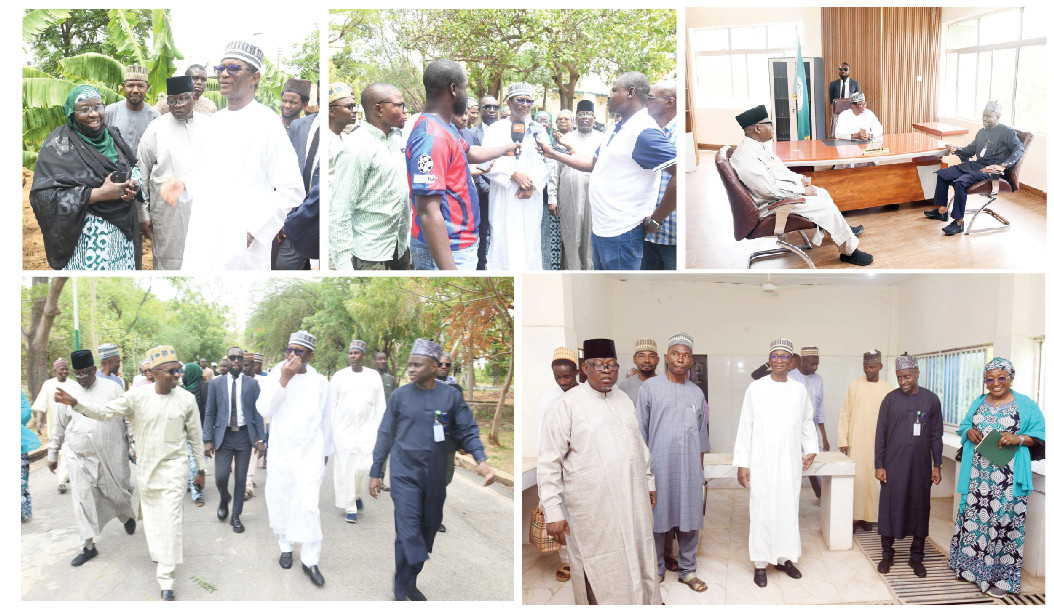
“We are here to officially take over and report to the office here. We have been given directives through the Presidency that we should relocate to the Kano Operational Office, from where we will be working henceforth,” Abubakar said during a high-level management visit to the APCU facility.
He explained that the Kano office already had existing infrastructure, including accommodation and office facilities, which would allow the agency to commence operations effectively.
“This place has been in existence for a very long time and we already have over 50 staff here. It is a functional office that I normally come to every month to work because this is the centre of our operational areas,” he added.
Abubakar noted that having the headquarters in Kano would ensure quicker response, improved coordination and stronger engagement with communities in the frontline states.
“The states that are affected by desertification should expect quicker reach, easy access and active participation because the head office is now going to be here. We are going to be fully operational,” he said.
Beyond administrative convenience, the relocation is expected to boost partnerships and funding opportunities. Abubakar disclosed that the agency had secured support from international partners, including the Food and Agriculture Organisation (FAO), through funding accessed from the United Nations.
“This is a very good time for us to be in Kano with FAO so that we can work together and make the Green Wall really great,” he said.
The minister highlighted that the agency has recorded significant achievements, including the establishment of oshelterbelts, construction of solar and wind-powered boreholes, engagement of forest guards and development of community orchards and woodlots.
Specifically, the feats recorded by the Agency include the distribution of 4,879 Solar Home Systems, installation of 1,917 solar street lights, distribution of 6,300 fuel-efficient stoves and installation of 128 solar irrigation pumps.
Worthy of mention is the fact that the Agency also raised 50,360,007 seedlings and distributed 10,505.9 tree seedlings to farmers as trees on farms. It also reclaimed 15, 200.08 ha area of degraded land, established shelterbelt, woodlot and orchard plantations among others.
The Minister explained that the previous Abuja location, which operated from a rented office, created coordination challenges because it was far from the agency’s core intervention areas.
The Kano APCU complex, originally established in 1988 under the World Bank-supported Arid Zone Afforestation Programme, provides a permanent facility within the Great Green Wall corridor.
With the relocation, stakeholders believe the agency will be better positioned to deliver on its mandate of creating a 15-kilometre-wide and 1,500-kilometre-long green belt across northern Nigeria, while improving climate resilience, food security and livelihoods of vulnerable communities.
Meanwhile, Abubakar warned land speculators against encroaching on the APCU property, insisting that the facility remains government-owned and will continue to serve environmental purposes.
“Government is not ready to sell this place because we are here and we are working,” he said.
The relocation, therefore, represents more than a change of office location; it signals a shift towards a more field-oriented approach where the Great Green Wall programme operates closer to the people it was created to serve.
We’ve got the edge. Get real-time reports, breaking scoops, and exclusive angles delivered straight to your phone. Don’t settle for stale news. Join LEADERSHIP NEWS on WhatsApp for 24/7 updates →
Join Our WhatsApp Channel