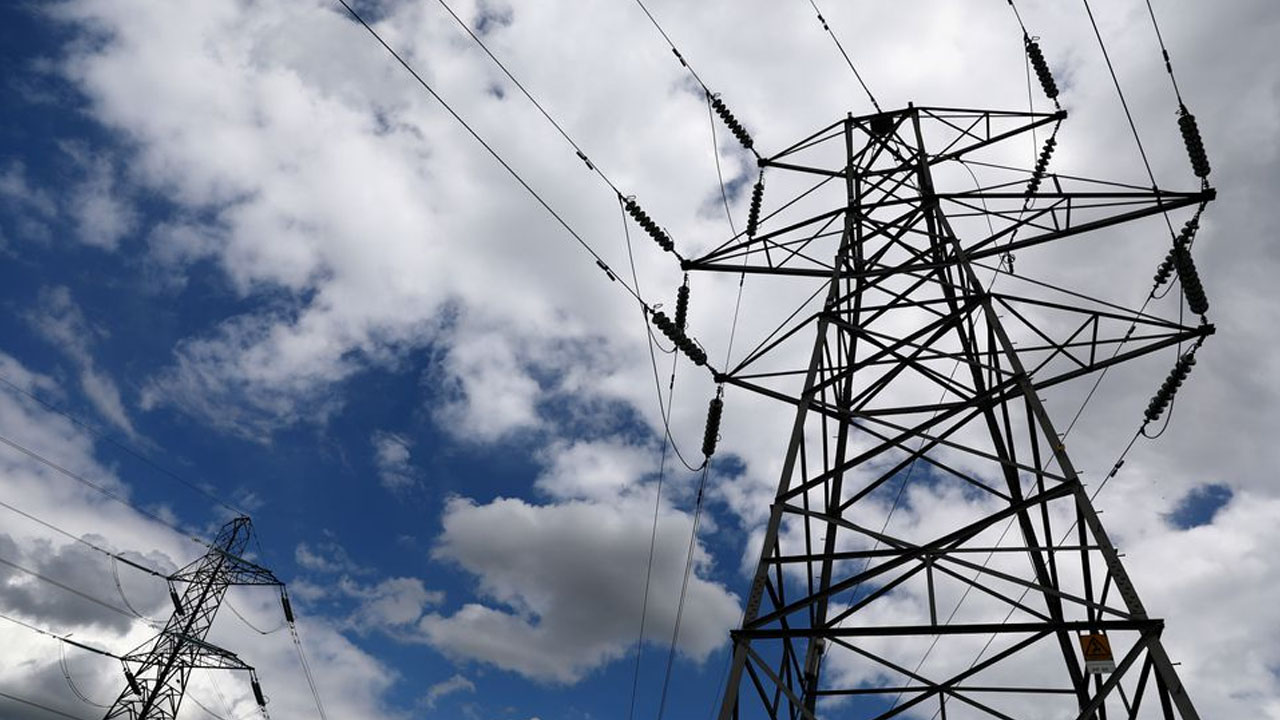
NEPA promised us no more blackouts by 1986. We’re in 2026. Two national grid collapses in the first week of January alone. If you’re not laughing at the absurdity, you’re probably crying in the dark right now because there’s no light to read this column.
I saw that old newspaper headline recently “NEPA: No more blackouts: 1986 deadline looms” and I didn’t know whether to laugh or weep. Forty years later, we’re still having the same conversation. Forty years of promises. Forty years of “the government is working on it.” Forty years of darkness.
The question every Nigerian asks is simple: why have we not solved our electricity problem since independence in 1960?
Military regimes came and went nothing. Civilian administrations rolled in with fresh promises nothing. We privatised the sector in 2013, but still nothing. President Muhammadu Buhari signed the Siemens agreement with great fanfare you guessed it, nothing moved. We passed the Electricity Act allowing states to generate their own power and predictably, not one single state has built a functional power plant.
Sixty-six years after independence, we’re stuck below 6,000 megawatts for over 200 million people.
Let me give you some context that will make you angry. Nigeria celebrated like we’d won the World Cup when power generation peaked at 5,543 megawatts in 2025. Maximum daily energy output hit 125,159MWh and government officials were practically doing victory laps. The Minister of Power held a press conference. NERC released congratulatory statements. Social media influencers praised the administration.
But here’s what they didn’t tell you in those press releases:South Africa, with just 60 million people, generates approximately 58,000MW. That’s more than ten times what we produce for a population four times smaller.
Egypt, with 104 million citizens, produces around 59,000MW.
Ghana yes Ghana! whose entire population barely exceeds 33 million people, generates about 5,000MW. Let that sink in. Ghana with 33 million people generates almost the same power as Nigeria with 200 million.
We’re celebrating mediocrity while the rest of the continent leaves us in the dust. Or should I say, leaves us in the dark?
The World Bank has thrown money at this problem like a desperate gambler at a losing table. Research shows Nigeria secured approximately 10 World Bank loans worth $4.36 billion over the past decade specifically to address power sector challenges. Four point three six billion dollars. Gone. Vanished into the black hole of Nigerian corruption and incompetence.
Where did all that money go? I’ll tell you where it didn’t go into your prepaid meter. It didn’t go into fixing the national grid that collapses more often than a knock-off Chinese generator.
Now, after privatisation failed spectacularly, some clever people suggested that states should generate their own power. President Buhari signed the Electricity Act in 2023 giving states the legal framework to build their own power plants. Finally, we thought, let governors compete. Let Babajide Sanwo- Olu show Charles Soludo what Lagos can do. Let Uba Sani Kaduna prove northern states can deliver.
Two years later nothing. Not one state has built a functional power plant. And before you start abusing governors on social media, let me give you some numbers that will shock you.
Building a 300 megawatt power plant costs between $270 million and $5 billion depending on the technology. Let me break that down:
A coal plant (300MW) costs around $400 million which is roughly N400 billion at current exchange rates.
A solar plant (300MW) costs approximately $500 million – about N500 billion.
A hydroelectric plant (300MW) ranges from $1.65 billion to $2.5 billion we’re talking N1.6 trillion to N2.5 trillion here. Large-scale infrastructure projects can exceed $5.8 billion when you factor in dams, turbines, and transmission lines.
Now tell me, which state in Nigeria has N400 billion to N2.5 trillion lying around for power generation? Lagos State’s entire 2024 budget was around N2.2 trillion and that covers everything from roads to schools to healthcare to security. Rivers State, one of our richest, had a budget of about N800 billion.
So when you hear politicians promising that the government will deliver a 24-hour power supply in one year, please laugh. I was listening to a radio call-in programme last week and one caller confidently declared that “any serious government can give Nigeria 24-hour power in one year.”I nearly drove off the road laughing.
Let me be blunt: No Nigerian politician alive today can give us a 24-hour power supply in one year. Nobody. Not Bola Tinubu. Not Atiku Abubakar, Not Peter Obi. Not Sanwo-Olu. Not Soludo. Not any of these people we’re arguing about on social media. I’m not being cynical. I’m being realistic. The mathematics simply don’t add up.
To provide 24-hour power for 200 million people, Nigeria needs at least 40,000 to 50,000 megawatts of installed capacity. We currently have less than 13,000MW installed capacity and we can barely generate 5,000MW on a good day. We need to increase generation by nearly ten times.
Even if and this is a massive if the federal government found the $50 billion to $80 billion needed for generation, you still have the problem of transmission. Our national grid is so decrepit that it collapses when generation exceeds 5,000MW. The grid wasn’t built for modern Nigeria. It’s like trying to run a supercomputer on your grandfather’s electrical wiring from 1975.
Fixing the transmission requires another estimated $10 billion to $15 billion. Then there’s the distribution of the network of wires, transformers, and substations that bring power to your house. That needs another $20 billion to $30 billion investment.
We’re looking at $80 billion to $125 billion total to fix this problem properly. Nigeria’s entire 2026 budget was around N54 trillion, so we’d need three to five times our annual budget just to fix electricity.
Can it be done? Yes. Countries have done it. China added more power generation capacity in the 1990s and 2000s than Nigeria’s entire installed capacity today. India added tens of thousands of megawatts. Even Vietnam and Bangladesh have surged ahead while we remained stuck.
But it requires something Nigerian politicians have consistently lacked: long-term thinking, honest leadership, and the willingness to make difficult decisions. It requires ending the culture of corruption in the power sector where contracts are awarded to cronies who can’t deliver. It requires forcing DisCos to actually invest instead of just collecting bills. It requires political will to prosecute officials who have embezzled billions meant for power projects.
Most importantly, it requires patience from Nigerians. This is a 10 to 15-year project minimum if done right. Not one year. Not even four years. Any politician promising you 24-hour power in one election cycle is either lying or delusional.
So where do we go from here?
First, Nigerians need to stop believing the lies. When politicians promise 24-hour power in one year, laugh at them. Publicly. Loudly. Make them explain the mathematics.
Second, we need incremental targets that are achievable. Aim for 15,000MW by 2030. Then 25,000MW by 2035. Set realistic milestones and hold people accountable when they miss them.
Third, states must get creative. If you can’t afford a 300MW plant alone, pool resources. Let the Southwest states jointly build a plant. Let the Southeast states collaborate. Stop waiting for Abuja to solve everything.
Fourth, prosecute officials who have actually stolen power sector funds. Not the usual Nigerian “committee to investigate” nonsense that goes nowhere. Real prosecutions with jail time.
Fifth, incentivize private investment properly. Give tax breaks to companies that build captive power plants. Make it easy for manufacturers to generate and sell excess power to the grid.
The 1986 deadline came and went. So did 1990, 2000, 2010, 2020. We’re still in darkness. The question is whether 2040 will be any different.
It will only be different if we stop accepting empty promises and start demanding honest leadership with realistic plans.
Until then, keep your generators fueled. Because NEPA sorry, PHCN sorry, “the DisCos” aren’t fixing anything anytime soon.
We’ve got the edge. Get real-time reports, breaking scoops, and exclusive angles delivered straight to your phone. Don’t settle for stale news. Join LEADERSHIP NEWS on WhatsApp for 24/7 updates →
Join Our WhatsApp Channel