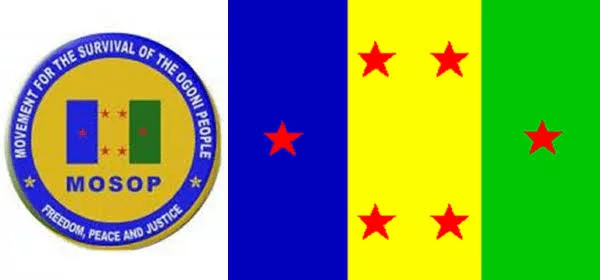
The Movement for the Survival of Ogoni People in the United States of America (MOSOP-USA) has said it is opposed to the resumption of oil exploration in Ogoniland, Rivers State because of the refusal of the federal government to integrate the Ogoni Bill of Rights (OBR) into the Nigerian constitution as recommend by the 1957 Willink Commission.
MOSOP-USA president,Elder DineBari Augustine Kpuinen, who disclosed this in a statement issued in Port Harcourt yesterday, expressed regret that more than 35 years after the OBR was signed, the federal government has done nothing to address the plight of the Ogoni people.
While reaffirming the organisation’s commitment to the OBR, Kpuinen said the bill was a fundamental condition established by the British government for the inclusion of Ogoni within Nigeria at the time of independence in 1960.
The statement reads in part: “The Movement for the Survival of the Ogoni People USA (MOSOP-USA) reaffirms its commitment to the Ogoni Bill of Rights. We maintain our support for this Bill, as it was a fundamental condition established by the British government for the inclusion of Ogoni within Nigeria at the time of independence in 1960.
“The nations of the Niger Delta had sought a separate state in conjunction with Nigeria, driven by concerns of potential domination and marginalization by the major ethnic groups. Unfortunately, the Ogoni people continue to experience similar challenges today.
“Following the death of the late Hon. Paul Nakuu Timothy Birabi, a prominent advocate for the movement, under controversial circumstances, the British government established a Commission of Inquiry and appointed Sir Henry Willink as its chairman.
“This body is commonly referred to as the Willink Commission. Its primary aim was to investigate and offer a solution to the concerns of minority groups. Consequently, the request for the establishment of a separate state was denied, contingent upon the minorities’ submission of a Bill of Rights.
“This Bill was intended to be integrated into the Constitution of Nigeria to safeguard the interests of these groups and to address their concerns, as articulated in the 1957 Willink Commission resolution.
“The discovery of oil in commercial quantities in 1958 significantly transformed the economic landscape of the region. Following the attainment of independence, the Nigerian government commenced the exploitation of the resources belonging to minority groups for the purpose of enhancing its economic interests.
“In 1960, at the time of Nigeria’s independence, all resolutions put forth by the Willink Commission in support of the Delta Niger people (minorities) were dismissed, overlooked, and disregarded. This event marked the commencement of a prolonged denial of our rights by both the populace and the government of Nigeria.
“On this date in 1990, the leaders of the Ogoni people referenced the decision of the Willink Commission as a prerequisite for their continued association with Nigeria.
“The anxieties surrounding domination and annihilation that minority groups experienced prior to independence are currently mirrored in the situation of the Ogoni people. The Hausa / Fulani herders, comprising a significant portion of the population within the Nigerian Nation, utilize our cash crops, vegetables, and various agricultural products as feed for their livestock.
“Speaking out against this evil practice can result in severe repercussions. In our region, Fulani herders have kidnapped people to extort money from their families, killing the victim if the family cannot pay.
“Furthermore, the Biafran nation, another significant ethnic group, has forcibly annexed the Oyigbo Local Government Area, which rightfully belongs to the Ogoni people. Consequently, the Biafrans receive both federal and state allocations for this area, which should exclusively benefit the Ogoni community.
“Our environment is among the most polluted in the world due to reckless and unchecked oil exploration on our land. Major ethnic groups and the government have embezzled the oil royalties and land rent that are owed to the Ogoni people.
“Despite the lack of compensation for the Ogoni and the failure to clean our polluted environment, the NNPC is provoking the Ogoni people by forcefully resuming oil operations in Ogoni, violating the PERSONA NON GRATA that was declared against them in 1993.
“Furthermore, the Bill of Rights continues to be blatantly overlooked. Ogoni is not viewed as a vital stakeholder in Nigeria; rather, it is treated as a conquered territory, subjected to oppression, destruction, and internal colonization. Besides these pressing issues, our government and some leaders remain fixated on resuming oil activities, ignoring the call for justice and dignity.
“When we appealed to the government and people of Nigeria for protection, that same government responded not by safeguarding the Ogoni nation but by murdering our leaders and citizens who were non-violently demanding their rights.
“We protested against internal colonization, oppression, environmental pollution, political marginalization, and land degradation. As a result, many were forced into exile, with some still suffering from statelessness in the Benin Republic and other West African countries to this day.”
We’ve got the edge. Get real-time reports, breaking scoops, and exclusive angles delivered straight to your phone. Don’t settle for stale news. Join LEADERSHIP NEWS on WhatsApp for 24/7 updates →
Join Our WhatsApp Channel