
The World Meteorological Organization (WMO) has raised alarm that the Earth’s climate system is now more imbalanced than at any point in recorded history, driven by steadily rising greenhouse gas concentrations.
This warning was outlined in its annual State of the Global Climate report released on Monday. The report noted that increasing levels of heat-trapping gases are fuelling unprecedented warming across both land and oceans, with wide-ranging implications for human life and ecosystems.
The WMO further revealed that the planet’s energy imbalance has grown markedly between 2001 and 2025, accelerating the pace of global warming.
It added that 2025 saw a sharp rise in extreme weather events — including heatwaves, floods, droughts, wildfires and tropical cyclones — leading to fatalities and substantial economic damage worldwide.
It further noted that these disasters are triggering secondary impacts such as food insecurity, displacement, and rising health risks, including heat stress and the spread of mosquito-borne diseases.
Ko Barrett, WMO deputy executive secretary, said the period between 2015 and 2025 has been the hottest 11-year stretch on record.
She added that 2025 was approximately 1.43°C above the 1850–1900 baseline, placing the planet dangerously close to the 1.5°C threshold linked to severe climate consequences.
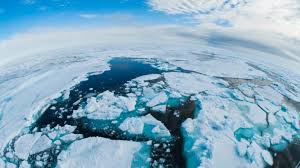
“As glaciers continue to retreat and ice continues to melt, the warming ocean and melting land-based ice are driving the long-term rise in global mean sea level rise,” she said.
Barrett urged stronger investment in early warning systems to help vulnerable countries better prepare for worsening climate shocks.
The report also revealed that concentrations of key greenhouse gases—carbon dioxide, methane, and nitrous oxide—hit record highs in 2024, recording their largest year-on-year increase.
John Kennedy, WMO scientific officer, said monitoring data shows these levels continued rising into 2025, further destabilising the planet’s energy balance.
He explained that under normal conditions, energy received from the sun is balanced by energy radiated back into space.
“There’s less outgoing energy due to the increased concentrations of greenhouse gases. More energy coming in than going out means that energy is accumulating in the Earth’s system,” he said.
Kennedy added that about 90 per cent of the excess heat is absorbed by the oceans, increasing marine heat stress and posing threats to coastal communities.
“This matters because over three billion people depend on these marine and coastal resources for their livelihoods, while nearly 11 per cent of the global population live on low-lying coasts directly exposed to coastal hazards,” he said.
WMO Secretary-General Celeste Saulo said human activity is increasingly destabilising the natural climate balance.
“Human activities are increasingly disrupting the natural equilibrium and we will live with these consequences for hundreds and thousands of years,” Saulo said.
The agency called for stronger climate services, improved data systems, and expanded early warning coverage to help countries adapt and protect lives and livelihoods.
Reacting to the report, UN Secretary-General António Guterres said, “Every key climate indicator is flashing red.
“Our global climate is in a state of emergency. The way ahead must be grounded in science, common sense and the courage to take urgent.
“Humanity has just endured the 11 hottest years on record. When history repeats itself 11 times, it is no longer a coincidence. It is a call to act.”
We’ve got the edge. Get real-time reports, breaking scoops, and exclusive angles delivered straight to your phone. Don’t settle for stale news. Join LEADERSHIP NEWS on WhatsApp for 24/7 updates →
Join Our WhatsApp Channel