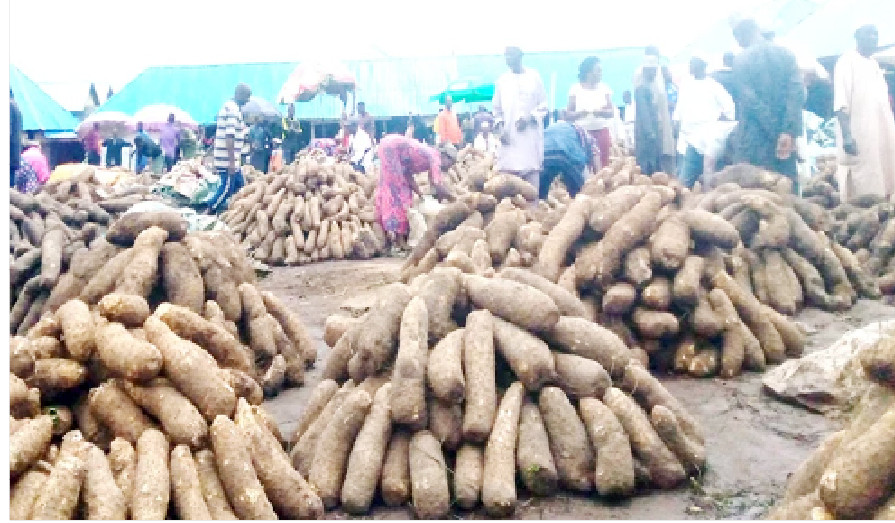
Amid rising food insecurity in Nigeria, yam farming and its value chain offer a promising investment opportunity, with the potential to generate significant returns within six to twelve months , the typical period from planting to harvest.
Beyond cultivation, investors can explore the yam value chain, which provides opportunities for year-round income through processing, storage, and distribution. Although yam is grown seasonally, it remains a staple food consumed throughout the year, making it a dependable and resilient commodity in Nigeria’s food market.
The rapid expansion of the hospitality industry, ranging from local food vendors to upscale restaurants, has further boosted demand for yam-based meals. From boiled yam and porridge to fried and roasted variants, yam features prominently on menus, ensuring steady patronage for investors.
Value addition also enhances profitability. Yam can be processed into flour, chips, flakes, and powdered forms used in preparing yam-based dishes. These processed products not only reduce post-harvest losses but also create new market segments for entrepreneurs.
Experts say investing in yam farming or its value chain provides an alternative to Nigeria’s oil-dependent economy, while also generating employment and addressing food shortages.
Speaking with LEADERSHIP Weekend, a farmer and part-time lecturer, Christopher Adetunji, advised prospective investors to consider direct involvement in farming or establish reliable supply chains.
“Yam is highly perishable and can spoil easily, so buying in bulk for resale without proper storage is risky,” he said. “It is better to own a farm or partner with a trusted farmer to ensure steady supply and minimize losses.”
Adetunji noted that small-scale
Yam farming can be started with as little as ₦100,000, even within a residential compound. According to him, this level of investment is sufficient to support small-scale production, basic processing, and supply to a limited customer base.
“For larger-scale farming, you’ll need more land and labour. However, even in yam processing, an investor can start with about N100,000 and potentially generate up to N1 million in profit, depending on market access and scale,” he added.
Similarly, a trader at the Mushin Yam Market, Hajia Akinloye, emphasized the importance of strong market linkages and proper handling practices.
“Anyone going into yam trading whether selling directly to consumers or supplying hotels should start with about N100,000 on a small scale and grow gradually,” she said. “Profitability depends on your ability to connect with large buyers. But remember, yam is sensitive to heat during transportation, so proper handling and storage are essential.”
Nigeria remains one of the largest producers of yam globally, with cultivation widespread across states such as Edo, Delta, Taraba, Adamawa, Cross River, Oyo, Ekiti, Imo, Niger, Nasarawa, Kaduna, Enugu, Kogi, and Ondo. This widespread production ensures consistent supply for both local consumption and value-added processing.
With improved technology, better storage systems, and stronger market linkages, stakeholders say the yam value chain holds significant potential for boosting incomes, reducing waste, and strengthening food security across the country.
We’ve got the edge. Get real-time reports, breaking scoops, and exclusive angles delivered straight to your phone. Don’t settle for stale news. Join LEADERSHIP NEWS on WhatsApp for 24/7 updates →
Join Our WhatsApp Channel