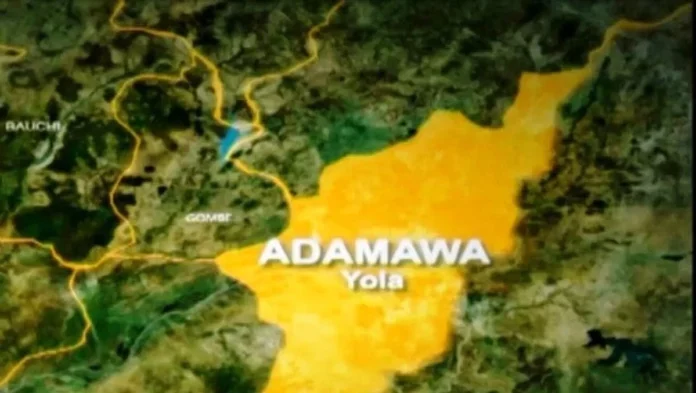
Last weekend I found myself in a city I had never stepped into before.Adamawa.I was part of President Bola Tinubu’s media team on his first official visit to the state, and I’ll admit it I was curious. I had been to Borno. I had been to Yobe. The North East, in my head, was a place defined by headlines: insurgency briefings, humanitarian statistics, grim photos from IDP camps.
Then we landed in Yola. Forty degrees Celsius. That wasn’t heat. That was punishment. The kind that slaps you across the face the moment you descend the aircraft stairs. My colleague checked his phone and showed me the number 40°C. I stopped complaining about the Abuja sun that day.
But something else hit me too. The roads. On our way from the Lamido Aliyu Mustapha Airport into town, I kept staring out the window. Smooth stretches. Clean markings. Some of those roads can hold their own against parts of the Federal Capital Territory. I’m not exaggerating. I’ve seen enough broken asphalt in this country to know the difference between cosmetic patchwork and deliberate construction.
Yola is quiet. Orderly. Almost shy. And that surprised me.
Before the trip, I had heard the usual dismissive tone people use when describing some northern state capitals. “Ah, you’re going there?” As if you were headed into a war documentary. But the city didn’t match the caricature.
Almost everyone I spoke to had one refrain: Governor Ahmadu Fintiri. They said his name the way people mention someone who has delivered something tangible. And in politics, visible projects speak louder than press releases.
On Monday, the city shifted gears. Crowds lined the streets to welcome President Tinubu. And yes, I noticed something else this is a People’s Democratic Party(PDP )state. Yet the turnout did not carry the bitterness or distance you sometimes see when federal and state politics diverge.
Rumours are swirling that Fintiri may find his way into the All Progressive Congress (APC). I don’t trade in rumours. But politics in Nigeria has always had flexible doors.
The President commissioned projects ;the Yola Model School, an eight-lane road with an underpass, a remodelled High Court complex, and a new Government House office building. The governor was precise with figures. N24.8 billion for the model schools across 21 local governments. N15.6 billion for the expanded road project. N5.5 billion for the High Court. N6.3 billion for the Government House complex.That level of specificity matters. It allows scrutiny. And scrutiny is healthy.
Inside the Government House, cultural troupes performed. There was colour, rhythm, pride. A Yoruba cultural group performed in Yola, Nigeria in miniature. And then Rarara took the stage. “Omo Logo” rang through the crowd, and the atmosphere shifted from ceremonial to electric. Whatever you think of political praise music, you can’t deny its effect. The crowd loved it.
Then the President spoke. And this is where the visit took on deeper political meaning. He showered praise on the National Security Adviser, Nuhu Ribadu, son of the soil. Honest. Bold. Courageous. Committed. Words chosen carefully and delivered firmly.
“With you, we will defeat the bandits and terrorists.”That endorsement did not happen in a vacuum. There is an ongoing feud between Ribadu and former Kaduna governor Nasir El-Rufai. El-Rufai has accused the NSA of serious misconduct, including involvement in the importation of a poisonous chemical and using the ICPC as a personal instrument. In one interview, he went further claiming Ribadu ordered his arrest and that someone tapped the NSA’s phone. When pressed, he doubled down: “Someone tapped his phone.”
Pause there. That is not small talk. That is an allegation that drags national security into political combat. And when former governors begin speaking openly about phone taps, intelligence access, and internal orders, we should all pay attention.
Because this is bigger than personalities. It raises uncomfortable questions about how power operates after office. About access to security information. About how far political rivalries can stretch before they weaken institutions.
Let me step back for a second because this is important. Nigeria cannot afford a public war between the current security leadership and former state executives while insurgency, banditry, and kidnapping still stalk communities. The North West bleeds weekly. The North Central trembles. Even the South is not immune to violent crime.
And when the President publicly backs his NSA in the NSA’s home state, that is not accidental theatre. That is a message. It says: I stand with my security team. It also says: internal disputes will not dictate federal posture.
The President also spoke about macroeconomic progress, increased allocations to states, investments in agriculture, and human capital. He urged governors to channel more resources toward poverty reduction and education. He thanked traditional rulers for maintaining peace during what he called difficult economic adjustments.
And yes, the federal allocation numbers have risen since fuel subsidy removal and exchange rate adjustments. States now have more fiscal breathing space. But allocations alone do not change lives. Execution does. What I saw in Yola suggests one thing: when states use funds visibly and strategically, citizens notice. Roads matter. Schools matter. Courts matter. They create structure. They improve daily life.
There’s also the political choreography to consider. Five governors attended: Agbu Kefas of Taraba, Babagana Zulum of Borno, Caleb Muftwang of Plateau, Inuwa Yahaya of Gombe, and Mai Mala Buni of Yobe. Different parties. Different alignments. But present.
Solidarity across party lines during federal visits sends a signal. It suggests cooperation. And cooperation, in a federation as complex as ours, is not optional.
Still, I keep returning to the heat in Yola. Forty degrees. It felt symbolic.
Nigeria right now is politically and economically hot. Tensions simmer beneath speeches. Allegations fly. Security challenges persist. Reforms pinch. And in that heat, leadership is tested.
Governor Fintiri has clearly invested in visible infrastructure. That earns political capital. President Tinubu is pushing structural economic changes that have increased state revenues but also stretched citizens’ patience. Both realities can exist at once.
And here is where we must be careful as observers and citizens. We cannot reduce governance to cultural performances and applause lines. We also cannot dismiss visible progress because it emerges from a rival party.
Competence should be acknowledged wherever it appears.
If a PDP governor builds durable roads and functional schools, say so. If an APC president strengthens fiscal capacity for states, say so. And if security leadership falls short, say that too without fear or favour.
In Yola, I saw a city defying stereotypes. I saw citizens proud of their governor’s work. I saw a president projecting unity across party lines. I also saw the quiet undercurrent of political repositioning that defines our system.
We are always one rumour away from a defection. We are always one interview away from a new controversy. But governance is not gossip. It is a delivery.
As the aircraft lifted off from Yola that evening, the sun still punishing the tarmac, I thought about something simple: Nigerians do not care which party fixes their road. They care that the road is fixed. They do not care who sings the praise song. They care that their children can attend a functional school. Everything else is noise.
The heat in Adamawa will not cool soon. The political temperature in Abuja may not either. But the standard must remain steady. Competence over theatrics. Institutions over personalities. Delivery over drama.
If that becomes our measuring stick, then visits like this will mean more than photo opportunities. And that is the real test of power.
We’ve got the edge. Get real-time reports, breaking scoops, and exclusive angles delivered straight to your phone. Don’t settle for stale news. Join LEADERSHIP NEWS on WhatsApp for 24/7 updates →
Join Our WhatsApp Channel