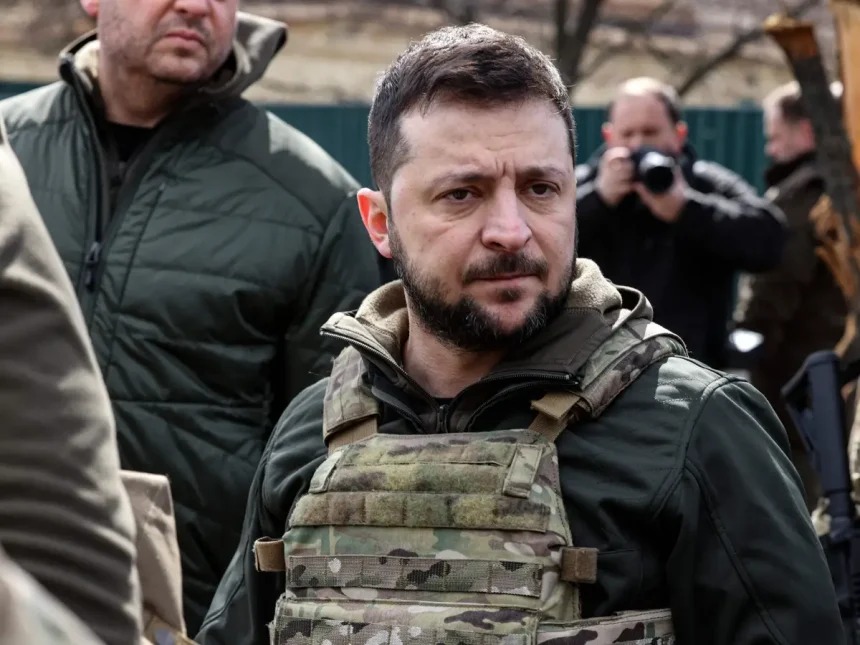
Ukrainian President Volodymyr Zelenskyy has dismissed the country’s top military commander, Gen. Oleksandr Syrskyi, following days of protests calling for changes in the armed forces leadership.
Zelenskyy announced the appointment of Gen. Mykhailo Drapatyi as the new commander-in-chief of Ukraine’s armed forces, saying the decision followed consultations with military commanders.
The move came after widespread demonstrations in Kyiv and other Ukrainian cities over the removal of former Defence Minister Mykhailo Fedorov, whose dismissal triggered criticism from soldiers, veterans and civilians who accused the government of abandoning military reforms.
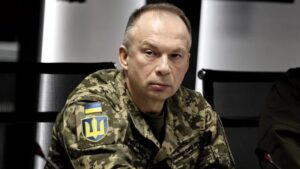
Announcing Drapatyi’s appointment, Zelenskyy said Ukraine’s priority remained achieving victory in its war against Russia.
“Our shared wish is one — victory over the enemy and conditions at the front and pressure on Russia that would force Russia towards peace,” Zelenskyy said.
The Ukrainian president thanked Syrskyi for his service, praising his role in defending Kyiv during the early stages of Russia’s full-scale invasion in 2022, as well as operations in Kharkiv and Kursk.
“I am grateful to Oleksandr Syrskyi and to every one of our warriors for Ukraine’s strong front-line positions,” Zelenskyy said. “I am grateful to Mykhailo Drapatyi for holding that same view.”
Drapatyi, 43, described his appointment as a major responsibility, pledging to focus on strengthening Ukraine’s military.
“Serving Ukraine has always been an honour for me, and during this war for independence, it means absolute responsibility,” he said in a Facebook post.
“I will work responsibly, with focus and with respect for the people defending our state today.”
The new army chief also thanked Syrskyi “for his consistent work to strengthen the Ukrainian military,” adding, “I grew up in it.”
Zelenskyy directed Drapatyi and other military commanders to present a new defence strategy focused on military reforms, faster weapons and drone deliveries, improved air defence against Russian attacks and a clearer mobilisation plan.
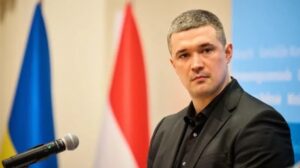
The leadership change followed the removal of Fedorov, who had been appointed defence minister in January and gained popularity for introducing technology-driven reforms and supporting Ukraine’s drone warfare capabilities.
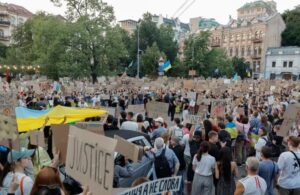
Fedorov’s dismissal sparked protests, with demonstrators accusing Zelenskyy of siding with what they described as an old military establishment over reform-minded leaders.
The former minister had publicly criticised Syrskyi, accusing him of blocking military reforms and maintaining a traditional top-down command structure.
He argued that Ukraine needed faster reforms, stronger use of robotics in warfare, improved protection of soldiers’ lives and a strategy aimed at weakening Russia’s military capacity.
Following Drapatyi’s appointment, Fedorov described the move as “new hope in the fight of free people for freedom and justice.”
“It is a voice for change that could not be ignored,” he said.
Syrskyi, however, defended his record in a farewell message, saying Ukraine’s military had undergone significant transformation under his leadership.
“An army that was fighting a difficult defensive campaign two years ago is now on the offensive,” Syrskyi wrote on Telegram.
“I am handing over to my successor an army that is not only holding the line but is advancing. I sincerely hope this offensive will continue.”
Syrskyi had faced criticism over his leadership style, particularly during the battle for Bakhmut, one of the longest and most costly battles of the war.
Some critics accused him of prioritising military objectives over soldiers’ lives, earning him the nickname “Butcher” among opponents.
His reputation was further affected after Ukrainian media outlet Babel reported allegations of abuse within the Skelia assault regiment, a unit associated with him.
Meanwhile, Zelenskyy revealed that he met with Fedorov and offered him what he described as a “worthy position” in government to help unite the country’s technology sector.
It remained unclear whether Fedorov accepted the offer.
The reshuffle marks one of the biggest changes in Ukraine’s military leadership since Russia launched its full-scale invasion, with attention now focused on whether Drapatyi’s appointment will calm public anger and improve confidence within the armed forces.
We’ve got the edge. Get real-time reports, breaking scoops, and exclusive angles delivered straight to your phone. Don’t settle for stale news. Join LEADERSHIP NEWS on WhatsApp for 24/7 updates →
Join Our WhatsApp Channel