The Revenue Mobilisation, Allocation and Fiscal Commission (RMAFC) has restarted the verification of disputed and newly drilled oil and gas wells across the country, after producing states raised objections to an earlier draft report on the exercise.
The commission’s chairman, Dr Mohammed Bello Shehu, disclosed this on Wednesday in Abuja at the inauguration of a reconstituted Inter-Agency Technical Committee (IATC), saying the previous report was set aside following claims, counterclaims and complaints from several states over the accuracy of well coordinates.
According to Shehu, the states’ concerns centred largely on the need to re-verify the coordinates of disputed and newly drilled wells and ensure they are correctly plotted on approved maps, rather than on the scope of the exercise itself.
The committee, whose mandate covers wells drilled from 2017 to date, is central to determining how the 13 per cent derivation fund is shared among oil and gas-producing states, since the geographic location of a well determines which state is credited with its output for revenue purposes.
Shehu said the fresh verification falls within RMAFC’s constitutional responsibility to monitor revenue accruing to, and disbursed from, the Federation Account, and is designed to guarantee fairness, clarity and stability in derivation allocations going forward.
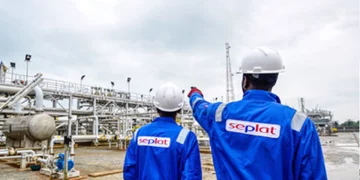
He directed members of the reconstituted committee to take relevant court judgments into account, rely strictly on officially approved maps, and carry out physical inspection of affected wells where required, rather than depending solely on documentary data.
The Commission said it has put in place a two-tier structure to run the exercise. The first tier consists of technical officers and subject-matter experts drawn from RMAFC, the Office of the Surveyor-General of the Federation, the National Boundary Commission and the Nigerian Upstream Petroleum Regulatory Commission (NUPRC). This team will handle ground-level verification, field inspections, technical analysis and the drafting of an initial report.
The second tier is an executive committee led by RMAFC’s leadership, which will provide overall direction, coordinate the various agencies involved, and approve the technical team’s findings before they go forward for formal ratification.
Shehu charged committee members to approach the assignment with integrity, objectivity and patriotism, stressing that the outcome would shape how derivation revenue is allocated among beneficiary states for years to come. RMAFC’s secretary, Tosin Adeyanju, also urged members to place national interest above sectional considerations and ensure diligence throughout the process.
The Commission said the exercise is expected to strengthen the credibility of revenue monitoring and allocation in Nigeria’s oil and gas sector, and to provide a lasting resolution to the recurring disputes among producing states over well ownership and derivation entitlements.
We’ve got the edge. Get real-time reports, breaking scoops, and exclusive angles delivered straight to your phone. Don’t settle for stale news. Join LEADERSHIP NEWS on WhatsApp for 24/7 updates →
Join Our WhatsApp Channel