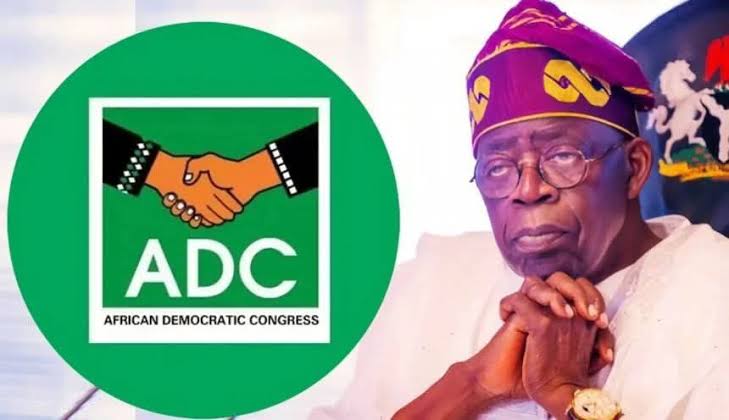
The African Democratic Congress (ADC) has alleged that President Bola Tinubu may introduce a five per cent fuel tax after the 2027 presidential election if he secures re-election, warning that the measure could push petrol prices above N1,500 per litre.
The party said the proposed tax could increase the financial burden on Nigerians already grappling with high transportation costs, rising food prices and other economic challenges.
The ADC National Publicity Secretary, Mallam Bolaji Abdullahi, stated this in a press release yesterday while reacting to comments by the Minister of Finance, Taiwo Oyedele, that the government would introduce the fuel tax when economic conditions improved.
Oyedele reportedly made the disclosure on the sidelines of the International Monetary Fund (IMF) meeting in Bangkok, Thailand.
Reacting, Abdullahi alleged that the government’s decision to delay the implementation of the tax was influenced by political considerations ahead of the 2027 general elections.
According to him, the five per cent fuel tax has already been provided for under the Nigeria Tax Act, which he said Tinubu signed into law in June 2025.
“They have already enacted the law for a five per cent tax on fuel under the Nigeria Tax Act. President Tinubu has signed it into law since June 2025. If they have not activated it yet, it is because of re-election,” Abdullahi said.
He further alleged that the president could announce the implementation of the tax after securing another term in office, drawing a comparison with his declaration on fuel subsidy removal during his inauguration on May 29, 2023.
“Once Tinubu is re-elected, he will announce the new tax law on the inauguration ground, just as he did for fuel subsidy in 2023,” the ADC spokesman said.
The party argued that implementing the proposed tax could result in another increase in the pump price of petrol, with consequences for households, transport operators, traders and businesses that depend on fuel for their daily operations.
It illustrated the potential impact using a petrol price of N1,450 per litre, stating that a five per cent surcharge passed directly to consumers would increase the price to N1,522.50 per litre.
The ADC warned that such an increase could further raise the cost of public transportation, goods distribution and essential services, potentially worsening the financial difficulties faced by households and small businesses.
The party also criticised the administration’s justification for the proposed tax, which it said was intended to support road infrastructure and fuel-price stabilisation.
It argued that the government should demonstrate measurable improvements in infrastructure and economic conditions before introducing additional charges that could increase the cost of living.
The ADC said Nigerians were already contending with the effects of previous economic policy decisions, including the removal of petrol subsidies, and urged the government to prioritise measures that would ease the pressure on households rather than introduce additional financial obligations.
The party also cited Tinubu’s position on fuel taxation when he was governor of Lagos State, claiming that he opposed a similar proposal by the administration of former President Olusegun Obasanjo in December 2003.
According to the ADC, Tinubu had then described the proposed fuel tax as “double taxation,” arguing that it would impose an additional burden on citizens.
The party questioned what it described as a departure from that position, accusing the president of supporting a measure that could further increase the cost of living.
It, however, urged Nigerians to consider the alternative economic policy proposed by its presidential candidate, Atiku Abubakar, which it described as a fuel production subsidy.
The ADC argued that the proposed measure would help reduce petrol prices and ease the cost of living, although the press release did not provide details of its proposed implementation or financing.
The party maintained that the government should focus on policies capable of reducing the cost of essential goods and services as Nigerians continue to contend with economic pressures.
We’ve got the edge. Get real-time reports, breaking scoops, and exclusive angles delivered straight to your phone. Don’t settle for stale news. Join LEADERSHIP NEWS on WhatsApp for 24/7 updates →
Join Our WhatsApp Channel