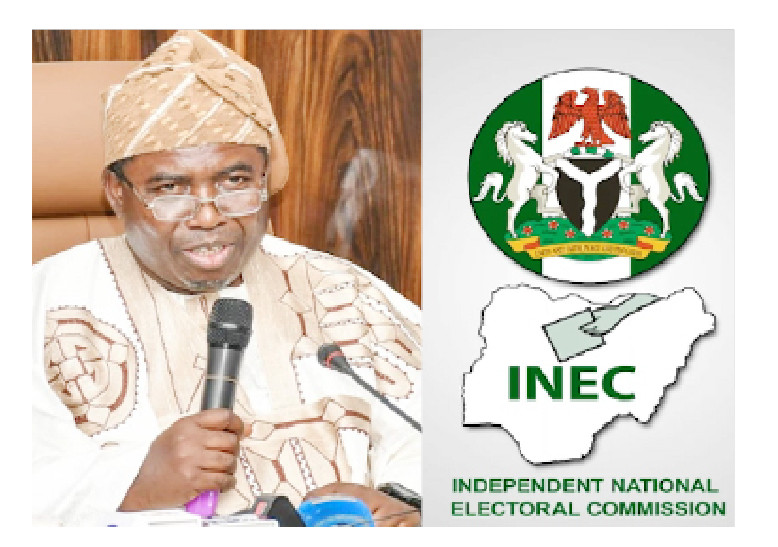
As the Independent National Electoral Commission (INEC) intensifies preparations for upcoming elections, stakeholders in the blockchain technology ecosystem have urged the commission to consider a gradual, test-run approach to integrating distributed ledger technology into the nation’s electoral process.
Speaking during an X Space hosted by the Stakeholders in Blockchain Technology Association of Nigeria (SiBAN), industry experts argued that while blockchain is not a magic wand, its deployment could substantially reduce the risk of result manipulation and boost voter confidence ahead of the 2027 general elections.
The conversation, which brought together technology entrepreneurs, electoral officials and policy advocates, explored the feasibility of transitioning from Nigeria’s current electoral framework to a more transparent, verifiable and immutable system.
The chief executive officer of Alpha-Geek Technologies, Oluwaseun Dania, told participants that the core value of blockchain lies not in changing how Nigerians vote, but in safeguarding what their votes represent.
“The real opportunity is actually much simpler, blockchain is not there to change how Nigerians vote, but to technically protect the integrity of the votes that are cast. People will be more confident knowing that as they are casting their votes, the results are being recorded on the blockchain, visible to everybody all over the world,” he stated.
Dania further identified voter apathy as a direct consequence of widespread perception that votes do not count, particularly during result transmission and collation. According to him, a time-stamped, properly verified blockchain system could incentivise disillusioned citizens to return to the polling booths.
While contributing to the technical feasibility of the proposal, chief executive officer of Egoras Technology, Harry Ugorji, recommended leveraging existing party structures as testing grounds before any national rollout.
Ugorji also addressed concerns about transaction costs, commonly known as gas fees, which have hindered blockchain adoption in resource-constrained settings.
“They have to scan the EC8A form,” Ugorji explained, referring to the result sheet used at polling units. “Once they scan and upload, there should be an AI-based layer that extracts that information and transmits it to the smart contracts. This data can be saved using IPFS (InterPlanetary File System) so that at every point in time, everybody can verify that data.”
He envisioned a streaming electoral process in which votes are counted in real time, effectively eliminating the black-box period during which manipulation often occurs.
President of SiBAN, Mela Claude Ake, expressed the association’s readiness to collaborate with INEC in an advisory capacity, noting that the conversation would continue as part of broader efforts to sustain momentum for electoral reform.
However, experts urged caution, citing Nigeria’s infrastructural deficits, including low internet penetration and limited digital literacy. Dania proposed a hybrid model that prioritises foundational elements such as migrating the National Identification Numbers (NIN) database and voter registers onto a secure blockchain.
He also recommended deploying the technology specifically for result transmission, ensuring that data captured at polling units remains unaltered at collation centres.
“Build simplified, easy-to-use front-end tools so the average voter does not need to understand the underlying complexity of smart contracts,” Dania advised.
On his part, head of Voter Education at INEC Lagos, Taiwo Gbadegesin, represented by Ayopo Lawal, head of Unit, Voter Education, drew attention to the commission’s ongoing digital transformation, particularly in the area of Continuous Voter Registration (CVR).
Gbadegesin explained that the pre-registration system now allows eligible Nigerians, including those in the diaspora, to initiate their registration, request transfers to closer polling units, or update personal details entirely from their mobile devices.
“This system allows Nigerians, including those currently abroad, to initiate their registration, request card transfers to closer polling units, or update personal details like marital name changes from their mobile devices,” he said.
According to him, shifting data entry to the user eliminates clerical errors caused by staff fatigue or large crowds, ensuring that personal information is captured with 100 per cent accuracy.
He added: “For those who utilise the pre-registration portal, the final in-person visit is strictly limited to capturing biometric data, such as fingerprints and facial features. This streamlined approach reduces the time spent at the centre to under five minutes, significantly easing the burden on both the public and INEC officials while ensuring the electoral roll remains robust and up-to-date.”‘
The experts unanimously agreed that while blockchain technology is mature enough for deployment, success ultimately depends on regulatory approval and the political will to embrace a system where data, once recorded, becomes permanent and beyond the reach of any single authority.
Additionally, they recommended starting with smaller electoral contests, such as university student union elections or secondary school representative polls, to build public trust and technical familiarity before scaling up to general elections.
Meanwhile, SiBAN reaffirmed its commitment to maintaining dialogue with INEC and other stakeholders, positioning the association as a potential technical partner in the journey toward more transparent and credible elections in Nigeria.
We’ve got the edge. Get real-time reports, breaking scoops, and exclusive angles delivered straight to your phone. Don’t settle for stale news. Join LEADERSHIP NEWS on WhatsApp for 24/7 updates →
Join Our WhatsApp Channel