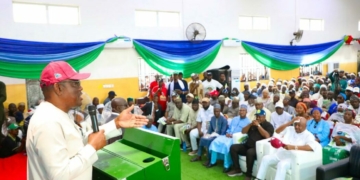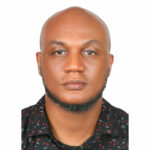
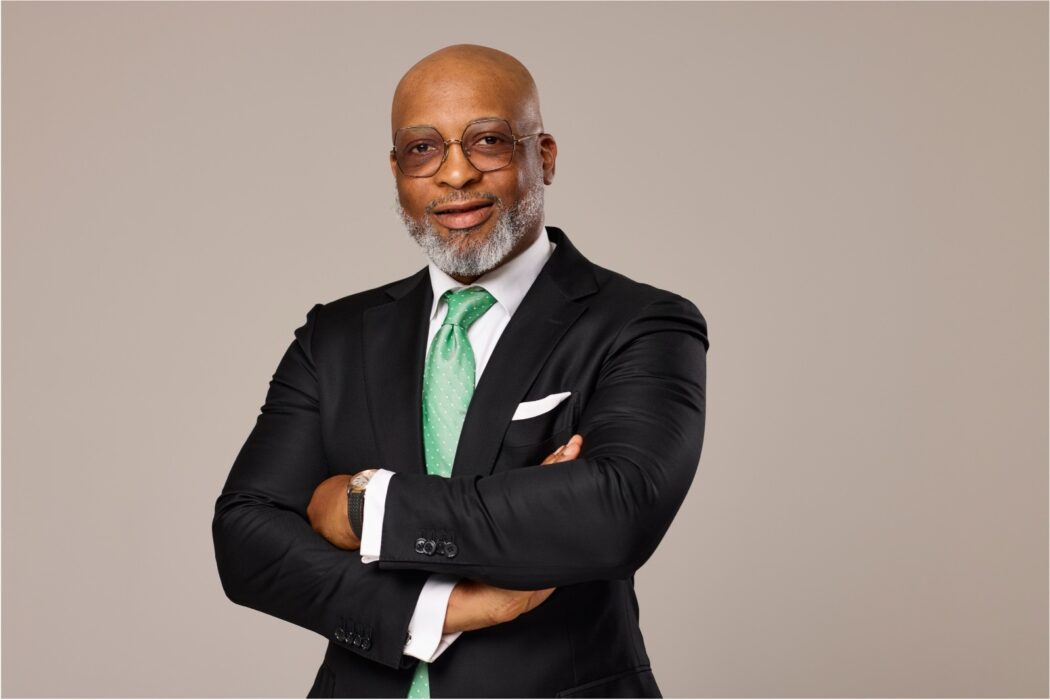
The Lagos State governorship candidate of the Labour Party (LP), Rotimi Odunaike, has criticised his exclusion from Sunday’s governorship debate organised by the Debate Consortium, describing the development as a setback to inclusive democratic participation.
The debate, organised by a consortium comprising TVC, Channels Television, The PUNCH and Vanguard newspapers, featured only four of the 17 governorship candidates contesting the 2027 Lagos State governorship election.
The candidates invited were those of the All Progressives Congress (APC), Nigeria Democratic Congress (NDC), African Democratic Congress (ADC) and Peoples Democratic Party (PDP).
In a statement on Monday, Odunaike questioned the criteria used in selecting the participating candidates, insisting that the exclusion of other contestants raised concerns about fairness, transparency and the opportunity for voters to assess all those seeking their mandate.
He said his team had made several attempts to secure his participation but was informed that invitations had been restricted to the four candidates.
According to him, subsequent efforts to get clarification revealed that his exclusion was based on what organisers described as a perceived lack of media visibility.
Odunaike, however, disputed the explanation, citing his recent media appearances and engagements on platforms including ARISE TV, Channels Television, MiTV, Nigeria Info, NTA and Jimi Disu’s Timeless podcast, among others.
“Despite several attempts by my team to secure my participation, we were informed that the selection was restricted to those four candidates,” he said.
He added that the explanation of limited media visibility did not reflect his recent engagements across television, radio, podcasts and online platforms.
The LP candidate also recalled that he encountered a similar situation at The Platform Nigeria’s Gen Z and Millennial Town Hall held in Lagos on October 1, 2026.
According to him, his efforts to secure a place at the event were unsuccessful, as he was informed that the four participating candidates had already been predetermined.
Questioning the rationale behind the selection process, Odunaike asked: “Why only four out of 17 candidates? And why the same four candidates?
“What criteria determine who gets invited and who gets excluded? And why should the choices available to Lagosians be defined by a select group of media organisations and event organizers?”
He argued that the issue went beyond his personal exclusion, saying it concerned the right of voters to hear from all candidates and assess their respective programmes before making electoral decisions.
“It is not a question of one candidate being denied a platform. It is a question of fairness to all candidates and, more importantly, fairness to the electorate,” he said.
“Public debates should expand democratic participation, not narrow it. They should give Lagosians the opportunity to hear different ideas, examine competing programmes and make informed assessments of those seeking their mandate.”
While acknowledging that debate organisers might have practical considerations in determining participation and format, Odunaike maintained that the selection criteria should be transparent, consistently applied and defensible.
He said media organisations and organisers should consider extending invitations to all candidates recognised by the Independent National Electoral Commission (INEC), allowing them to decide whether to participate and present their programmes to voters.
The Labour Party candidate also questioned the use of media visibility as a basis for exclusion, particularly when political parties and candidates were still developing their campaign strategies and expanding their public engagements.
With about three months to the governorship election, he argued that candidates should not be denied access to public platforms on the grounds of insufficient visibility when such platforms could provide opportunities to build public awareness.
“Against this backdrop, a subjective criterion such as media visibility should not become a circular requirement that denies candidates the very platforms through which they can engage the public and demonstrate their ideas,” he said.
Odunaike consequently called on media organisations, debate organisers and institutions hosting election-related public forums to adopt more open and inclusive selection processes.
He maintained that Lagos voters deserved the opportunity to hear from all candidates and independently assess their proposals.
“Lagosians deserve to see and hear all the options available to them. They deserve the opportunity to assess the candidates and decide for themselves,” he said.
“No credible democratic process should pre-empt that choice or unfairly limit their right to make it.”
We’ve got the edge. Get real-time reports, breaking scoops, and exclusive angles delivered straight to your phone. Don’t settle for stale news. Join LEADERSHIP NEWS on WhatsApp for 24/7 updates →
Join Our WhatsApp Channel