
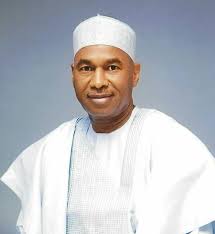
A legal practitioner, Balarabe Ahmad, has supported the governorship ambition of Ahmed Galadima Aminu and urged voters in Adamawa State to prioritise competence over political rhetoric ahead of the 2027 elections.
In an interview with journalists, Ahmad argued that the state requires leaders capable of delivering measurable results, rather than campaign slogans.
He said since Nigeria’s return to democracy in 1999, Adamawa had witnessed numerous political promises without consistent, technically-driven governance focused on human development.
Ahmad described Aminu as a seasoned technocrat with a proven track record in public service, particularly during his time at the Petroleum Technology Development Fund (PTDF).
“For over two decades at the PTDF, he demonstrated what it means to build people and institutions,” Ahmad said.
Ahmad noted that Aminu rose through the ranks from pioneer staff to Chief Executive, where he expanded the agency’s mandate in human capacity development within the oil and gas sector. He added that thousands of Nigerians benefited from scholarships, specialised training programmes, research grants, and institutional partnerships under his leadership.
“Today, many of those trained form a critical part of Nigeria’s energy workforce. His impact is measurable and enduring,” he said.
Drawing from personal experience, Ahmad said he had worked with Aminu for over two decades and observed what he described as a rare blend of leadership qualities.
“He combines humanity with firmness. He listens, values people, and protects the vulnerable, while also enforcing standards and taking responsibility when tough decisions are required,” he said.
He stressed that such a balance is essential for governance in Adamawa, where civil servants, farmers, traders, and youths require both empathy and discipline from leadership.
Ahmad also highlighted consistency as a defining feature of Aminu’s career, noting that he has remained committed to institution-building rather than appearing only during election cycles.
“Development is often gradual and unglamorous, but it is sustainable when built on strong systems. He understands this because he has lived it,” he added.
On concerns that technocrats may struggle in politics, Ahmad maintained that Nigeria’s current realities demand competence and results-oriented leadership.
“What Adamawa needs now is not rhetoric but execution. He has shown that he can design and implement policies effectively,” he stated.
Outlining Aminu’s vision, Ahmad said it focuses on human capacity development aligned with global standards, with practical initiatives tailored to local realities. These include establishing vocational and technical hubs, targeted scholarship programmes, and strengthening teacher and healthcare worker training.
He added that the plan also includes creating school-to-work pathways in key sectors such as agriculture, ICT, construction, and small-scale manufacturing.
“These are practical ideas, not abstract concepts. They are based on models he has successfully implemented at the national level,” he said.
Ahmad further identified youth empowerment as critical to addressing insecurity in the North-East, linking unemployment to rising crime and instability.
“Security begins with opportunity. Expanding skills acquisition, strengthening apprenticeship systems, and creating job pipelines will help move young people into employment and reduce the appeal of violence,” he said.
He concluded by urging the people of Adamawa to move beyond political promises and focus on proven performance.
“The state has tried rhetoric. It is time to test a track record. Aminu has spent decades building Nigerians and should be given the opportunity to build Adamawa,” Ahmad added.
We’ve got the edge. Get real-time reports, breaking scoops, and exclusive angles delivered straight to your phone. Don’t settle for stale news. Join LEADERSHIP NEWS on WhatsApp for 24/7 updates →
Join Our WhatsApp Channel