2027 political realignments are reshaping Nigeria’s opposition landscape as ADEMU IDAKWO reports on emerging alliances ahead of the next presidential election
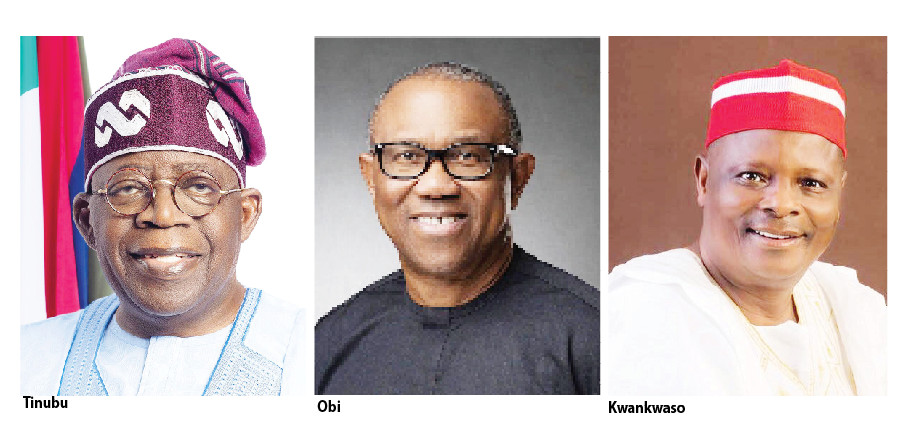
Fresh political realignments ahead of the 2027 presidential election have intensified following the decision by Peter Obi and Rabiu Musa Kwankwaso to work together on a new political platform, a development analysts say could challenge the existing South-North political structure led by President Bola Ahmed Tinubu and Vice President Kashim Shettima.
The emerging Obi-Kwankwaso alliance, built around growing coalition talks and their movement toward the Nigerian Democratic Congress (NDC), has already attracted national attention within both ruling and opposition circles.
Political analysts believe the significance of the alliance lies in the possibility of combining Obi’s support base across parts of Southern Nigeria and among urban youths with Kwankwaso’s entrenched grassroots influence in Kano and sections of Northern Nigeria through the Kwankwasiyya movement.
Analysts further argue that religion may become one of the factors shaping the emerging political alignments ahead of the election.
According to observers, the Tinubu-Shettima ticket in 2023 was principally built around a Muslim-Muslim arrangement aimed at consolidating support across the predominantly Muslim core northern states.
However, the emerging Obi-Kwankwaso coalition is now being viewed in some political circles as a possible Christian-Muslim ticket designed to broaden national appeal and counterbalance the APC’s previous electoral formula.
Though discussions surrounding opposition coalition talks have circulated for months, recent developments involving both political figures have pushed the debate beyond usual political defections into national issues about electoral power, regional balancing and the future direction of Nigeria’s opposition politics.
Analysts say such a coalition, if successfully consolidated, could challenge the traditional dominance of both the APC and PDP by creating an alternative political force capable of influencing voting patterns ahead of 2027.
Despite the growing attention surrounding the alliance, political observers maintain that the ruling APC still enjoys the advantages of incumbency, established party structures and institutional influence across much of the country.
They also note that, beyond public enthusiasm, the Obi-Kwankwaso alliance may eventually confront internal challenges related to power-sharing, party structure, regional interests, and possible disagreements over presidential and vice-presidential arrangements.
However, analysts argue that a coordinated Obi-Kwankwaso movement could still influence political conversations if expanded into a broader coalition capable of attracting dissatisfied voters across regional and party lines.
The unfolding political movement has already triggered reactions from both the ruling establishment and opposition actors, reflecting growing interest in the implications of a united opposition front ahead of 2027.
The African Democratic Congress (ADC) dismissed claims that the reported exits of Obi and Kwankwaso came as a surprise, insisting both politicians had long planned to leave the platform despite ongoing consultations within the party.
ADC National Publicity Secretary, Bolaji Abdullahi, described the developments as “pre-planned,” arguing that internal litigations cited by both camps could not have justified abandoning the coalition project.
The ruling APC also moved quickly to downplay the emerging alignment.
Presidential spokesman, Bayo Onanuga, reportedly described Obi as a “political nomad,” accusing opposition leaders of pursuing personal ambition rather than ideological unity.
Senate President Godswill Akpabio also reportedly mocked the ADC following the developments, while Minister of the Federal Capital Territory, Nyesom Wike, accused Obi of frequently moving across political platforms in search of political opportunity.
Speaking during a media interaction in Abuja, Wike said genuine political leadership requires resolving internal party crises rather than abandoning political structures during disputes.
Minister of Aviation and Aerospace Development, Festus Keyamo, however, adopted a different tone while reacting to Obi’s reported movement toward the NDC.
In a post on X on Thursday, Keyamo defended Obi’s decision to leave the ADC, arguing that the former Anambra governor merely moved toward a political platform that appreciated his political value and ambition.
“The beautiful woman, who knows her worth, has no time to waste waiting for this bachelor and walks away quietly to another suitor who knows her worth,” Keyamo wrote on
The growing debate surrounding the emerging alliance also attracted criticism from PDP chieftain Segun Showunmi, who argued during a television interview on Thursday that the real presidential contest in 2027 would remain between President Tinubu and former Vice President Atiku Abubakar.
Showunmi questioned Obi’s national leadership capacity, particularly in security and governance, insisting he had yet to see convincing evidence that the former Anambra governor possesses the experience required to govern Nigeria.
Adding an academic perspective to the debate, Dr. Christian Okeke said the Obi-Kwankwaso alignment was already generating political reactions across the country despite remaining in its early stages.
“Definitely, Obi-Kwankwaso’s alignment will reshape the voting pattern and is already sending political shock waves,” he said in an interview with LEADERSHIP Weekend.
“The alignment has produced a rapid impact within this short period, and the wave will be deeper in the coming days.”
According to Okeke, the 2027 election may eventually become a referendum on the performance of the current administration.
“More interesting times lie ahead, and the 2027 election will definitely be a vote on the government of the day,” he stated.
He added that members of the ruling party were already aware of the political challenge gradually emerging ahead of the election season.
“The Obi-Kwankwaso combination and its effect are a welcome development and will make the upcoming election an interesting exercise, particularly if they allow a free, fair and credible contest,” he added.
However, political analyst Damian Godwin, who spoke with our correspondent in Abuja on Thursday, said the growing pressure from youth groups and political stakeholders urging former President Goodluck Jonathan to run in the 2027 presidential race could significantly alter the emerging opposition equation.
According to him, Jonathan’s possible entry into the race may weaken Obi-Kwankwaso’s calculations by dividing opposition interests and reshaping voter alignment ahead of the election.
“Jonathan’s emergence may likely alter the political equation completely, making Obi-Kwankwaso’s ambition vulnerable,” he said.
The analyst added that Jonathan’s return to active presidential politics could attract moderate voters, sections of the South-South political bloc and undecided political interests capable of reshaping coalition negotiations ahead of 2027.
Observers say the unfolding opposition calculations bear similarities to the early coalition negotiations that produced the APC merger in 2013, the political alliance that ended the PDP’s 16-year hold on power at the federal level.
While questions remain over competing ambitions, power-sharing arrangements and ideological differences within the opposition camp, the Obi-Kwankwaso movement has already intensified political calculations ahead of 2027.
Whether the alliance survives internal contradictions or matures into a formidable national coalition, its emergence has already added fresh uncertainty to political calculations ahead of the next presidential election.
We’ve got the edge. Get real-time reports, breaking scoops, and exclusive angles delivered straight to your phone. Don’t settle for stale news. Join LEADERSHIP NEWS on WhatsApp for 24/7 updates →
Join Our WhatsApp Channel