By Dr. Emeka Edwards
As the permutations and shifting political alliances gain momentum ahead of the 2027 Presidential election, there is a growing debate over the need to consider a middle presidential candidate as the Game Changer for the Geo-Polity.
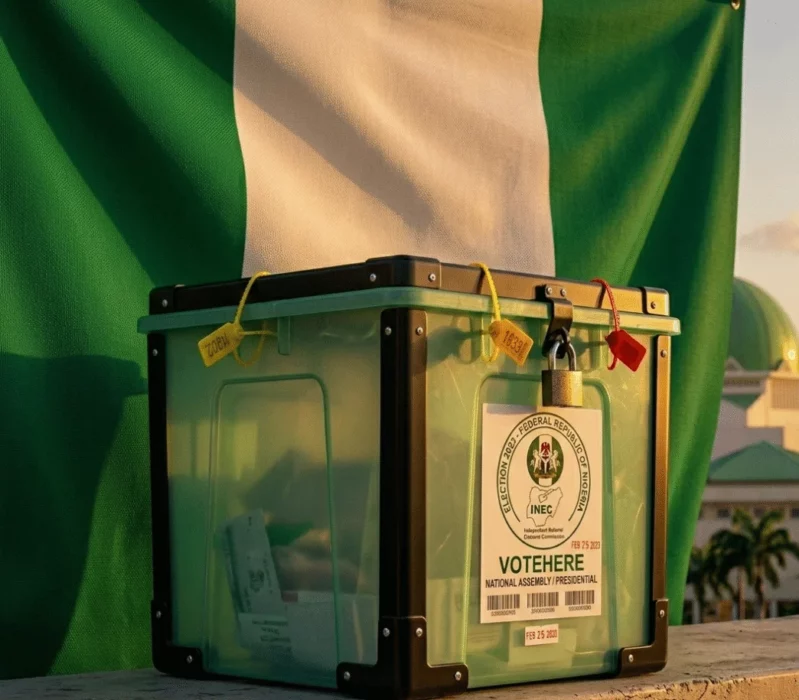
Equally germane is the place of the Labour Party in the current political arrangement as Nigeria marches toward the 2027 general elections. The political landscape is no doubt undergoing a seismic shift. The ruling All Progressives Congress (APC), led by President Bola Ahmed Tinubu, seemingly stands like a political behemoth, through a seeming hegemonic rise and consolidation since the 2023 polls. As of March 2026, the APC controls 32 out of 36 states, following high-profile defections from opposition party governors in states like Taraba, Kano, Bayelsa, Plateau, and Zamfara. Consequently, the party now holds an unprecedented two-thirds majority in both the Senate (80 of 109 seats) and the House of Representatives (241 of 360 seats). However, beneath this structural strength, the APC remains vulnerable to “market square reality.” While inflation has trended downward from its 2024 peak of 34.6%, the high cost of living remains a potent tool for any serious contender and opposition party, to vote out the ruling party from power in the 2027 general elections. However, for this to be achieved the choice of the Presidential candidate, his region and state of origin, and the unity of the opposition parties in the support of the Presidential candidate as a consensus candidate. Consolidating the Opposition Where as the restructuring of the African Democratic Congress (ADC) and the entrance of political gladiators like Atiku Abubakar, Peter Obi, Rotimi Amaechi, Nasiru El-rufai, David Mark and so many other political heavy weights into its fold, presented a ray of hope to giving the APC a run for its money, the lack of consensus on who would be the Party’s Presidential candidate has clearly weakened the Party’s chances at the polls as witnessed in the last council elections and indeed other off cycle elections across the country, where despite the best efforts the Party candidates performed dismally. The facts on the ground posit clearly that the opposition parties’ greatest asset in 2027 will not be their manifestos, but the choice, region, and carrying capacity of their presidential candidate on one hand, and how he can provide measurable alternatives through infrastructure blueprints and programs that can reverse the “anti-people” economic climate. Such a candidate must have the dexterity to frame the 2027 election as a referendum on survival vs. hardship, and tap into the frustrations of the youth and women the largest voting blocs, through, identifying a credible, resourceful, young, and acceptable candidate who would run with him across the country. Organizing grassroots structures that can protect his votes in the “last mile”, and moving from merely criticizing the APC to presenting a credible, researched plan for national security and job creation. Why such a candidate must hail from the Middle Belt While some groups push for President Bola Tinubu to complete a second term for the sake of continuity, others insist that the 2027 cycle is the perfect window to restore confidence in the “Nigerian Project”. The general argument is that geographically and culturally, the Middle Belt comprising the North Central zone and parts of the North East and West is Nigeria’s natural “melting pot”. It is the only region that effectively mirrors the country’s entire diversity, housing hundreds of ethnic groups and maintaining a delicate balance between Nigeria’s primary religions.
To this end, a Middle Belt president would not be seen as a partisan representative of the “core North” or the “deep South,” but as a mediator who understands the nuances of land rights, resource competition, and ethno-religious coexistence. While the region has produced military leaders like General Yakubu Gowon (Plateau), General Ibrahim Babangida (Niger), and General Abdulsalam Abubakar (Niger) it has been notably absent from the top seat in the democratic era. Perhaps the most compelling argument for a Middle Belt presidency is the region’s firsthand experience with Nigeria’s most complex security challenges. As the epicentre of the farmer-herder conflicts and eco-violence, any purpose-oriented leader from this region would possess the unique “insider perspective” required to heal these deep-seated wounds.
The Choice of Labour Party The 2023 general elections proved that the Labour Party (LP) is no longer a peripheral player in Nigerian politics. However, the surge that saw Peter Obi disrupt the traditional two-party system was fuelled more by organic momentum than by a durable political structure. As the 2027 general elections approach, the party finds itself at a critical juncture, it must either evolve into a “winning machine” or risk being swallowed by internal factions and the ruling APC’s growing hegemony. The primary lesson from 2023, as acknowledged by Interim National Chairperson Senator Nenadi Usman, was that “Labour’s greatest weakness was structure, not technology”. In the light of this, the party seems to be reinventing itself by first realigning with its critical stakeholders such as the Nigeria Labour Congress (NLC) and the Trade Union Congress (TUC) to transform millions of workers into incorruptible and disciplined voters and polling agents who can “safeguard every vote”. The 2027 election will not be won by “noise” but by commitment and strategy. If the Labour Party can reconcile its factions and plant its flag firmly in the fertile soil of the Middle Belt, it may yet turn its 2023 “movement” into a 2027 “mandate.”
While it is undeniable that the exit of Mr. Peter Obi who has officially registered as a member of the African Democratic Congress (ADC), citing the LP’s internal crises and fear that the federal government would “not allow him on the ballot” under the LP banner, is a setback for the Labor Party, the present leadership must present veritable prove that its platform is greater than any one individual. It must show that it is a party of ideology and workers, not just a vehicle for a single ambition, through a member drive that converts its present over 6 million supporters into card carrying members, pick its presidential candidate from the Middle Belt as a unifying factor between the North and South, develop a national security campaign program that would promote “Peace and Land Rights” policy and promote coalition building through “principled alliances” that would not negatively impact on the party’s identity. The 2027 election should not just be about who wins, but about how we heal. The Middle Belt and the Labour Party must be ready to lead that healing.
– Edwards writes from Katampe-Dawaki District Abuja FCT
We’ve got the edge. Get real-time reports, breaking scoops, and exclusive angles delivered straight to your phone. Don’t settle for stale news. Join LEADERSHIP NEWS on WhatsApp for 24/7 updates →
Join Our WhatsApp Channel