
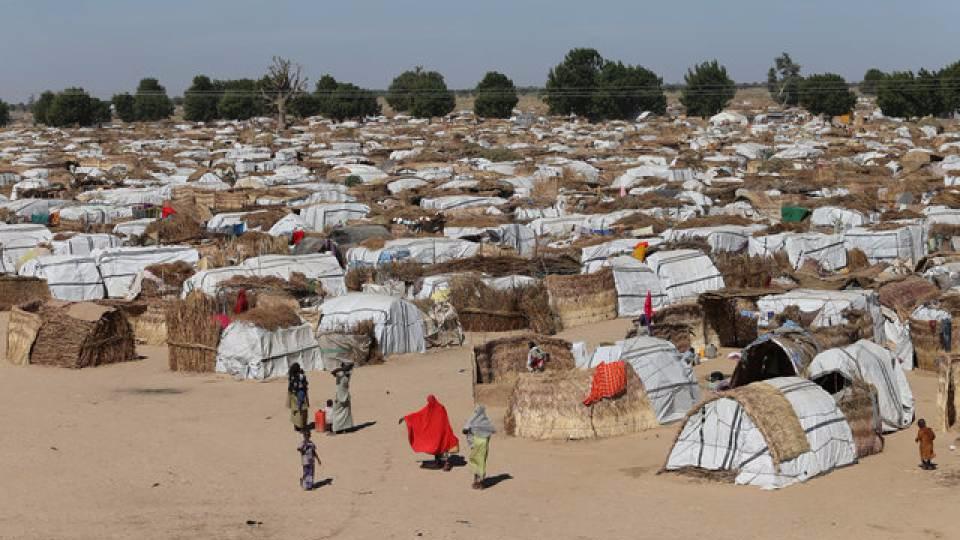
About 34.7 million Nigerians, including over 650,000 internally displaced persons in Borno, Sokoto, and Zamfara States, are projected to face acute food and nutrition insecurity or worse between June and August 2026 lean season.
This is according to the latest Cadre Harmonisé (CH) food and nutrition security analysis released in Abuja yesterday.
The figure represents a 13.4 percent increase from the 30.6 million people identified in the February–March 2025 CH analysis, with an additional 4.1 million Nigerians added to the acute food and nutrition insecurity situation.
While the current number of people facing dare food and nutrition conditions (October – December 2025) stands at 27.2 million, the report shows that millions of households are struggling to maintain adequate food consumption due to persistent inflation, insecurity and economic pressures.
While inflation and the consumer price index eased slightly during the current assessment period, prices of essential food items such as vegetable oil, dairy products, meat and condiments remained more than 35 percent higher, driven largely by the naira-dollar exchange rate and rising transport costs.
The analysis also noted that over half of households who appeared to meet acceptable food consumption thresholds did so through negative coping strategies, including eating fewer meals, reducing meal portions for children and adults, or borrowing money to buy food.
The nutrition situation also remains alarming across the North-East and North-West. Acute malnutrition has reached emergency levels in parts of Borno, Yobe, and Katsina states, particularly in Central Borno, Maiduguri, Jere, Mobbar, and Jibia LGAs. Although certain areas of Benue and Jigawa recorded relatively “Acceptable” levels, the overall trend indicates widespread undernutrition among children and pregnant women.
Mortality levels also remain low in most areas but have risen to crisis levels in several zones, including Central and Northern Borno, Southern Adamawa, and parts of Yobe, Sokoto, and Zamfara. Emergency-level mortality was reported in Eastern Borno and Northern Adamawa.
The report identifies four key drivers behind the worsening food crisis such as; persistent insecurity disrupting rural livelihoods; government food imports undermining local production; climate shocks such as floods and prolonged dry spells altering cropping systems; and widespread displacement exacerbating vulnerability among already fragile populations.
The report covers 27 states and the Federal Capital Territory and conducted by the Nigerian food security sector led by the Federal Ministry of Agriculture and Food Security, with support by the Food Agriculture Organisation (FAO) of the United Nations and other development partners.
“The rise in cost of energy, fertilizers and agrochemicals with over 56 percent increase, remains a concern to many smallholder farmers.
The nutrition situation across the Northwest and Northeast ranges from Alert (Phase 2) to Serious (Phase 3), and to Critical (Phase 4) levels.
Critical levels of acute malnutrition were found in many areas of the Northeast, particularly in Central Borno, Maiduguri, Jere and Mobbar, and in parts of Katsina State”, the analysis noted.
Speaking at the presentation in Abuja, FAO representative in Nigeria and ECOWAS, Hussein Gadain expressed concern over the continued disruption of livelihoods caused by conflict, climate shocks and rising production costs.
Gadain urged Nigeria and its partners to strengthen data collection, expand state participation, and reinforce policy support for farmers as the country battles deepening food and nutrition insecurity.
Responding to the report, the permanent secretary, ministry of agriculture and food security, Dr Marcus Ogunbiyi reaffirmed the federal government the commitment to sustaining the Cadre Harmonisé process and deepening collaboration with partners to advance a resilient, evidence-based and hunger-free Nigeria.
We’ve got the edge. Get real-time reports, breaking scoops, and exclusive angles delivered straight to your phone. Don’t settle for stale news. Join LEADERSHIP NEWS on WhatsApp for 24/7 updates →
Join Our WhatsApp Channel