Africa Day this year marks 60 years since the founding of the Organisation of African Unity (OAU). The anniversary begs the question: How much of the vision of the OAU’s founding fathers has been realised 60 years on? What would not be there but for the efforts of the organisation and its successor the African Union?
There were two competing visions lobbying at the founding. Kwame Nkrumah, Ghana’s president, in his Africa must Unite speech, argued the pan-African case for continental federalism, for a Union of African States, with one continental diplomatic corps, one department of defence, and a common market.
He was hugely outvoted by other presidents refusing to give up their sovereignty. So the OAU, formed on 25 May 1963, was instead modelled on the Organisation of American States. It was an inter-governmental organisation whose charter pledged it to not interfere in the internal affairs of its member states – even in the event of massacres. This followed the precedents of the UN United Nations, the Arab League, and the Organisation of American States, and would soon be followed by the Association of South-East Asian Nations (ASEAN).
The OAU was committed to decolonisation, including the end of apartheid in South Africa and the settler regime in Southern Rhodesia (Zimbabwe). It contributed herculean diplomatic lobbying and sanctions to achieve this. Its Liberation Committee, based in Dar es Salaam (the Tanzanian commercial capital), donated weapons and funds to the insurgencies in South Africa, Zimbabwe, Namibia, Angola, and Mozambique.
The OAU was a state-centric realisation of pan-Africanism. It launched a variety of continental NGOs, which were allocated to one or other member state to host. Space allows for only one example: it supported the launch of the Pan-African Writers’ Association. Ghana pledged to provide it with premises for headquarters.
One development not anticipated when the OAU was founded in 1963 was the subsequent establishment of regional economic communities. There are over a dozen of these. Out of the eight officially recognised by the AU, the most significant are the Economic Community of West African States (ECOWAS), the Southern African Development Community (SADC), and the East African Community (EAC). These three are each free trade areas and, on paper at least, the ECOWAS and EAC are custom unions. These each provide stepping-stones towards that continental common market that Nkrumah had lobbied for back in 1963.
As a political scientist who has researched the OAU and AU, I argue that it has performed far better than almost all of its global counterparts, though it has also experienced several shortcomings.
The hits
One success of the AU is its growing prestige. After its founding in 2002, Wikipedia did not consider it merited an entry until 2011. But today 50 non-African states accredit ambassadors to the AU. The diaspora demanded inclusion during South African president Thabo Mbeki’s leadership, and is now formally recognised as the “sixth region” of the AU since 2003. Caribbean nations, members of CARRICOM, recently started formal links with the AU: these are African-descendant nations, abducted out of Africa during centuries of slave trade.
The AU architecture for peacekeeping and peacemaking has no peer in the Organisation of American States, Arab League, or ASEAN. While most AU organs meet only twice per year, the Peace and Security Council has met twice per month since its founding in 2004.
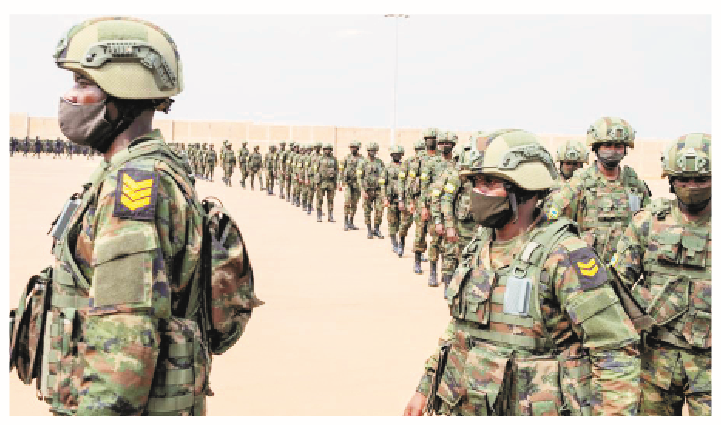
Dozens of its ad hoc military missions help governments with the suppression of terrorism everywhere from the Sahel to northern Mozambique. Various AU and regional economic community peacekeepers have served in the Democratic Republic of Congo’s numerous civil wars for decades.
The AU seeks a role in global governance. It tries to negotiate that Africa speaks with one voice in the halls of international organisations. Since some of the most important economic decisions about Africa are made outside the continent, the urgency of this is self-explanatory. The AU has its own embryonic diplomatic corps, with permanent diplomatic missions in Brussels (to negotiate with the EU), Beijing, Cairo (to negotiate with the Arab League) in New York (at the United Nations), and in Washington (to negotiate with the World Bank and IMF).
Kwame Nkrumah appealed for an African common market back in 1963. The 1991 Treaty of Abuja proposed an elaborate 34-year schedule to achieve this. The first real step towards such economic integration is the African Continental Free Trade Area – headed by a South African Secretary-General, Wamkele Mene. Clearly, this will take at least a decade to substantially achieve. But the prize of “defragmenting Africa”, as the World Bank calls it, will be worth the herculean lobbying and negotiating it will take. The African Continental Free Trade Area is currently negotiating “rules of origin” and dispute-settling mechanisms as its opening steps.
The AU tries to be norms-making. The 1991 Treaty of Abuja must surely be the world’s most ambitious attempt to import lock, stock, and barrel the institutions and norms of the EU into another continent, which was of course only partially successful.
Few AU members have implemented the Charter on Democracy, Elections, and Good Governance. But a majority of countries have one by one signed up to the African Peer Review Mechanism which, like the AU, has just celebrated its 20th anniversary. This is part of the peer pressure towards constitutionalism, and against autocrats.
The misses
One failure of the AU is in not preventing serial coups-de-etat. There have been more than 200 coups following the era of independence in the 1960s. The obvious reason is that the continental body never sends a military intervention to suppress the putchists, to capture them and bring them to trial for treason. It limits itself to diplomatic pressures against them, such as suspending their membership.
In 2016 the AU launched a campaign to “silence the guns by 2020”. Unhappily, it proved powerless to prevent both coups and terrorist insurgencies from continuing, so the slogan was repackaged as “silence the guns by 2030”. It remains to be seen if wars can be suppressed throughout the African continent by 2030.
Another failure is in getting member states to pay their annual dues. Clearly, the current penalties of suspension, which only fully come into effect when a state falls two years behind in payments, is not a deterrent. The AU surely needs to follow the universal practice by banks – that if a customer falls more than two months behind in repaying a mortgage bond, full sanctions are implemented.
The AU often dispatches election observers to countries to monitor voting, and hopefully to deter vote-rigging in its various forms. It has been criticised for reluctance to censure incumbent regimes that tilt the playing field in the electoral contest for power.
Cornerstone
In conclusion, the AU compares well with its peers in developing countries such as ASEAN, Organisation of American States, and Arab League. The AU accomplishes more than the Commonwealth, or the Francophonie. Only the EU is way ahead – because its budget is three orders of magnitude larger than that of the AU.
The AU has put cornerstones in place towards realising the goals of the founders. The end of coups and civil wars; working towards establishing an African common market; and getting Africa to speak with one voice in global governance are worthy goals to persist in pursuing.
– Gottschalk is a member of the African National Congress.
Culled from: The Conversation
We’ve got the edge. Get real-time reports, breaking scoops, and exclusive angles delivered straight to your phone. Don’t settle for stale news. Join LEADERSHIP NEWS on WhatsApp for 24/7 updates →
Join Our WhatsApp Channel