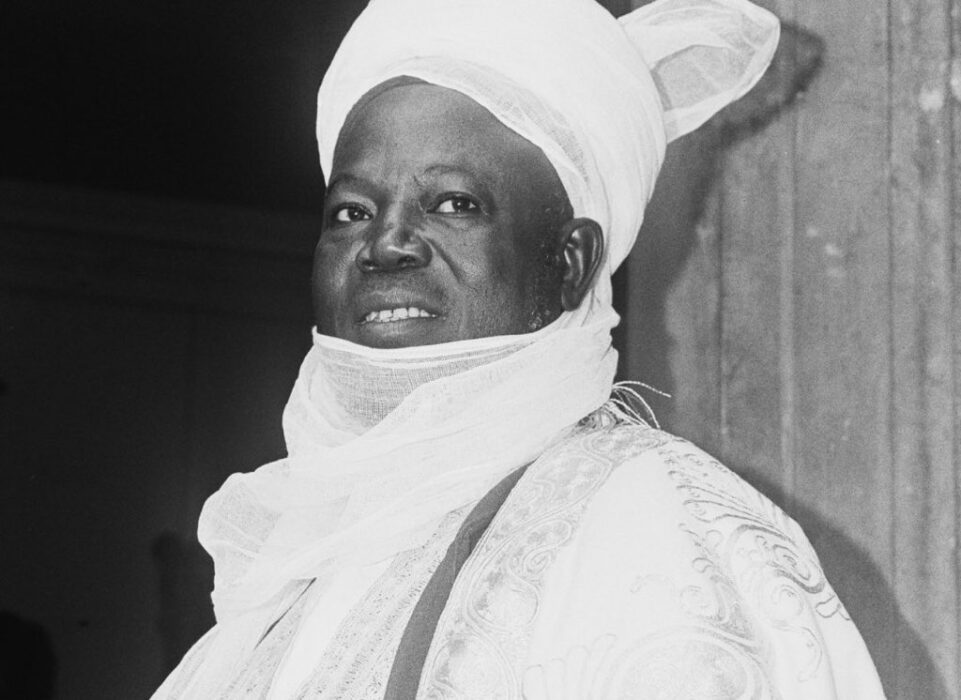
Prominent northern groups and institutions have declared that, as they commemorate 60 years since the death of the Sardauna of Sokoto, Sir Ahmadu Bello, they will organise a conference in April this year to chart a way forward in rebuilding the region.
The groups include the apex northern socio-cultural organisation, the Arewa Consultative Forum (ACF); the Northern Elders’ Forum (NEF); the Sir Ahmadu Bello Memorial Foundation; the Miyetti Allah Cattle Breeders Association of Nigeria (MACBAN); and other Arewa groups and institutions.
Addressing a news conference in Kaduna on Thursday on behalf of the northern groups and institutions, the Chairman of the ACF Board of Trustees (BoT), Bashir M. Dalhatu, said the conference would critically examine the region, its strengths and weaknesses, and the trajectories of its development, designed and driven by its fundamental interests.
The northern groups and institutions planning the Sardauna conference include the Arewa Consultative Forum, Northern Elders’ Forum, Sir Ahmadu Bello Memorial Foundation, Arewa House, CEDDART, A.R.D.P., Arewa Defence League, MACBAN and other organisations.
Dalhatu further explained that the conference would bring together leaders, elders, intellectuals, clergy, entrepreneurs, women and youth. He added that it would be deliberately designed to allow the North to speak to itself, listen to criticism, explore its limitations, and enhance understanding of its strengths and weaknesses.
He asserted that the North would continue to see itself as a key player in the growth and development of Nigeria’s democratic system.
Dalhatu noted that the late Premier of the Northern Region, the Sardauna, demonstrated the highest sensitivity to the plural nature of the North and ran a compassionate administration that was transparently inclusive and fair to both Christian and Muslim Northerners.
Enumerating the Sardauna’s achievements, Dalhatu said he built roads, hospitals, research institutions and major economic development establishments, and instituted a wide array of incentives that served as strategic infrastructure for rapid, inclusive growth and development.
The Chairman of the ACF Board of Trustees said:
“Today is exactly sixty years since Sir Ahmadu Bello, the Sardauna of Sokoto, and some of his colleagues were murdered by rogue elements of the Nigerian military. Those killings eventually plunged the country into a series of crises, including a thirty-month civil war and the loss of hundreds of thousands of lives.
“Some versions of our history suggest that the nation has moved on from those tragic events. Indeed, as a country, we celebrate this day as Armed Forces Remembrance Day. The heroism and sacrifices of our men and women in the Armed Forces are worthy of celebration.
“In the same spirit, key elements of our history are also worth remembering, particularly where they remind us of major turning points in our lives as Northerners and Nigerians. The people of the North have a special place in their hearts for the Sardauna and his colleagues who made the supreme sacrifice sixty years ago.”
Dalhatu added: “Indeed, their roles in preparing our Northern Region for self-government and, ultimately, independence, and the remarkable growth of our region and its unity under very trying circumstances, have been captured by history as vital lessons in the study of committed and visionary leadership.
“Although they were human and vulnerable as leaders, their commitment to the people, competence in governance and administration, and transparent integrity serve as unmatched standards for generations of leaders who subsequently assumed responsibility for our welfare, progress and security.”
He further stated: “Sixty years after the Sardauna, the North looks with pride at the world-class university, Ahmadu Bello University (ABU), which his vision and commitment led him to establish.
“He started with just a handful of government schools in the most populous region of Nigeria, yet he died leaving behind hundreds of learning institutions that allowed the children of both the rich and the poor equal access to opportunities to learn and become responsible, productive adults.
“He instilled in Northerners the values of humility and committed protection of their heritage within a fiercely competitive federation. He led an administration that prioritised the welfare of the poor and the principles of a thriving free economy.
“He worked closely with other Nigerian leaders, insisting that Nigerians could live in a united country without abridging the rights or interests of any group or section. The Sardauna will always remain a role model for the people of the North.
“A large number of northern groups intend to organise a major conference under the theme, ‘60 Years Without the Sardauna’, in the first week of April this year.
“The objective is not merely to indulge in consoling nostalgia, but to position the past in a way that genuinely influences the present and the future of the people of the Northern Region.
“The expected outcome includes informed observations and recommendations for rebuilding a North of farmers, teachers, entrepreneurs and young people who need support to grow with strong, wholesome values. We have vast volumes of valuable, informed research that will be distilled into actionable strategies to improve our security, economy and coexistence.
“We will seek to rediscover the linkages between our past and our future, and we are convinced that the conference will provide the region with an opportunity to begin a productive reversal of its fortunes.”
According to him:
“The key objective of the conference is to remind our people of a past free from the severe challenges that constrain us today, and to rekindle the spirit of a hardworking people living in peace, with respect for the values of good citizenship and responsible leadership.
“Today, more than 70 per cent of Northerners are under 60 years of age. This means they did not live under a leadership that sought to unite a region characterised by immense complexity and diversity, shield it from unfair competition, and lay the foundations for phenomenal growth.
“The Sardauna and his colleagues sound like legends to millions of Northerners today, largely because the North looks back in vain for successors capable of sustaining their remarkable records.
“Our young people today only hear of excellent schools and hospitals that were built with public funds, while millions of them are Almajirai with very limited opportunities to become productive adults. The old Northern Region is now divided into nineteen states.
“We are having to contend with the unbearable cost of governance, deeply troubling and complex inter-communal relations, and conflicts that claim lives daily — all of which point to poor standards of leadership and the mismanagement of public affairs,” he said.
We’ve got the edge. Get real-time reports, breaking scoops, and exclusive angles delivered straight to your phone. Don’t settle for stale news. Join LEADERSHIP NEWS on WhatsApp for 24/7 updates →
Join Our WhatsApp Channel