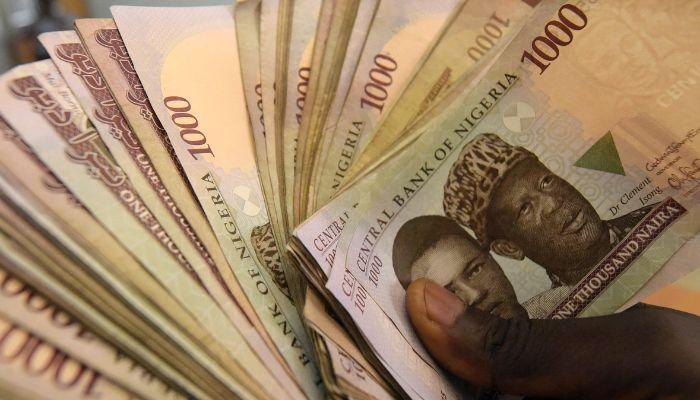
By the close of business last week, a dollar traded for N1,524.83 and N1,575 at the official market and at the parallel market respectively. And for the umpteenth time, questions were raised in informed circles and, even in the streets, as to how the nation’s medium of exchange got to this low level.
As this concern persists, there are attempts to put the blame on banks. As far as this newspaper knows, banks are just a factor in the entire matrix. Critical as they may be, other factors also play their roles in determining what goes on in monetary policies. Foreign exchange management is a mixture of the financial, the social and political.
In the country today, one does not need to be an expert to understand that a combination of two key factors-the decline in the supply of dollars and a surge in the demand for dollars- is responsible for the exchange rate volatility the nation is experiencing.
The cogent question to be asked ought to be, why is the demand for dollar so high while the supply of it is low? Again, different factors are responsible for this high demand for dollars including government’s policies like floating the naira when the country’s production for export is near zero. This was further compounded by, in our view, the hasty removal of fuel subsidy without measures to cushion the impact.
Other factors contributing to the volatility in the foreign exchange regime are social issues like the inordinate craze for foreign education, senseless embrace of medical tourism and the average Nigerian’s insatiable appetite for foreign goods and services. There is also political influence in the allocation and distribution of the available foreign exchange. These demands are the causative factors that are responsible for the strain and stress in the financial market that have made the dollar king against the Naira.
For instance, because of a seeming loss of faith in the nation’s education system, most middle- and high-income families take their children abroad with the attendant pressure on foreign reserve. In this process, banks only come in as facilitators.
The UNESCO Institute of Statistics noted that the number of Nigerian students abroad increased from less than 15,000 in 1998 to over 71,000 in 2015. By 2018, the figure had reached 96,702. The pressure this puts on the demand for foreign exchange cannot be underestimated.
According to records from the nation’s apex bank, between 2010 and 2020, foreign education expenses gulped $28.65 billion while a whopping $11bn was spent on medical treatment abroad within the same period.
What this presupposes, in our opinion, is that in a decade, Nigerians demanded almost $40 billion to access education and healthcare in foreign countries. And within the same period, the Personal Travel Allowances (PTA) given to Nigerians stood at $58.7 billion. In yet another record, the CBN disclosed that between January and September 2019, a whopping $9.01 billion was disbursed to Nigerians for personal foreign travel alone.
While education, healthcare and travels pushed the demand for dollars off the roof, one fact which has also contributed to the worsening foreign exchange crisis is the nation’s intolerably high import needs, in some cases, for items that are consumptive and not productive in nature. For instance, over 99 per cent of the cars driven in the country are imported, necessitating dollar payments. Also, with the collapse of the major textile mills, over 90 percent of the materials are imported fabrics. Add the importation of items like apple, biscuits and toothpicks to the mix, the answer to the question on why there is high demand for dollar becomes easy to comprehend and worry about.
The truth that is so glaring and which experts have continued to call attention to is the fact that Nigeria has very low export earnings because the country produces not much of export value aside from crude oil which constitutes 90 percent of export earnings.
The nation’s over-reliance on foreign education and medicare, aside from depleting the foreign reserves and pushing the demand for dollars to an intolerably high level, is also suggestive of the deplorable state of healthcare and education sectors in the country.
Curiously, rather than blame policy inconsistencies in the public sector, Nigerian elite and middle-class voracious appetite for foreign goods and services which have continue to put pressure on the naira, Nigerians have continued to blame the deposit money banks (DMBs) for the exchange rate volatility.
The problem started with the neglect, over the years, of education, agriculture, infrastructure and health sectors by government at all levels. It is no surprise, then, that when the rot set in as a result, and the craze for foreign education, medical tourism and import substitution kicked in, the value of the local currency took a hit vis-à-vis its foreign counterparts especially the dollar to which it is tied.
In our considered opinion, the challenge before the nation is how to check the downward spiral in the value of the Naira. Already, the CBN has put in place some measures which it believes can help the fast-deteriorating situation. Unifying the foreign exchange market, clearing outstanding foreign exchange obligations, and introducing new operational mechanisms for Bureau de Change (BDCs) are helpful.
However, government must summon the political will to support the apex bank in executing these measures which in our considered opinion, if dutifully implemented, will help assuage the current challenge. Scapegoating the banks is unhelpful in the prevailing circumstance.
We’ve got the edge. Get real-time reports, breaking scoops, and exclusive angles delivered straight to your phone. Don’t settle for stale news. Join LEADERSHIP NEWS on WhatsApp for 24/7 updates →
Join Our WhatsApp Channel