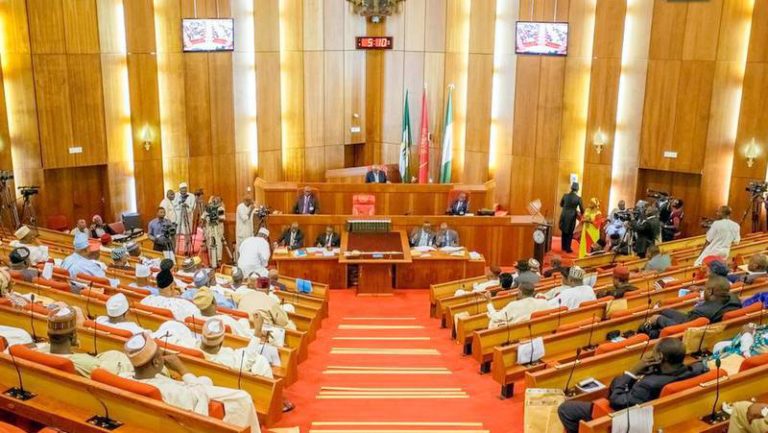
The recent introduction of a bill to return Nigeria to a parliamentary system of government in 2031 has generated vigorous debate. The bill, sponsored by 60 lawmakers in the House of Representatives, was introduced during plenary.
It is instructive to note that Nigeria currently practices a presidential system of government which allows for a direct election of the president. This newspaper recalls that Nigeria practiced the parliamentary system of government from 1960 to 1966 before the military interregnum.
Proponents of the return to that system that ushered in the First Republic argue that it will reduce costs and promote greater accountability, while critics counter that it has the capacity to empower an undisciplined political class.
As the House deliberates on this proposed constitutional change, it must carefully weigh the potential benefits and drawbacks. On the surface, adopting a parliamentary system appears attractive. Lawmakers backing the bill contend Nigeria’s current presidential model creates much waste and inefficiency. They note that in the proposed system, prime ministers are appointed by the legislative majority, making them directly answerable to parliament. This contrasts with the present system that confers power to elect president solely on the electorate and is lacking in legislative constraints. This latter argument is faulty because the legislators have the power to impeach which they seldom consider.
However, in theory, the parliamentary system imposes greater discipline on the executive branch and reduces corruption. Proponents also argue parliaments are more representative of the popular will just as it confers on the members described as Backbenchers a greater influence than in presidential regimes, where power is concentrated in the person of the president.
Critics point out that minority and coalition governments are common under parliamentarism. This can lead to political instability and constant power struggles between parties. Nigeria’s history of fractious ethnic politics exacerbates these risks. Coalitions unite only by their desire for power and patronage could further inflame regional tensions as was experienced in 1966 that led to a military takeover of power. Unstable governments may find it harder to pursue vital long-term development goals.
Perhaps, it is also important to point out that a Presidential system offers greater continuity in leadership and policy direction. In the considered opinion of this newspaper, the system is not the problem that we face in our democratic journey. The cost of governance is unlikely to change meaningfully in a parliamentary system. Profligacy stems more from poor leadership and lack of accountability than the system of government.
Shifting to a parliamentary model will not alter these underlying pathologies. Members of the political class will continue to pad budgets and award dubious contracts regardless of their executive power.
Arguably, presidential system makes this corruption more visible because of the concentration of power in the office of the president. Parliamentary systems diffuse responsibility across party and coalition lines, potentially masking such self-serving behavior.
In our view, the cost of governance can also be reduced in the presidential system of government by having a unicameral legislature. Most pertinent is the inexorable fact that what the nation needs and very urgently is a change of attitude to politics and governance whatever the system in place.
What the electorate need is good leadership. A change of system of governance will have no effect if we still have deviant politicians who want to win election at all costs. Furthermore, of more concern is the risk of empowering an often-undisciplined legislature. Nigerian legislators are not known to have a strong record of holding leaders to account or renouncing their own privileges. In a parliamentary system, they could shield an ineffective or unethical prime minister in return for favors and largesse. Party patronage rather than effective governance may become the overriding priority.
Critics note the previous period of parliamentary government in Nigeria from 1960-1966 was marked by intense regional factionalism and corruption. There are doubts that contemporary lawmakers would behave any differently if given greater power. Fundamentally, in our opinion, lasting change depends less on structure and more on standards and mindset.
Ultimately, the political class must lead by example, serving the common good rather than narrow interests. Until legislators consistently embrace ethics, accountability and self-sacrifice, tinkering with political systems will achieve little. The poor quality of representation is the chief issue, not the model of governance.
Nonetheless, careful evolution of systems can support cultural change. Perhaps elements of parliamentarism applied selectively could foster more responsible politics. More free votes could loosen excessive party control, allowing members to vote their conscience.
Stronger legislative committees could provide oversight and policy guidance akin to Westminster tradition. But wholesale adoption of the parliamentary model seems premature before underlying political pathologies are addressed.
As the House weighs this proposed reform, it should consider incremental measures that promote accountability and reflection. Wholesale change is not likely to cure fundamental flaws in political culture. Patience and perseverance in laying the foundations for more ethical leadership are paramount.
The integrity of the ruling class, not the system it operates within, will determine if Nigeria can reach its full potential. Parliament must reform itself before it can achieve meaningful constitutional reform. This deeper challenge exceeds institutions alone. It goes to the heart of what we expect from those who govern in our name.
We’ve got the edge. Get real-time reports, breaking scoops, and exclusive angles delivered straight to your phone. Don’t settle for stale news. Join LEADERSHIP NEWS on WhatsApp for 24/7 updates →
Join Our WhatsApp Channel