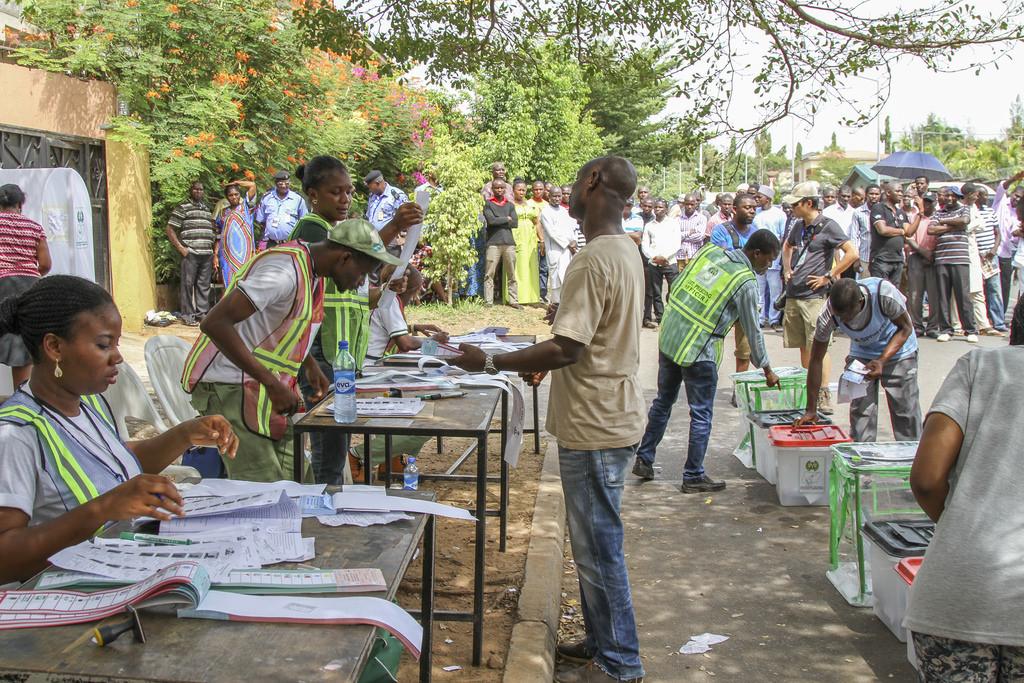
As part of preparations for the November 30, 2024, local government elections, the Kano State Independent Electoral Commission (KANSIEC) asks candidates for the chairmanship to pay N10 million, while their councillorship counterparts will pay N5 million to secure nomination forms. KANSIEC Chairman Professor Malumfashi Sani told the media that female candidates and persons with disabilities would have a different fee structure, which the commission is yet to disclose.
These charges, which appear among the very few classified as a new high, dwarfed the amount charged by many State Independent electoral commissions (SIECs). For instance, Bauchi State Independent Electoral Commission (BASIEC) fixed the cost at N300,000 for chairmanship candidates, N250,000 for deputy chairmanship candidates, and N120,000 for councillorship candidates; Kwara SIEC charged chairmanship candidates N700,000 and Councillorship candidates N268,000; Plateau SIEC pegged the cost at N1.2m and N500,000 for chairmanship and councillorship, respectively; Kebbi State Electoral Commission fixed N500,000 for chairmanship, N300,000 for vice chairmanship, and N200,000 for councillorship.
In Akwa Ibom State, it is N500,000 for chairmanship and N250,000 for councillorship; Kogi SIEC fixed N250,000 for chairmanship candidates and N100,000 for their councillorship counterparts; in Zamfara State, chairmanship forms cost N3 million, and councillorship forms go for N1 million.
Aside from the excessive costs of getting nomination forms, other expenses are required before and during the election process, including logistics for campaign rallies. All of those make elections in Nigeria expensive and beyond the reach of many.
Are these state electoral commissions charging such exorbitant amounts as a desperate move to raise revenue? Should the desire to increase revenue precede the need for collective participation? What is the implication of the exorbitant sums being charged on election spending?
Justifiably, there has been an outcry by the opposition political parties and other critical political interests against the outrageous cost of forms charged by the SIECs. But what does this patently prohibitive cost of form portend for democracy, corruption, and good governance, especially at the grassroots level in the country?
In making the cost of nomination forms exorbitant, the system is narrowing and making the space for participation increasingly tricky. It is a given that owing to so much influence of money in the nation’s politics, participating in an election in Nigeria has become a class thing reserved for the affluent few and, hence, a disincentive for many. Essentially, this often allows moneybags to bankroll and install their puppets to the detriment of the democratic process and the benefits derivable therefrom.
It is not for nothing that the amended Electoral Act limits candidates’ spending on elections. Specifically, section 88 (2-7) limits election expenses. N5 billion is the maximum amount pegged for presidential candidates; N1 billion for governorship candidates, N100 million for senatorial candidates, and N70 million for federal House of Representatives candidates.
The nation cannot afford a situation where leadership at all levels, especially at the local government level, which is the closest and ordinarily ought to be the most impactful on the people, is determined by the sheer size of one’s pocket and not character.
Unfortunately, the high cost of participating in elections makes it easy for people of questionable character who have so much money to emerge as leaders and those who dominate the governance space with all its negative implications on the polity.
The high cost of nomination forms in Kano, especially, defies logic, considering that 10.5 million out of the state’s 15.9 million people are wallowing in abject poverty, according to data by the Nigeria Bureau of Statistics. The same data showed that multidimensional poverty affects 66.3 per cent of the people in the state.
This worrisome level of poverty is primarily occasioned by bad leadership, especially at the grassroots level, where governance has been at its condemnable nadir. All it takes to reverse this worrisome trend is effective grassroots governance, which will only be possible by expanding the space for all to participate actively.
Charging exorbitant costs for forms will limit participation and narrow the space for the emergence of credible leadership, which is desperately needed to change the governance narrative. It also negates a crucial aspect of one of the fundamental principles of democracy, which is the right of all to vote and be voted for.
Therefore, we enjoin the Kano state government to urgently direct KANSIEC to reverse these exorbitant charges. Above all, we reaffirm the call for SIECs to stop conducting local government elections.
We’ve got the edge. Get real-time reports, breaking scoops, and exclusive angles delivered straight to your phone. Don’t settle for stale news. Join LEADERSHIP NEWS on WhatsApp for 24/7 updates →
Join Our WhatsApp Channel